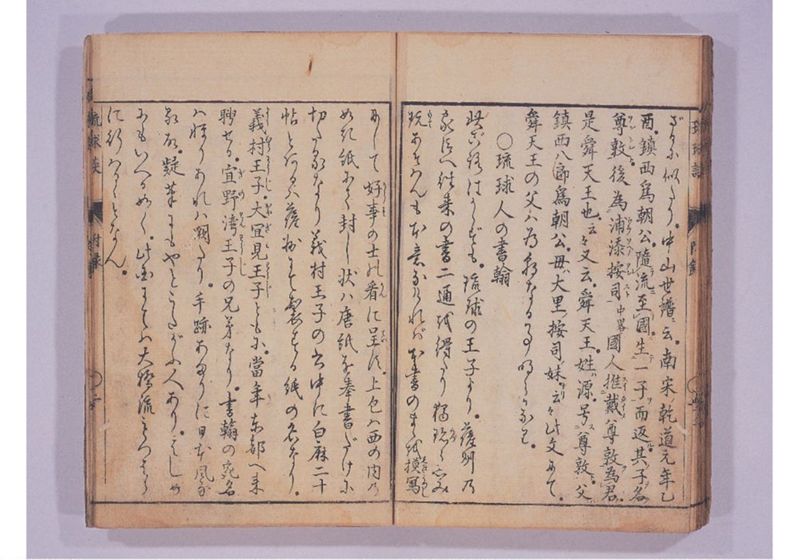
翻刻
ざるに似たり、中山世譜 ̄ニ云、南宋 ̄ノ乾道元年乙
酉、鎮西為朝公、随 ̄テ_レ流 ̄ニ至 ̄リ_レ国 ̄ニ、生 ̄テ_二 一子 ̄ヲ_一而返 ̄ル、其 ̄ノ子 ̄ヲ名 ̄ク
尊敦(ソントン) ̄ト_一、後為_二浦添(ウラソヘノ)按司(アンスト)_一《割書:中略| 》国人 推(スイ)_二戴(タイ) ̄シテ尊敦 ̄ヲ_一為_レ君 ̄ト
是舜天王也、《割書:云| 々》又云、舜天王、姓 ̄ハ源、号 ̄ス_二尊敦 ̄ト_一、父 ̄ハ
鎮西八郎為朝公、母 ̄ハ大里 ̄ノ按司 ̄ノ妹 ̄ナリ《割書:云| 々》此文にて、
舜天王の父は為朝なる事明らかなり、
○琉球人の書翰
此ごろはからずも、琉球の王子より、薩州の
家臣へ往来の書二通を得たり独 珍(めづ)らしみ
玩(もて)あそはんも本意なければ本書のまゝを模写(しきうつし)
にして好事(かうす)の士の看(かん)に呈(てい)す、上包は西の内の
如き紙にて封し状は唐紙を奉書だけに
切たるなり義村王子の書中に白麻二十
帖とあるは薩州にて製する紙の名なり、
義村(よしむら)王子(わうじ)、大宜見(おほぎみ)王子(わうじ)ともに、当年東都へ來
聘せる、宜野湾(ぎのわん)王子(わうじ)の兄弟なり、書翰の宛名
は憚りあれは闕たり、手跡あまりに日本風な
る故、疑筆にもやとうたがふ人あり、はしめ
にもいへる如く、此国にては大橋流もつはら
に行はるゝとなん、
現代語訳
ざるに似たり。『中山世譜』に云う、「南宋の乾道元年乙酉、鎮西為朝公、流罪に従って国に至り、一子を生んで返る。その子を名づけて尊敦(ソントン)という。後に浦添(ウラソヘ)按司(アンス)となる。(中略)国人推戴して尊敦を君となす。これ舜天王なり」と。また云う、「舜天王、姓は源、尊敦と号す。父は鎮西八郎為朝公、母は大里の按司の妹なり」と。この文によって、舜天王の父は為朝である事が明らかである。
○琉球人の書翰
この頃偶然にも、琉球の王子より薩摩藩の家臣への往来の書状二通を得た。ただ珍しがって愛玩するのも本意ではないので、原文のまま模写にして好事の士の観覧に供する。上包は西の内のような紙で封じ、書状は唐紙を奉書大に切ったものである。義村王子の書中に「白麻二十帖」とあるのは薩摩藩で製造する紙の名前である。義村王子、大宜見王子ともに、当年江戸へ来聘した宜野湾王子の兄弟である。書翰の宛名は憚りがあるので省略した。筆跡があまりに日本風であるため、代筆ではないかと疑う人がある。初めにも言った通り、この国では大橋流(書道)がもっぱら行われているとのことである。
英語訳
seems to be the case. The "Chūzan Seifu" states: "In the first year of Qiandao of the Southern Song dynasty, year of the Metal Rooster (1165), Lord Chinzei Tametomo, following his exile, arrived in the country, fathered one son and returned. That son was named Sonton. He later became Urasoe Aji. (omitted section) The people of the country elevated Sonton as their lord. This was King Shunten." It also states: "King Shunten's surname was Minamoto, his title was Sonton. His father was Lord Chinzei Hachirō Tametomo, his mother was the younger sister of Ōsato Aji." From this text, it is clear that King Shunten's father was Tametomo.
○Letters from Ryukyuan People
Recently, by chance, I obtained two letters exchanged between Ryukyuan princes and retainers of Satsuma domain. Rather than simply treasuring them as curiosities for my own amusement, which would not serve my true purpose, I have copied them exactly as written to present them for the examination of interested scholars. The outer wrapping was sealed with paper similar to nishinouchi, and the letters were written on Chinese paper cut to hōsho size. The "twenty bundles of white hemp paper" mentioned in Prince Yoshimura's letter refers to paper manufactured in Satsuma domain. Both Prince Yoshimura and Prince Ōgimi are brothers of Prince Ginowan, who came to Edo as an envoy this year. I have omitted the addressees' names out of discretion. Some people suspect these might be ghost-written because the calligraphy appears too Japanese in style, but as I mentioned at the beginning, the Ōhashi school of calligraphy is predominantly practiced in that country.