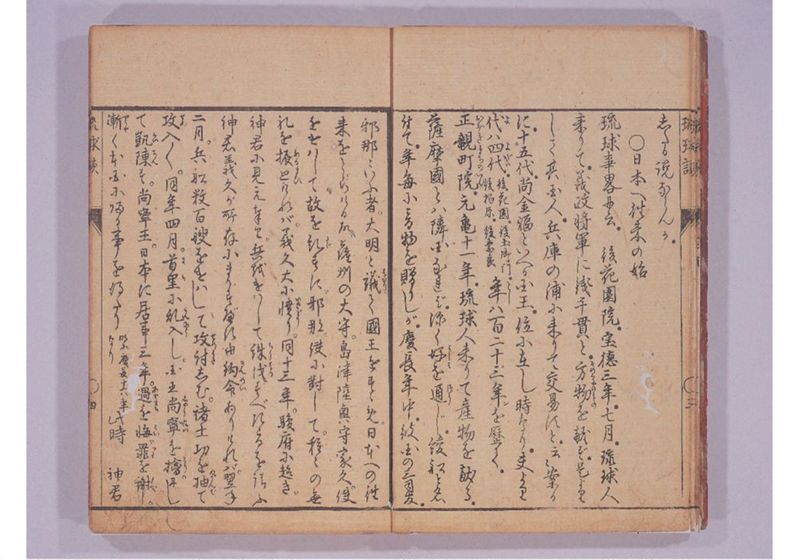
翻刻
【右丁】
したる説ならんか•
〇日本へ往来の始
琉球事略に云•後花園院•宝徳三年•七月•琉球人
来りて•義政将軍に銭千貫と•方物(そのくにのもの)を献ず•是より
して其国人•兵庫の浦に来りて交易すと•云々案る
に•十五代•尚金福といへる国王•位に在し時なり•夫より
代(よ)は四代•《割書:後花園•後土御門•|後柏原•五李良》年(とし)は百二十三年《割書:ん|》を歴て•
正親町院(おほきまちのいん)•元亀十一年•琉球人来りて産物を献る•
薩摩国とは隣国なれば•深く好(よしみ)を通じ•綾船と名
付て•年毎に音物を贈りしが•慶長年中•彼国の三司官•
【左丁】
邪那といふ者。大明と議(はかり)て国王をすゝめ。日本への往
来をとゞめける故。薩州の大守。島津陸奥守家久。使
を遣はして故を糺(たゞ)すに。邪那。使に対して。種々の無
礼を振廻(ふるまひ)ければ。義久大に憤(いきどう)り。同十三年。駿府に趣き。
神君に見え奉て。兵を遣はして誅罰(ちうはつ)すべき旨を請ふ
神君義久が所存にまかすべき由 鈎命(きんめい)ありければ。翌年
二月。兵船数百艘遣はして攻討(せめうた)しむ。諸士功を抽(ぬきんで)て
攻入〳〵。同年四月。首里(すり)に乱入(らんにう)し。国王 尚寧(しやうねい)を擒(とりこ)にし
て凱陣(かいちん)す。尚寧王。日本に居事三年。過(あやまち)を悔(くい)。罪(つみ)を謝(しや)し。
漸(やうや)く本国に帰る事を得たり《割書:時に慶長十六年|なり》此時 神君
現代語訳
【右丁】
したのであろうか。
〇日本へ往来の始
『琉球事略』に言う。後花園院、宝徳三年、七月、琉球人が来て、義政将軍に銭千貫と方物(その国の物産)を献じた。これより後、その国人が兵庫の浦に来て交易するようになったという。考えるに、十五代、尚金福という国王が王位にあった時である。それより代は四代、《後花園、後土御門、後柏原、後奈良》年は百二十三年を経て、正親町院、元亀十一年、琉球人が来て産物を献じた。薩摩国とは隣国なので、深く親しみを通じ、綾船と名付けて、毎年贈り物を送っていたが、慶長年中、彼国の三司官、
【左丁】
謝那という者が大明と謀って国王を勧め、日本への往来を止めたため、薩摩州の大守、島津陸奥守家久が使者を遣わして事情を質したところ、謝那が使者に対して種々の無礼を働いたので、義久は大いに憤り、同十三年、駿府に赴き、神君にお目通りして、兵を遣わして誅罰すべき旨を請うた。神君は義久の考えに任せるべきという勅命があったので、翌年二月、兵船数百艘を遣わして攻討させた。諸士が功を抜きんでて攻め入り、同年四月、首里に乱入し、国王尚寧を捕虜にして凱旋した。尚寧王は日本にいること三年、過ちを悔い、罪を謝し、ようやく本国に帰ることを得た《時に慶長十六年である》。この時神君は
英語訳
[Right Page]
This might be the explanation.
○ The Beginning of Travel to and from Japan
The "Ryukyu Jiryaku" states: In the third year of Hōtoku under Emperor Go-Hanazono, in the seventh month, Ryukyu people came and presented 1,000 kan of coins and local products to Shogun Yoshimasa. From this time on, people from that country came to Hyōgo Bay to trade. Upon consideration, this was during the time when the fifteenth king, Shō Kinpuku, was on the throne. From then, four generations passed—《Go-Hanazono, Go-Tsuchimikado, Go-Kashiwabara, Go-Nara》—and 123 years elapsed until Emperor Ōgimachi's eleventh year of Genki, when Ryukyu people came and presented local products. Since Satsuma Province was a neighboring domain, they maintained deep friendship, naming their ships "Aya-bune" and sending gifts every year. However, during the Keichō era, one of the three chief ministers of that country,
[Left Page]
a man named Jana, conspired with the Great Ming and persuaded the king to stop travel to and from Japan. Therefore, the lord of Satsuma Province, Shimazu Mutsu-no-kami Iehisa, sent an envoy to investigate the matter. When Jana showed various forms of disrespect to the envoy, Yoshihisa became greatly angered. In the same thirteenth year, he went to Sunpu, had an audience with the Divine Sovereign, and requested permission to send troops for punishment. The Divine Sovereign issued a command that Yoshihisa should proceed according to his judgment. The following year in February, hundreds of warships were dispatched for the attack. The warriors distinguished themselves in battle and stormed in. In April of the same year, they invaded Shuri, captured King Shō Nei, and returned in triumph. King Shō Nei remained in Japan for three years, repented his mistakes, apologized for his crimes, and finally was able to return to his homeland 《this was in the sixteenth year of Keichō》. At this time, the Divine Sovereign