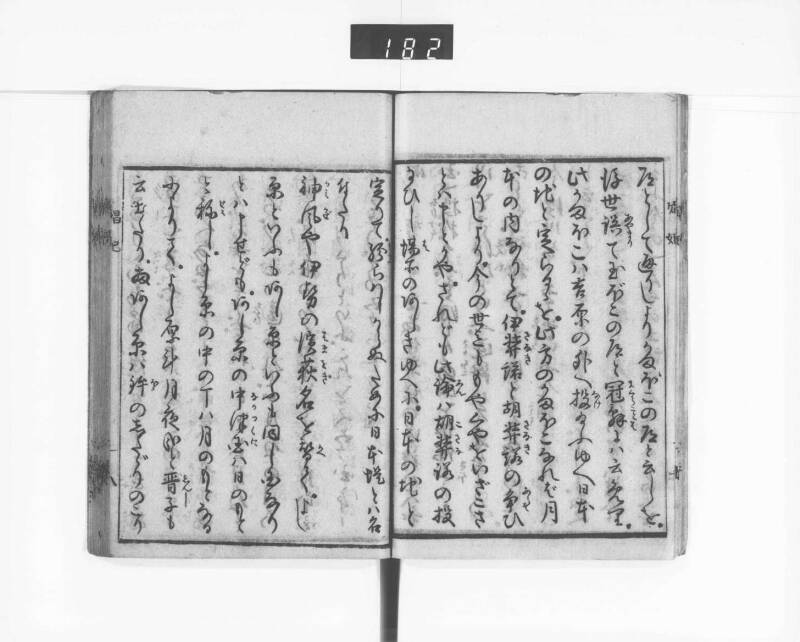
翻刻
道として通りしよりかまぼこの道と云しを。
後世 誤(あやまり)て玉ぼこの道と冠辞(まくらことは)には云めり。
此かまほこは吉原の外へ投(なけ)給ふゆへ日本
の地と定らるゝを。此方のかまほこなれば月
本の内なりとて。伊 弉諾(さなき)と胡 弉諾(さなき)の争(あらそ)ひ
ありしより。今の世迄もやくやをいざこさ
とは申とかや。されども此 論(ろん)は胡弉(こさな)諾の投
給ひし場(は)所のあしきゆへに。日本の地と
定りて。紛(まぎ)らはしからぬために日本堤とは名
付たり
神風(かみかぜ)や伊勢の浜萩(はまをぎ)名を替(かへ)て。よし
原といふもあし原といふも同し国なり
とは申せども。あし原の中津国(なかつくに)は日のもと
と称(せう)しよし原の中の丁は月のもとなる
によりて。よし原斗月夜哉と晋子(しんし)も
云出たり。扨あし原は鉾(ほこ)のしたゞりのこり
現代語訳
道として通ったことから「蒲鉾の道」と言っていたのを、後世に誤って「玉鉾の道」と枕詞には言うようになった。この蒲鉾は吉原の外へ投げられたゆえに日本の地と定まるところを、こちらの蒲鉾であるからには月本(つきのもと)の内であると言って、伊弉諾と胡弉諾(こざなき)の争いがあったことから、今の世までも「やくや」を「いざこざ」とは申すとかや。されどもこの論は、胡弉諾の投げられた場所が悪かったゆえに、日本の地と定まって、紛らわしくないようにするために「日本堤」とは名付けられた。
神風や伊勢の浜荻、名を変えて、「吉原」と言うも「葦原」と言うも同じ国ではあると申せども、葦原の中津国は「日のもと(日本)」と称し、吉原の中の丁は「月のもと(月本)」であることから、「よし原斗月夜哉」と晋子も言い出した。さて、葦原は鉾の滴りの残り
英語訳
Because people passed along it as a road, it was called "the road of kamaboko," but later generations mistakenly began to call it "the road of tamaboko" (jeweled spear) as a pillow word. This kamaboko was thrown outside Yoshiwara, and so it ought to have been designated as Japanese territory; however, since it was the kamaboko from this side (the Moon Origin realm), there arose a dispute between Izanagi and Kozanagi as to whether it lay within Tsuki-no-moto (Moon Origin). It is said that from this quarrel, even to this day, "yakuya" (trouble) came to be called "izakoza" (quarreling). Nevertheless, in this debate, because the spot where Kozanagi threw it was deemed unsuitable, it was established as Japanese territory, and in order to avoid any further confusion, it was named "Nihon Tsutsumi" (Japan Embankment).
"Divine wind, the beach reeds of Ise" — changing their names, to call it "Yoshiwara" or "Ashiwara" (reed plain) amounts to the same country. However, the "Nakatsukuni of Ashiwara" (the Central Land of Reed Plains) is called "Hi-no-moto" (origin of the sun / Japan), while the central block within Yoshiwara is "Tsuki-no-moto" (origin of the moon), and it is for this reason that Shinshi also composed the verse: "Yoshiwara — naught but moonlit nights." Now then, as for the Ashiwara, the remaining drippings of the spear...