翻刻
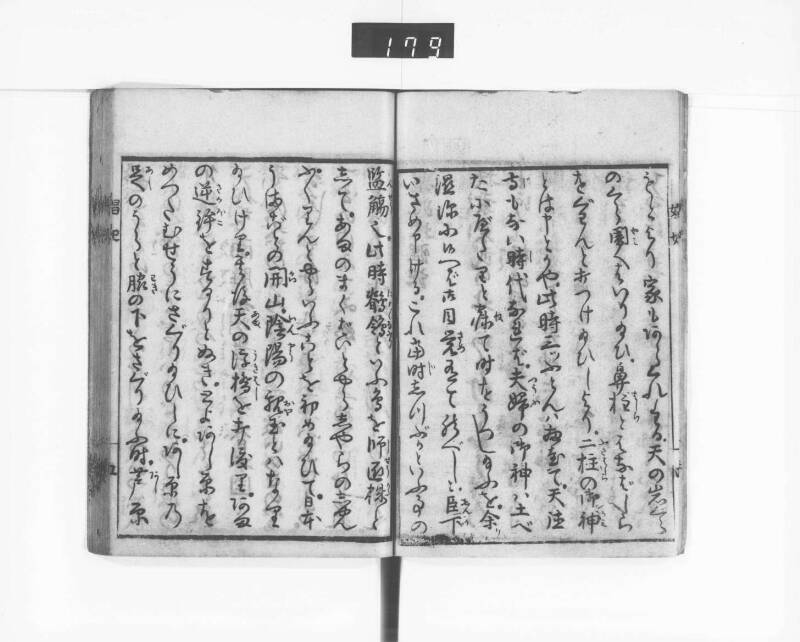
もとより家もあらくれたる。天の岩ぐら
のくら闇(やみ)へはいり給ひ。鼻 柱(はしら)とはなばしら
をぐわんと打つけ給ひしより。二柱(ふたはしら)の御 ̄ン神(かみ)
とは申とかや。此時三 ̄ツふとんは扨置て。天徳
寺(じ)もない時(し)代なれば。夫婦(ふうふ)の御神は土べ
たにべたりと寝(ね)て時をうつし給ふを。余 ̄リ
湿深に候へば御目 覚(さめ)有て然べしと。臣下(しんか)
いさめ申ける。これ当 時(じ)しつぶかといふ事の
濫觴(らんせう)也。此時 鶺鴒(はくなふり)といふ鳥を師匠株(しせうかふ)と
して。あまのまくばいとやらしやらのしやん
ぷくりんとやらいふことを初め給ひて。日本
うまごとの開(かい)山。陰陽(いんやう)の親(おや)玉とはなり
給ひけり。其後 天(あめ)の浮橋(うきはし)を打渡り。あま
の逆鉾(さかほこ)をするりとぬき。とよあし原を
めつたむせうにさぐり給ひしに。あし原の
足(あし)のうらと脇(わき)の下をさぐり給ふ時。芦(あし)原
現代語訳
もとより家もなく荒々しいところで、天の岩屋の
暗闇の中へお入りになり、鼻柱と鼻柱を
ごつんとぶつけてしまわれたことから、二柱の御神と
申すとかや。この時、三つ折り布団はさておき、天徳
寺もない時代のことなれば、夫婦の御神は土の上に
べたりと寝て、時を過ごされたのを、あまりに
湿気が深うございますれば、お目覚めなさるべしと、臣下が
諌め申し上げた。これが当時「しつぶか(湿深)」という言葉の
起こり(濫觴)である。この時、鶺鴒(せきれい)という鳥を師匠株と
して、「天の交合」とやら「しゃんぷくりん」とやら言うことを始められて、日本
うまごとの開山、陰陽の親玉とはなり
給うたのである。その後、天の浮橋を渡り、天の
逆鉾をするりと抜き、豊葦原をむやみやたらに
探り給うたところ、葦原の
足の裏と脇の下を探り給う時、葦原の
英語訳
Originally having no house whatsoever in that wild place, they entered into the darkness of the Heavenly Rock Cave, and when they bumped their nose-pillars together with a great thud, that is why they came to be called the "Two Pillars" of the gods, or so they say. At this time, setting aside the matter of a three-fold futon, since it was an age before Tentokuji temple existed, the divine couple lay flat down on the bare earth and passed their time thus. As the dampness was exceedingly deep, their retainers admonished them, saying they ought to wake themselves. This is said to be the
origin (the very first instance) of what is now called "shitsubuka" (deep dampness). At this time, taking the bird called the wagtail as their teacher and master, they began what might be called "the heavenly coupling" or "shanpukurin" and such things, becoming the founding masters of Japanese lovemaking, the supreme parents of yin and yang. After this, they crossed the Heavenly Floating Bridge, smoothly drew out the Heavenly Jeweled Spear, and probed about recklessly in the Toyoashihara (the Reed Plain). As they groped at the soles of the feet and the armpits of the Reed Plain,