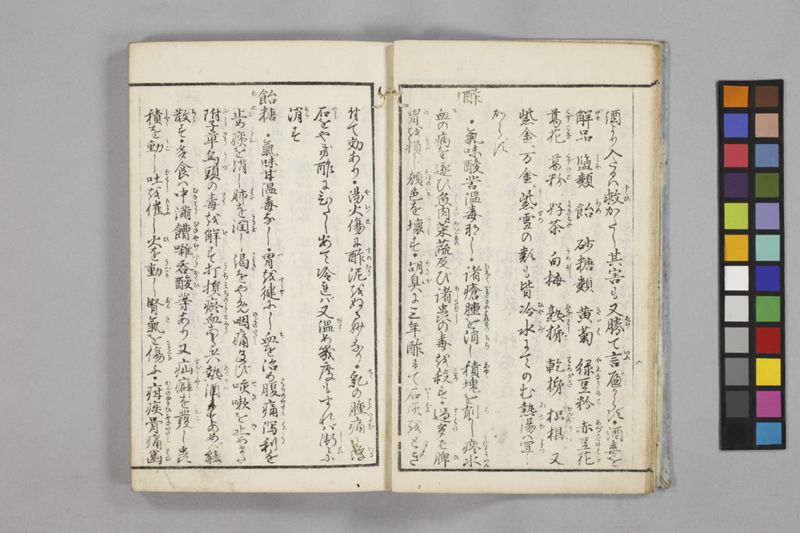
翻刻
【右丁】
酒より入たるは救(すくひ)かたし其害も又 勝(あげ)て言(いふ)べからず・酒毒を
解(げす)品 塩(しほ)類 飴(あめ) 砂糖類 黄菊(きゞく) 緑豆粉(やえなりのこ) 赤豆花(あづきのはな)
葛花(くずはな) 葛粉(くずのこ) 好茶(よきちや) 白梅(うめぼし) 熟柿(きざわし) 乾柿(ころがき) 枳椇(けんぽなし) 又
紫金、 万金、 紫雪(しせつ)の類も皆 冷水(ひやみづ)にてのむ熱湯(あつゆ)は宜(よろ)し
からず
《振り仮名:酢| |す 》・気味酸苦毒なし・諸(もろ〳〵)瘡腫(できものはれもの)を消(ちら)し積(しやく)塊を削(へら)し痰(たん)氺(りういん)
血(ち)の病を逐ひ魚肉(にくるい)菜蔬(あをもの)及び諸虫(あしきむし)の毒を殺(ころ)す・過多(すぐれ)ば脾(ひ)
胃(ゐ)を損(そん)じ顔色(かほのいろ)を壊(あしく)す・胡臭(わきが)に三年酢にて石灰(いしばい)をとき
【左丁】
付て効あり・湯火傷(やけと)に酢泥(すのおり)をぬる妙なり・乳(ちゝ)痛(いたむ)に浮(かる)
石(いし)をやき酢にひたしあて冷れば又 温(あたゝ)め幾度もすれば漸々(したい)に
消(ちら)す
《振り仮名:飴糖| |あめ 》 ・気味甘温毒なし・胃(い)を健(すぐやか)にし血(ち)を治め腹痛(はらのいたみ)瀉利(くだり)を
止(と)め痰(たん)を消し肺(はい)を潤(うるを)し渇(かわき)をやめ咽痛(のどのいたみ)及び咳嗽(せき)を止(や)めまた
附子草(ぶしさう)烏頭(うづ)の毒(とく)を解(け)す打損(うちみ)瘀血(ちのとゝこほり)ある者 熱酒(あつがん)にてのめば能
散(ちら)す・多食は中満(むねはり)𩞄(むね)囃(やけ)呑酸(ふかきおくび)等あり又 疝癖(せんしやく)【ママ】を発(おこ)し虫
積(しやく)を動(うご)#1し吐(もとし)を催(もよふ)し火(ひ)を動(うごか)し腎(じん)気(き)を傷(そこな)ふ・疳疾(かんのやまひ)骨痛(ほねいたみ)歯(はの)
現代語訳
【右丁】
酒から入った毒は救いがたく、その害もまた挙げて言い尽くせないほどである。酒毒を解する品:塩類・飴・砂糖類・黄菊・緑豆粉(やえなりの粉)・赤豆花(小豆の花)・葛花(葛の花)・葛粉(葛の粉)・上等な茶・白梅(梅干し)・熟柿(木で熟れた渋抜き柿)・乾柿(ころ柿)・枳椇(けんぽなし)、また紫金丹・万金丹・紫雪の類も皆、冷水で飲む。熱湯は宜しくない。
**酢** 気味は酸・苦で毒はない。諸々の瘡腫(できもの・腫れもの)を散らし、積塊(体内の塊)を削り、痰・流飲・血の病を逐い、魚肉・野菜類および諸々の有害な虫の毒を殺す。摂り過ぎると脾胃を損じ、顔色を悪くする。腋臭(わきが)には、三年酢に石灰を溶かして
【左丁】
塗ると効果がある。湯火傷(やけど)には酢の澱(おり)を塗るのが妙である。乳房が痛む際には、軽石を焼いて酢に浸して当て、冷えたらまた温めて、これを何度も繰り返せば、次第に(腫れが)散る。
**飴糖(あめ)** 気味は甘・温で毒はない。胃を健やかにし、血を治め、腹痛・下痢を止め、痰を消し、肺を潤し、渇きを癒やし、咽喉の痛みおよび咳を止める。また附子・草烏頭の毒を解する。打ち身で瘀血(血の滞り)がある者が熱燗で飲めば、よく散る。多食すると胸が張り、胸焼け、呑酸(胸のむかつきを伴うげっぷ)などが起こる。また疝癪を発し、虫積を動かし、嘔吐を催し、体内の火(熱)を動かし、腎気を傷つける。疳の病・骨の痛み・歯の……
英語訳
**[Right Page]**
Toxins that enter through alcohol are difficult to save oneself from, and their harms are likewise too numerous to fully enumerate. Substances that resolve alcohol toxicity: salt preparations, malt sugar (*ame*), sugar preparations, yellow chrysanthemum, mung bean powder, adzuki bean flowers, kudzu flowers, kudzu starch, fine tea, white plum (pickled plum), ripened persimmon, dried persimmon (*korogaki*), Japanese raisin tree fruit (*kenpōnashi*), and preparations such as Zijin Dan, Wanjin Dan, and Zixue — all of these should be taken with cold water. Hot water is not appropriate.
**Vinegar** Its flavor is sour and bitter, and it has no toxicity. It disperses all manner of sores and swellings, reduces internal accumulations and masses, expels diseases of phlegm, retained fluids, and blood, and kills the toxins of fish, meat, vegetables, and harmful creatures. Excessive consumption damages the spleen and stomach and deteriorates one's complexion. For body odor (underarm odor), dissolve lime in three-year-aged vinegar and
**[Left Page]**
apply it — this is effective. For scalds and burns, applying the lees (sediment) of vinegar is an excellent remedy. For breast pain, heat a pumice stone, soak it in vinegar, and apply it; when it cools, warm it again and repeat this many times — the swelling will gradually disperse.
**Malt Sugar (*Ame*)** Its flavor is sweet and warm, and it has no toxicity. It invigorates the stomach, regulates the blood, stops abdominal pain and diarrhea, dissolves phlegm, moistens the lungs, quenches thirst, and stops throat pain and coughing. It also resolves the toxicity of monkshood (*Aconitum carmichaelii*) and wild aconite (*Aconitum kusnezoffii*). For those suffering from bruising with stagnant blood (*ōketsu*), drinking it in warm sake will effectively disperse the stagnation. Excessive consumption can cause chest fullness, heartburn, and acid reflux with belching. It may also trigger hernia-like abdominal spasms (*senshaku*), stir up parasitic accumulations, induce vomiting, inflame internal heat, and damage the kidney qi. For childhood *kan* disorders, bone pain, and dental……