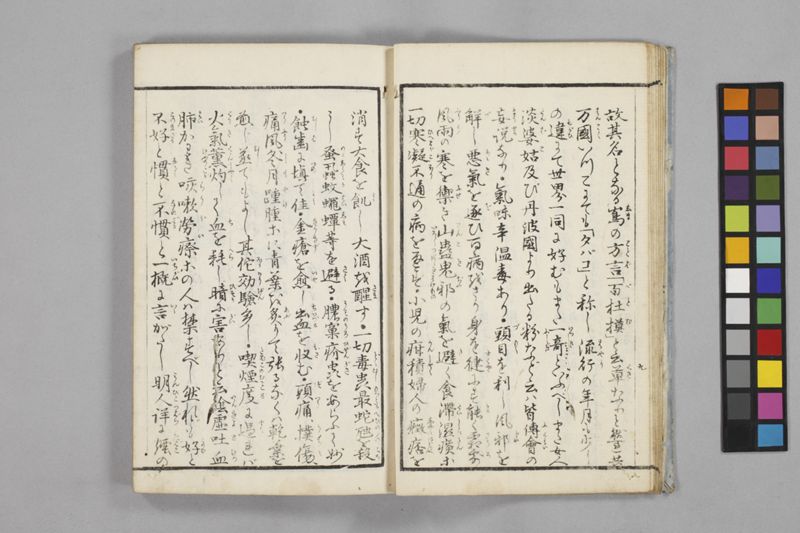
翻刻
【右丁】
故其名となる島(しま)の方言(ことば)「百(ぺ)杜(と)摸(む)」と云 草(くさ)なりと然れ共
万国(はんこく)いつこにても「タバコ」と称し流行(はやり)の年月も少し
の違(ちがひ)にて世界一同に好むもまた《振り仮名:一奇|いっき|ふしぎ 》といふべしまた女人
淡婆姑(たんばこ)及び丹波国より出たる粉など云は皆 傅会(ふくはい)の
妄説(まうせつ)なり●気味辛温毒あり●頭目(づもく)を利し風 邪(じゃ)を
解(げ)し悪気(あくき)を逐(を)ひ百病をさり身を健(すくやか)にす能(よ)く霜露(さうろ)
風雨(ふうう)の寒を禦(ふせ)き《振り仮名:山蠱鬼邪|さんこきじゃ|いろいろのあしきはけもの 》の気を避(さ)く食 滞(たい)湿痰(しつたん)等
一切 寒凝(ひへとゞこほり)不通の病をへず●小児の疳積(かんしゃく)婦人の癥(しやく)痞(つかへ)を
【左丁】
消す大食を飢(すか)し大酒を醒(さま)す●一切 毒虫(どくむし)最(もつとも)蛇虺(へびの▢い)を殺(ころ)
し蚤(のみ)蝨(しらみ)蚊(か)蝿(はい)蟫(しみ)等を避(さく)る●膿窠(うみのうろ)疥虫(ひぜんがさ)をあらふて妙
●蝕歯(むしば)に塡(つめ)て佳(よし)●金瘡(きりきず)を愈(いや)し出血(ちいづる)を收(おさ)む●頭痛(づつう)、撲傷(うちみ)、
痛風(つうふう)、冬月踵腫(しもやけ)等に青葉を炙(あぶ)りて張るなくは乾葉を
煎じ蒸(むし)てもよし其 佗(ほか)効験(かうげん)多し●喫煙(たばこのむこと)度(ど)に過(すく)れば
火気(くわき)《振り仮名:薫灼|くんしゃく|けふりこが 》して血(ち)を耗(へら)し暗(ひそか)に害(がい)ありと云 陰虚(いんきよ)吐血(とけつ)
肺(はい)かわき咳嗽労瘵(らうがい)等の人は禁すべし然れども好(このむ)と
不好(このまざる)と慣(なるゝ)と不慣(なれざる)と一概(いちがい)に言(いゝ)がたし明人(みんひと)詳(つばら)に煙(たばこ)の
現代語訳
【右丁】
それゆえその名(たばこ)となった。その島の方言で「百杜摸(ペトム)」と呼ばれる草であるとされる。しかしながら、世界中どこでも「タバコ」と称して流行した時期もわずかな違いはあるものの、世界中が同じようにこれを好むというのも、また一つの不思議なことと言うべきであろう。また、「女人淡婆姑(にょにんたんばこ)」とか、丹波国より出た粉から来たなどという説は、すべて付会(こじつけ)の妄説(でたらめな説)である。
●気味は辛・温にして毒あり。●頭と目を利し、風邪(ふうじゃ)を解し、悪気(あくき)を追い払い、百病を去り、身を健やかにする。よく霜露・風雨の寒さを防ぎ、山蠱鬼邪(さまざまな悪しき化け物)の気を避ける。食の滞り・湿痰など一切の寒凝(冷えによる滞り)・不通の病を(取り)除く。●小児の疳積(かんしゃく)・婦人の癥(しゃく)・痞(つかえ)を
【左丁】
消す。大食(食べ過ぎ)による腹の張りを空かし、大酒(飲み過ぎ)を醒ます。●一切の毒虫、とりわけ蛇・蝮(まむし)を殺し、蚤・虱・蚊・蝿・紙魚(しみ)などを避ける。●膿の溜まった瘡(かさ)・疥癬(ひぜんがさ)を洗うのに妙(すぐれている)。●虫歯に詰めるのによい。●切り傷を癒し、出血を収める。●頭痛・打ち身・痛風・冬の踵の腫れ(しもやけ)などには、青葉を炙って張る。なければ乾燥した葉を煎じて蒸してもよい。その他、効験(こうけん)は多い。●喫煙(たばこを吸うこと)が度に過ぎれば、火気が薫灼(くんしゃく、煙で焦がす)して血を減らし、ひそかに害があるという。陰虚・吐血・肺の乾き・咳嗽・労瘵(ろうがい)などの人は禁ずべきである。しかしながら、好む者と好まざる者、慣れた者と慣れざる者とで一概に言いがたい。明の人(中国人)が詳しく煙草の
英語訳
**[Right Page]**
Thus the name (tobacco) was derived from it. In the island's local dialect, it is called the plant "Petomu" (*Pétum*). Nevertheless, the fact that it is called "tabako" everywhere throughout the world, and that the world uniformly came to favor it with only slight differences in the dates of its becoming popular, is itself something that must be called a remarkable curiosity. Furthermore, explanations such as that the name derives from "nyonin-tambako" (a woman's name) or from a powder originating from Tanba Province are all baseless fabrications and nonsense.
● Its flavor is pungent and warm, and it has toxicity. ● It benefits the head and eyes, disperses wind-evil (*fūja*), expels malignant vapors (*akki*), removes the hundred ailments, and keeps the body healthy. It effectively wards off the cold of frost, dew, wind, and rain, and averts the influences of mountain demons and evil spirits (*sankoki-ja*, various malevolent supernatural beings). It eliminates all ailments arising from cold stagnation (*kangyō*) and obstruction of circulation, including food stagnation and damp-phlegm conditions. ● It disperses infantile convulsions/irritability (*kanshaku*) in children and abdominal masses (*shaku*) and obstructions (*tsukae*) in women.
**[Left Page]**
It relieves the discomfort of overeating and sobers one up after heavy drinking. ● It kills all manner of venomous creatures, most notably snakes and vipers, and repels fleas, lice, mosquitoes, flies, silverfish, and similar pests. ● It is marvelous for washing festering sores and scabies (*hizengasa*). ● It is good for packing into cavities of decayed teeth. ● It heals cuts and wounds and stanches bleeding. ● For headaches, bruises, gout, and heel swelling from chilblains in winter months, fresh green leaves are roasted and applied as a poultice; if unavailable, dried leaves may be boiled and steamed for the same purpose. There are many other efficacious uses. ● However, if one smokes to excess, the fire energy scorches and fumigates (*kunshaku*), depleting the blood and causing concealed harm. Those suffering from yin deficiency, hemoptysis (coughing up blood), dryness of the lungs, coughing, or consumption (*rōgai*) should abstain. Nevertheless, it is difficult to make blanket statements, as the effects differ between those who enjoy it and those who do not, and between those accustomed to it and those who are not. A scholar of the Ming dynasty, in discussing tobacco in detail...