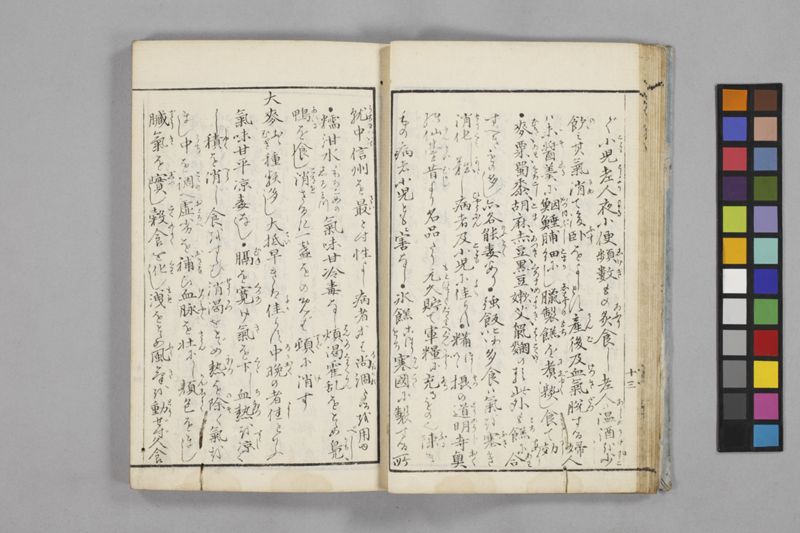
翻刻
【右丁】
ぐ小児(ことも)老人(としより)夜(よる)小便 頻数(しけき)もの炙(あふり)食し老人は温酒(あたゝめさけ)を少(すこ)し
飲(の)み其気 消(さめ)て後 臥(ふす)をよしとす産後(さんご)及 血気(けつき)脱(だつ)する婦人
は未醤羹(みそしる)に𩶾𩸫(かつほ)#1脯(ぶし)細(こまか)にし臘製餻(しはすのもち)を煑熟(にじゆく)し食て効(しるし)あり
●麦(むき)、粟(あわ)、蜀黍(もろこし)、胡麻(こま)、赤豆(あつき)、黒豆(くろまめ)、嫩艾(よもき)、鼠麹(はゝこくさ)、の類此外も餻(もち)に合(あわ)
すべきもの多し亦各 能毒(のふとく)あり●強飯《割書:こわ|いゝ》多食は気を塞(ふさ)き
消化(せうくわ)し難(かた)し病者(ひやうにん)及 小児(ことも)に佳(よか)らす●糒《割書:ほし|いい》摂(せつ)の道明寺(とうめうじ)奥(おく)
の仙台(せんたい)昔(むかし)より名品たり元(もと)久(ひさしく)貯(たくわへ)て軍粮(ぐんりやう)に充(あつ)るもの也 陳(ふる)き
もの病者小児ともに害なし●氷餻《割書:こほり|もち》寒国(かんこく)に製する所
【左丁】
就中(うちについて)信州を最(さい)とす性よし病者等は尚(なほ)涸(かれ)たるを用ゆべし
●糯泔水《割書:もちこめの|しろみつ》気味甘冷毒なし煩渇(はんかつ)霍乱(くわくらん)をとゝめ鳧(かも)、
鴨(あひる)を食し消(こなれ)さるに一盞をのめば頓(すぐ)に消(け)す
大麦《割書:おゝ|むぎ》種類多し大 抵(てい)早きは佳(よか)らす中(なか)晩(おく)の者 佳(よし)といふ
気味甘平凉毒なし●膈(むね)を寛(くつろ)け気(き)を下(くだ)し血熱(ちねつ)を凉(すゝし)く
し積(しやく)を消(へら)し食をすゝむ消渇(せうかつ)をとゞめ熱(ねつ)を除(のそ)く気を
まし中(うち)を調(とゝの)へ虚劣(おとろへ)を補(おきな)ひ血脈(けつみやく)を壮(さかん)にし顔色(かんしよく)をまし
臓(ざう)気(き)を実(じつ)し穀食(こくしよく)を化(くわ)し洩(もれ)をとゝめ風気(ふうき)を動(とう)ぜず久食
現代語訳
【右丁】
(前ページより続き)…気を塞ぐ。小児・老人で夜間に頻尿のある者は、(餅を)炙って食べるとよく、老人はさらに温めた酒を少し飲み、その気が落ち着いてから横になるのがよいとされる。産後および血気(血と気)が脱した婦人には、味噌汁に鰹節を細かくして、師走(十二月)に製した餅を煮て食べると効果がある。●麦・粟・蜀黍(もろこし)・胡麻・小豆・黒豆・嫩艾(よもぎ)・鼠麹草(ははこぐさ)の類、このほかにも餅に混ぜ合わせるべきものは多い。これらにはそれぞれ固有の効能と毒性がある。●強飯(こわめし):多食すると気を塞ぎ、消化しにくい。病人および小児には良くない。●糒(ほしいい):摂(州)の道明寺、奥(州)の仙台のものは古来より名品である。もとより長く貯えて軍糧に充てるものである。古いものは病人・小児ともに害がない。●氷餅(こおりもち):寒い国(寒冷地)で製するところであるが、
【左丁】
とりわけ信州(長野)のものが最上とされる。性質がよく、病人等にはさらに(水分が)乾いたものを用いるのがよい。●糯米のとぎ汁:気味は甘冷で毒はない。煩渇(胸のもやもやと口の渇き)・霍乱(急性の吐き下し)を止め、鴨(かも)や家鴨(あひる)を食べて消化しない時に一杯飲めば、たちどころに消化する。
大麦(おおむぎ):種類が多い。おおむね早熟のものは良くなく、中晩(中手・晩手)のものが良いとされている。気味は甘平涼で毒はない。●胸を楽にし、気を下し、血熱(血の熱)を涼しくし、積(消化不良の滞り)を消し、食欲を進め、消渇(糖尿病様の病)を止め、熱を除く。気を増し、体内を整え、虚弱な衰えを補い、血脈を盛んにし、顔色をよくし、臓気(内臓の機能)を充実させ、穀食(穀物の消化)を助け、泄(下痢・漏れ)を止め、風気(風邪・中風)を動ぜず、長く食べ続けると……(以下次ページへ続く)
英語訳
**[Right folio]**
*(Continuing from the previous page)* …obstructs the qi. For children and elderly people with frequent nighttime urination, it is good to eat mochi that has been toasted (*炙*, grilled/broiled). It is further recommended that elderly persons drink a little warmed sake and, after the qi has settled, lie down to rest. For women after childbirth and those who have lost blood and vital energy (*kekki*), boiling finely shredded dried bonito (*katsuobushi*) and year-end mochi (*shiwasu no mochi*, i.e., mochi made in the twelfth month) in miso soup and eating it is said to be effective. ● Wheat, millet, sorghum (*morokoshi*), sesame, adzuki beans, black soybeans, young mugwort (*yomogi*), and cudweed (*hahakogusa*, *Gnaphalium affine*)—among these and many other ingredients that can be mixed into mochi, each possesses its own specific efficacies and potential toxicities. ● **Kowa-meshi** (hard steamed rice): Excessive consumption obstructs the qi and is difficult to digest. It is not good for sick persons or young children. ● **Hoshi-ii** (dried cooked rice): The variety from Dōmyōji in Settsu Province and that from Sendai in Mutsu Province have been renowned since ancient times. Originally stored for long periods as military provisions (*gunryō*), the older variety causes no harm to either sick persons or young children. ● **Kōri-mochi** (frozen/dried mochi): This is produced in cold regions, but
**[Left folio]**
above all, that from Shinshū (present-day Nagano Prefecture) is considered the finest. Its nature is good, and for sick persons and the like, it is better to use the thoroughly dried variety. ● **Glutinous rice washing water** (*mochigome no shiromizu*): Its flavor and nature are sweet and cool, with no toxicity. It stops vexation-thirst (*hankatsu*) and cholera-like illness (*kakuran*, acute gastroenteritis with vomiting and diarrhea). When one has eaten wild duck (*kamo*) or domestic duck (*ahiru*) and it fails to digest, drinking one cup of this water will immediately dissolve the obstruction.
**Barley** (*ōmugi*): There are many varieties. Generally speaking, early-ripening varieties are not of high quality; those of the middle or late harvest are said to be the best. Its flavor and nature are sweet, balanced (*hei*), and cool, with no toxicity. ● It relaxes the chest, descends the qi, cools blood heat (*chinetsu*), disperses digestive stagnation (*shaku*), promotes appetite, stops wasting-thirst disease (*shōkatsu*, akin to diabetes), and eliminates heat. It increases vital energy, regulates the interior of the body, supplements deficiency and debility, invigorates the blood vessels, improves complexion, fortifies the visceral qi (*zōki*), aids in the digestion of grains, stops leakage and diarrhea, does not stir up wind-qi (*fūki*), and with prolonged consumption… *(continues on the next page)*