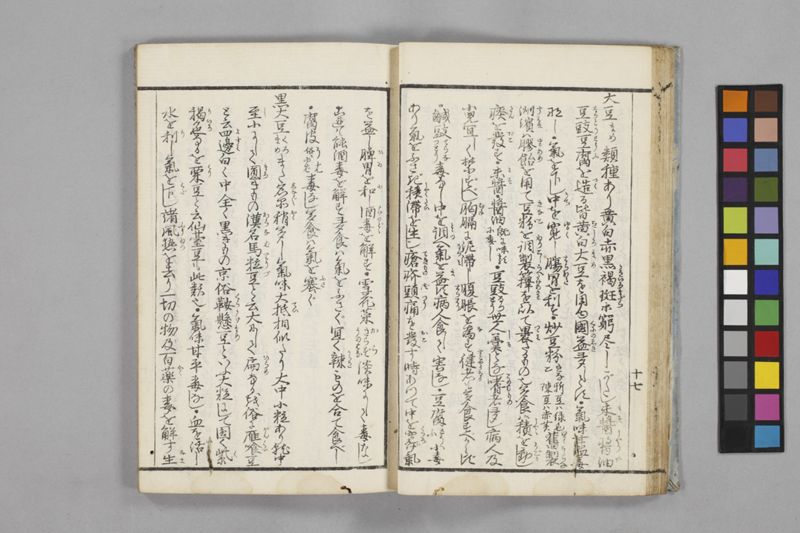
翻刻
【右丁】
大豆《割書:まめ》類種あり黄白赤黒 褐(かきいろ)斑(まだら)等窮尽しがたし未醤(みそ)醤油(しやうゆ)
豆豉(なっとう)豆腐(とうふ)を造(つく)る皆 黄(き)白(しろ)大豆(まめ)を用ゆ国益(くにのゑき)多しとす●気味甘温毒
なし●気を下し中(うち)を寛(ゆるく)し腸胃(はらわた)を利す●炒豆粉《割書:きな|こ》《割書:新豆は緑色|陳豆は赤黄》旧製(むかしこしらへの)
州浜(すはま)は膠飴(ゆるあめ)を用て豆粉(きなこ)を調製(ねりこしらへ)籜(たけのかわ)を以て裹(つゝみ)たるもの也多食は積(しやく)を動(うごか)し
痰(たん)を発(おこ)す●未醤(みそ)・醤油《割書:既に味類|に委し》・豆豉《割書:なつ|とう》世人 羹(しる)となし嗜者(このむもの)多し病人及
小児宜しく禁ずべし胸膈(むね)に《振り仮名:泥滞| |なづみ 》し《振り仮名:腹張| |はらはり 》を為(な)す健者(すこやかなる)も多食すべからず
●鹹豉《割書:てらな|つとう》毒なし中を調(とゝの)へ気を益(ま)す病人食して害なし●豆腐《割書:とう|ふ》小毒
あり気をふさぎ積(しやく)滞(たい)を生じ瘡疥(てきもの)頭痛(づつう)を発(おこ)す時あつて中を寛(くつろ)げ気
【左丁】
を益し脾胃(ひゐ)を和(わ)し酒毒(さけのどく)を解す●雪花菜《割書:から|きらず|うのはな》淡味にして毒なし
これも能酒毒を解す多食は気をふさぐ宜く辣(からき)ものを合て食べし
●腐皮《割書:うは|俗 ̄ニゆば》毒なし多食は気を塞(ふさ)ぐ
黒大豆《割書:くろ|まめ》また名品(しな〴〵)稍(やゝ)多し気味大 抵(てい)相似たり大中小粒あり就中
至(し)小にして円(まろ)きもの漢名(からな)馬粒豆(ばりうづ)と云大にして扁(ひらめ)なるを俗に雁喰(がんくい)豆
と云 四辺(よすみ)白く中全く黒きもの京俗 鞍懸豆(くらかけまめ)といふ大粒にして円く紫(く)
褐色(りいろ)なるを栗(くり)豆と云仙台豆も此類也●気味甘平毒なし●血を活(いか)し
水を利(り)し気を下(くだ)し諸 風熱(ふうねつ)を去り一切の物及百 薬(やく)の毒を解す生(なま)
現代語訳
【右丁】
大豆(まめ):種類があり、黄・白・赤・黒・褐色・斑(まだら)など、数え尽くせないほど多い。味噌・醤油・納豆・豆腐を作るには、いずれも黄大豆または白大豆を用いる。国産品として益するところ多しとされる。●気味は甘・温で毒はない。●気を下らせ、腹中をゆるめ、腸胃の通りを良くする。
●炒り豆粉(きな粉)〔新豆は緑色、古豆は赤黄色〕:昔ながらの製法による「州浜(すはま)」は、水飴(柔らかい飴)を用いてきな粉を練り合わせ、竹の皮で包んだものである。多食すると積(つかえ)を動かし、痰を生じさせる。
●味噌・醤油〔すでに「味の類」の項に詳しい〕・納豆(豆豉):世間の人々がこれを汁(スープ)にして好む者が多いが、病人および小児には飲ませることを慎むべきである。胸や横隔膜のあたりに滞り(澱み)が生じ、腹が張る原因となる。健康な者も多食してはならない。
●鹹豉(てら納豆):毒はなく、腹中を整え、気を益す。病人が食べても害はない。
●豆腐(とうふ):小毒がある。気をふさぎ、積滞を生じさせ、できもの・頭痛を起こすことがある。一方で腹中をくつろげ、気を
【左丁】
益し、脾胃を和らげ、酒毒を解す。
●雪花菜(からきらず・卯の花):淡泊な味で毒はない。これもよく酒毒を解す。多食すると気をふさぐ。辛いものと合わせて食べるのがよい。
●腐皮(うわ皮、俗にゆば):毒はない。多食すると気をふさぐ。
黒大豆(くろまめ):また品種がやや多い。気味はおおむね互いに似ている。大・中・小粒があり、とりわけ非常に小さくて丸いものを漢名で「馬粒豆(ばりゅうず)」という。大きくて扁平なものを俗に「雁喰(がんくい)豆」という。四辺が白く中が全体に黒いものを京都では俗に「鞍懸豆(くらかけまめ)」という。大粒で丸く、紫褐色のものを「栗豆(くりまめ)」という。仙台豆もこの類に属する。●気味は甘・平で毒はない。●血を活かし(血行を促し)、水を利し、気を下らせ、諸々の風熱を去り、一切の食物および百薬の毒を解す。生の……
英語訳
**[Right folio]**
**Soybeans** (*mame* / *daizu*): There are many varieties — yellow, white, red, black, brown, and mottled — too numerous to fully enumerate. For making miso, soy sauce (*shōyu*), nattō, and tofu, yellow or white soybeans are used in all cases. They are considered highly beneficial as domestic produce. ● Their flavor and nature are sweet and warm, with no toxicity. ● They descend the qi, loosen the interior of the abdomen, and promote the flow through the intestines and stomach.
● **Roasted soybean flour** (*kinako*) [new beans are green in color; old beans are reddish-yellow]: The *suhama* made by the old traditional method is prepared by kneading kinako with soft *mizuame* (starch syrup), then wrapping it in bamboo sheath. Eating too much stirs up accumulation (*shaku*) and produces phlegm.
● **Miso, soy sauce** [already described in detail under the "Flavoring" section], and **nattō** (*tōshi*): Many people enjoy making these into soup, but they should be carefully avoided by the sick and by young children. They cause stagnation and blockage in the chest and diaphragm area and can lead to abdominal bloating. Even those in good health should not eat too much.
● **Kamba-nattō** (*teranattō* / salted fermented soybeans, *kanshi*): Non-toxic. It regulates the interior of the abdomen and augments the qi. It is harmless even for sick people to eat.
● **Tofu** (*tōfu*): Has slight toxicity. It obstructs the qi, causes accumulation and stagnation, and can sometimes trigger sores and headaches. On the other hand, it can also relax the interior, augment the qi,
**[Left folio]**
harmonize the spleen and stomach, and resolve alcohol toxicity.
● **Okara** (*karakira zu* / *unohana*, snow-white soybean refuse): Bland in flavor and non-toxic. It also effectively resolves alcohol toxicity. Eating too much obstructs the qi. It is best eaten together with something spicy/pungent.
● **Yuba** (tofu skin / *fuhi*): Non-toxic. Eating too much obstructs the qi.
---
**Black soybeans** (*kuromame*): There are also somewhat many varieties. Their flavor and nature are broadly similar to one another. There are large, medium, and small-grained types. Among them, the extremely small and round variety is called *mariūzu* ("horse-grain bean") in Chinese. The large and flat variety is commonly called *gankui-mame* ("wild-goose-eating bean"). The type with white edges and an entirely black center is called *kurakake-mame* ("saddle-draped bean") in Kyoto vernacular. The large-grained, round, and purplish-brown variety is called *kuri-mame* ("chestnut bean"). The *Sendai-mame* (Sendai bean) also belongs to this category. ● Their flavor and nature are sweet and neutral (*hei*), with no toxicity. ● They invigorate the blood (promoting circulation), promote urination, descend the qi, dispel various wind-heat conditions, and resolve the toxicity of all manner of foods and medicines. When eaten raw…