翻刻
【右丁】
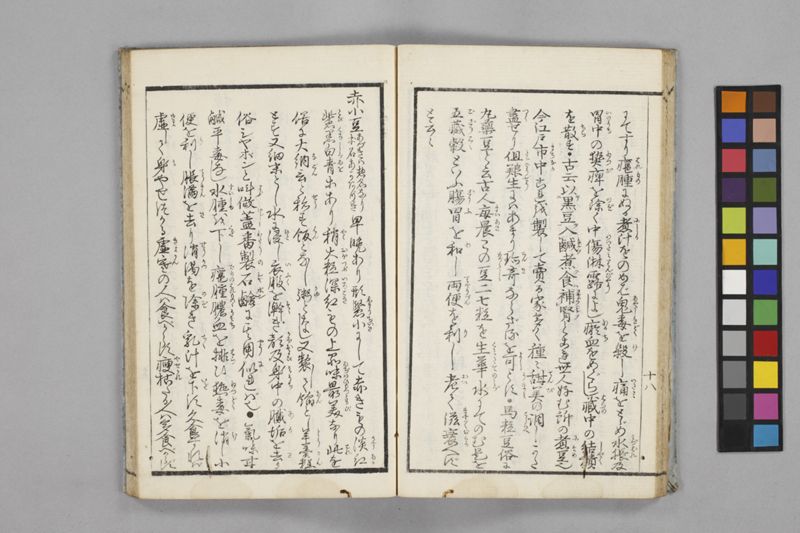
にてすり癰腫(はれもの)にぬる煮汁(にしる)をのめば鬼毒(あやしきどく)を殺(け)し痛(いたみ)をとゞめ水脹(みづばれ)及
胃中(いのうち)の熱痺(ねつび)を除(のぞ)く中 傷(のいたみ)淋露(りんびやう)によし瘀血(わるち)をめぐらし臓(はらの)中の結積(しやく)
を散(ちら)す●古云以 ̄テ_二黒豆 ̄ヲ_一入 ̄レ_レ鹹(シホケ) ̄ヲ煮 ̄テ食 ̄ハ補(ヲキナフ)_レ腎(ジン) ̄ヲとこれ世人好む所の煮豆(にまめ)也
今江戸 市中(まちなか)これを製して売る家多く種々《振り仮名:甜美|てんび|うまみ 》の《振り仮名:調| |こしらへ 》しかた
尽(つく)せり但(たゞ)養生(やうぜう)にはあまり《振り仮名:珍奇|ちんき|めづらし 》ならざるを可(よし)とす●馬粒豆俗に
丸薬豆と云古人 毎晨(まいあさ)この豆二七粒を生華水(くみたてのみづ)にてのむ是を
五蔵穀(ござうこく)といふ腸胃(ざうふ)を和(わ)し両便(りやうべん)を利(り)し老(おい)て滋(ます〳〵)衰(おとろ)へず
と云々
【左丁】
赤小豆《割書:あづきは総名なり|本名あかあづき》早晩あり形 緊(しまり)小(ちいさ)にして赤きもの淡紅(うすあか)
鴜(とび)黒(くろ)白(しろ)青(あを)等あり稍(やゝ)大粒(おほつぶ)深紅(いろこき)もの上品 味(あぢはひ)最(もつとも)美(び)なり此(これ)を
俗に大 納言(なごん)と称(せう)す飯(はん)となし粥(かゆ)となし又製して餡(あん)とし羊羹糕(ようかん)
とす又細末とし水に浸(ひた)し衣服(いふく)を澣(そゝ)ぎ顔(かほ)及(および)身中(みうち)の膩垢(あか)を去(さ)り
俗シヤボンと叫作(よぶ)#1蓋(けだし)番製(わたりの)石鹸(シヤボン)に其 用(やう)似(に)れば也●気味甘
鹹平毒なし水腫(すいしゆ)を下(くだ)し癰腫(でものはれものゝ)膿血(うみち)を排(はら)ひ熱毒(ねつどく)を消(け)し小
便を利(り)し脹満(てうまん)を去(さ)り消渇(せうかつ)を除(のぞ)き乳汁(ちゝ)を下(いだ)す久食すれば
虚(きよ)して身(み)やせつかる虚寒(きよかん)の人は食べからす痩(やせ)枯(かれ)たる人は多食べからず
現代語訳
【右丁】
(前ページより続き、黒大豆の項)
生のままですり潰して腫れ物に塗る。煮汁を飲めば、毒気(怪しき毒)を消し、痛みを止め、水腫(むくみ)および胃中の熱による痺れを除く。打ち身の痛みや淋病によく効き、瘀血(悪い血)を巡らせ、腹中の積(しこり・つかえ)を散らす。
●古書に「黒豆に塩気を入れて煮て食べれば腎を補う」とある。これは世人が好む「煮豆(にまめ)」のことである。今の江戸の町中では、これを作って売る店が多く、様々なおいしい味付けの工夫が尽くされている。ただし、養生のためには、あまり珍しく凝った味付けでないものの方がよい。
●馬粒豆(俗に「丸薬豆」とも言う):古人はこの豆を毎朝二七粒(十四粒)、汲みたての水で飲んだ。これを「五臓穀(ごぞうこく)」という。腸胃(臓腑)を和らげ、大小便の通りをよくし、老いてもますます衰えないと言われている。
【左丁】
赤小豆(あずき):「あずき」は総称であり、本来の名を「赤あずき」という。早生・晩生の別があり、形が締まって小さく赤いものをはじめ、淡紅・鳶色・黒・白・青などの種類がある。やや大粒で深紅色のものが上等品で、味が最も良い。これを俗に「大納言(だいなごん)」と称する。飯(赤飯)にしたり、粥にしたり、また加工して餡にし、羊羹や糕(かのこ・練り菓子の類)にする。また細かく粉末にして水に浸し、衣服を洗ったり、顔および体の垢を落としたりするのに用い、俗に「シャボン」と呼ぶ。これは西洋渡来の石鹸(シャボン)にその用途が似ているからである。
●気味は甘・鹹(塩辛い)・平で毒はない。水腫(むくみ)を下らせ、腫れ物・できものの膿血を排出し、熱毒を消し、小便の通りをよくし、腹の張りを去り、消渇(糖尿病様の症状)を除き、乳汁を出やすくする。長く食べ続けると虚して身体がやせ衰える。虚寒(体が虚弱で冷え性)の人は食べてはならない。痩せて枯れた(やつれた)人も多食してはならない。
英語訳
**[Right folio]**
*(Continued from the previous page, under the entry for black soybeans)*
When ground raw, it can be applied to swellings and boils. Drinking the cooking liquid dispels strange/mysterious toxins, relieves pain, and removes water-swelling (edema) as well as heat-induced numbness in the stomach. It is effective for bruise pain and urinary disorders (*rinbyō* / strangury), promotes the circulation of stagnant blood (*oketsu*), and disperses accumulations and stagnation in the abdomen.
● An ancient text states: "If black soybeans are cooked with salt and eaten, they will nourish the kidneys." This is precisely what is commonly known as *nimame* (simmered beans), beloved by people everywhere. In today's streets of Edo, there are many shops that prepare and sell these, and every conceivable variation of delicious seasoning has been devised. However, for the purposes of nurturing one's health, it is better not to have them prepared in an overly elaborate or unusual way.
● **Horse-grain beans** (*mariūzu*; commonly called *丸薬豆 maruyakumame*, "pill beans"): People of old swallowed fourteen (two times seven) of these beans every morning with freshly drawn water. This practice was called *gozōkoku* ("the grain of the five viscera"). It is said to harmonize the intestines and stomach (viscera), promote both urination and defecation, and prevent physical decline even into old age.
---
**[Left folio]**
**Adzuki beans** (*azuki*): "*Azuki*" is a general name; the original name is "*aka-azuki*" (red adzuki). There are early-ripening and late-ripening varieties. The beans that are firm, small, and red are the basic type, and there are also light-red, reddish-brown (kite-colored), black, white, and green varieties. The somewhat larger, deep-crimson beans are the finest quality, with the best flavor. These are commonly called "*Dainagon*." They are cooked into rice (red rice), made into porridge, processed into sweet bean paste (*an*), and used to make *yōkan* (jellied bean paste) and *kō* (confections). They can also be ground into fine powder, soaked in water, and used to wash clothing and to remove grime from the face and body, and are commonly referred to as "*shabon*" (soap). This is because their use resembles that of the Western-imported soap (*shabon*).
● Their flavor and nature are sweet, salty (*kan*), and neutral (*hei*), with no toxicity. They reduce water-swelling (edema), drain the pus and blood from boils and swellings, dispel heat toxin, promote urination, relieve abdominal distension, alleviate *shōkatsu* (excessive thirst and urination, resembling diabetes), and promote the secretion of breast milk. Eating them over a long period will cause depletion and physical emaciation. Those with a deficiency-cold (*kyokan*) constitution should not eat them. Those who are already thin and emaciated should not eat them in large quantities.