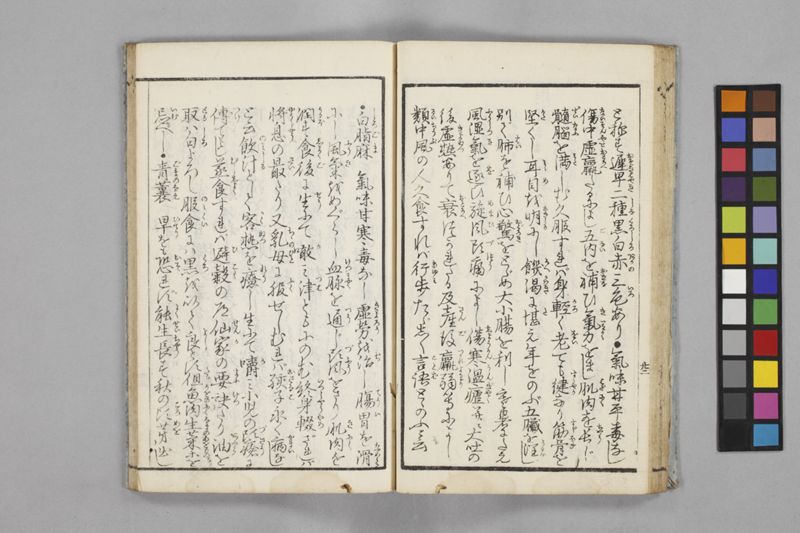
翻刻
【右丁】
と称す遅早(おそきはやき)二 種(しな)黒(くろ)白(しろ)赤(あか)の三 色(いろ)あり●気味甘平毒なし
傷中(ないそん)虚羸(やせおとろへ)たるによし五内(ごない)を補(おきな)ひ気力(きりよく)をまし肌肉(はだにく)を長(ちやう)じ
髄脳(ずいなふ)を満(みた)しむ久服すれば身 軽(かろ)く老(をい)ても健(すくやか)なり筋骨(すじほね)を
堅(かた)くし耳(みゝ)目(め)を明(あきらか)にし饑渇(うへかはき)に堪(た)え年をのぶ五臓を潤(うるほ)し
別て肺(はい)を補ひ心 驚(おどろき)をとゞめ大小腸を利し寒暑にたえ
風湿(ふうしつ)気(き)を逐(を)ひ旋風(めまひ)頭痛(づつう)によし傷寒(しようかん)温瘧(うんぎやく)《割書:幷 ̄ニ》大吐の
のち 虚熱(きよねつ)ありて衰(おとろへ)つかれたる及 産後(さんご)羸弱(つかれよわり)等によし
類中風(るいちうぶ)の人久食すれば行歩(あゆみ)たゞしく言語(ことば)とゝのふと云
【左丁】
●白脂麻(しろごま) 気味甘寒毒なし虚労(きよろう)を治(ぢ)し腸胃(てうい)を滑(なめらか)
にし風気(ふうき)をめぐらし血脈(けつみやく)を通(つう)じ頭風(づふう)をさり肌肉(きにく)を
潤(うるほ)す食後(しよくご)に生(せう)にて噉(か)み津(つは)ともにのむ終身(いつしやう)輟(やめ)ざれば
将息(やうじやう)の最(さい)たり又 乳母(ちゝのひと)に服(ふく)せしむれば孩子(おさなこ)永く病(やまい)なし
と云 飲汁(のみしる)として客熱(かくねつ)を療(れう)し生にて嚼(か)み小児の頭瘡(づさう)に
傅(つけ)てよし蒸食(むししよく)すれば避穀(ひこく)の道 仙家(せんか)の要訣(よふけつ)たり油(あふら)を
取(とる)は白(しろ)よろし服食(のみくい)には黒(くろ)を以て良(よし)とす但(たゞ)魚肉(うをのにく)生菜(なまのあをもの)等を
忌(いむ)べし●青(ごまの)𧅺(なえ) 旱(ひてり)をも恐(おそ)れず能(よく)生長(せいちやう)す秋の頃(ころ)芽(めを)出し
現代語訳
【右丁】
(前ページからの続き:胡麻について)
と称される。早生・晩生の二種があり、黒・白・赤の三色がある。
●気味は甘・平にして毒なし。内臓を傷めて虚弱・痩せ衰えた者によい。五内(五臓)を補い、気力を増し、肌肉(皮膚・筋肉)を育て、髄と脳を満たす。長く服用すれば身が軽くなり、老いても健やかでいられる。筋骨を堅固にし、耳目を明らかにし、飢えや渇きに耐え、長寿をもたらす。五臓を潤し、とりわけ肺を補い、動悸・驚きを鎮め、大腸・小腸の働きを助け、寒暑に耐える体をつくる。風湿の気を追い払い、めまい・頭痛によい。傷寒(急性熱性疾患)・温瘧(熱性のマラリア様疾患)ならびに大吐の後に虚熱があって衰え疲れた者、および産後の疲弱などによい。類中風(中風に似た症状)の人が長く食べ続ければ、歩みが正しくなり、言葉が整うという。
---
【左丁】
●白脂麻(白ごま) 気味は甘・寒にして毒なし。虚労(慢性の消耗性疾患)を治し、腸胃を滑らかにし、風気(風邪の気)を巡らせ、血脈を通じさせ、頭風(頭部の風邪の気による疾患)を去り、肌肉を潤す。食後に生のままよく噛んで、唾液とともに飲み込むことを一生涯やめなければ、養生の最たる方法となる。また乳母に服用させれば、乳を飲む幼い子は永く病気にならないという。汁を飲み物として客熱(外から来た熱、一時的な発熱)を療し、生のまま噛んで小児の頭瘡(頭部の皮膚病・できもの)に塗り付けるとよい。蒸して食べれば穀物を断つ(避穀)ことができ、仙家(道家・仙道の修行者)の要訣(奥義)となる。油を採るには白ごまがよく、服食(薬として飲み食いすること)には黒ごまをもって良しとする。ただし、魚肉・生の青物などとの食べ合わせは避けるべきである。
●胡麻の苗(なえ) 日照り(旱魃)をも恐れず、よく生長する。秋の頃に芽を出し、(以下次ページに続く)
英語訳
**[Right Page]**
*(Continuing from the previous page: Sesame — Goma / 胡麻)*
...and it is so called (*Koshō* / 巨勝, "the great victor"). There are two varieties — early-ripening and late-ripening — and three colors: black, white, and red.
● Its flavor and nature are sweet and neutral (*hei*), with no toxicity. It is beneficial for those who have suffered internal damage (*shōchū* / 傷中) and become emaciated and weakened (*kyorei* / 虚羸). It tonifies the five viscera (*gonai* / 五内), increases physical strength and vitality, promotes the growth of skin and flesh, and fills the marrow and brain. Long-term consumption makes the body light; even in old age, one remains hale and healthy. It hardens the sinews and bones, sharpens the senses of hearing and sight, enables endurance of hunger and thirst, and extends the years of life. It moistens the five viscera and, particularly, tonifies the lungs; it calms palpitations and fright, promotes the function of the large and small intestines, and builds resistance to both cold and heat. It drives away wind-dampness (*fūshitsu* / 風湿), and is good for dizziness (*memai* / 旋風) and headaches. It is beneficial in cases of *shōkan* (傷寒, acute febrile illness), warm malaria (*ungyaku* / 温瘧), as well as post-severe-vomiting weakness with lingering heat (*kyonetsu* / 虚熱), and general debility and exhaustion, including postpartum weakness. It is said that those with conditions resembling wind-stroke (*rui-chūfū* / 類中風) who consume it over a long period will recover steadiness in their gait and clarity in their speech.
---
**[Left Page]**
● **White Sesame (*Shiro-goma* / 白脂麻)** — Its flavor and nature are sweet and cold (*kan* / 寒), with no toxicity. It treats chronic consumptive conditions (*kyorō* / 虚労), smooths the functioning of the intestines and stomach, circulates wind-*qi* (*fūki* / 風気), opens and passes the blood vessels, dispels head-wind ailments (*zufū* / 頭風), and moistens the skin and flesh. If, after each meal, one chews the raw seeds and swallows them together with saliva, and continues this practice without interruption throughout one's entire life, this constitutes the highest method of health cultivation (*yōjō* / 養生). Furthermore, if a nursing mother takes it, the infant she nurses will remain free from illness for a long time, it is said. Taking the juice as a beverage treats externally-contracted heat (*kakuetsu* / 客熱); chewing it raw and applying it to sores on a child's head (*zuso* / 頭瘡) is also beneficial. When steamed and eaten, it enables one to abstain from grains (*hikoku* / 避穀) — a key method (*yōketsu* / 要訣) of the practitioners of the immortal arts (*senka* / 仙家). For extracting oil, white sesame is preferable; for consuming as medicine (*fukushoku* / 服食), black sesame is considered superior. However, one should avoid combining it with fish, meat, and raw greens (*namanonaoamono*).
● **Sesame Sprouts (*Goma no nae* / 青𧅺)** — They are not afraid of drought (*hideri* / 旱) and grow vigorously. Around autumn, sprouts emerge... *(continues on the next page)*