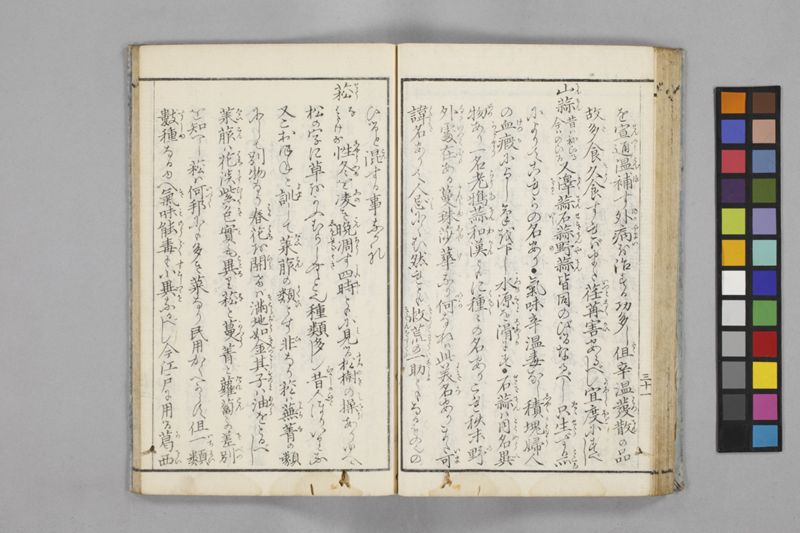
翻刻
【右丁】
を宣通(せんつう)温補(うんほ)す外(ほか)病(やまい)を治する功多し但(たゝ)辛温 発散(はつさん)の品
故 多(た)食 久(きう)食すればまた荏苒(いつとなく)害(かい)あるべし宜(よろしく)度(ほど)にすべし
山蒜(さんさん)《割書:昔はねひる|今はのひる》又 《振り仮名:沢 蒜|たくさん|さわ 》《振り仮名:石蒜|せきさん|いし 》《振り仮名:野蒜|やさん|の 》皆同のびるなるべし只(たゝ)生(せう)ずる所(ところ)
によりてこれらの名あり●気味辛温毒なし積(しやく)塊(かたまり)婦人
の《振り仮名:血瘕|けつか|かたまり 》によし気を下し水源(みつのもと)を滑(なめらか)にす●石蒜(せきさん)は同名異(とうめうい)
物(ぶつ)あり一名 老鴉蒜(らうあさん)和漢(わかん)ともに種々(くさ〳〵)の名ありこれ秋末 野(の)
外(なか)【ママ】処在(いつくにも)ある蔓珠莎華(まんじゆしやけ)なり何(いか)なれは此 美名(よきな)ありまた可(いま)
諱(くしき)名ありて人 忌(いみ)にくむ然れとも《振り仮名:救荒|きうくわう|きゝんをすくふ 》の一助(いちしよ)ともなるもの也の
【左丁】
ひると混(こん)する事なかれ
菘(せう)《割書:な|はたけな》性(しやう)冬(ふゆ)を凌(しの)き《振り仮名:晩凋|はんちう|しをれがたき 》す四時(しいじ)ともに見(み)る松樹(まつのき)の操(みさを)ありゆへに
松の字に草をかふむらしむと也種類多し昔人(むかしのひと)ほりいりな
又こおほねと訓(よま)して莱菔(だいこん)の類(たくひ)とす非(ひ)なり菘は蕪菁(かふらな)の類
にして別物なり春(はる)花(はな)を開(ひら)けば満地(そこらぢう)如金(きんのことし)其子(そのみ)は油(あふら)をとるべし
莱菔(たいこん)は花(はな)淡紫色(うすむらさき) 実(み)も異(ことな)り菘(な)と蔓菁(かふら)と蘿匐(たいこん)この差別(さべつ)
を知へし菘は何邦(いづく)にも多き菜なり民用かくへからす但 一類(いちるい)
数種(すしゆ)なるゆへ気味(きみ)能毒(のうどく)も小異(すこしつゝこと)なるべし今江戸に用る葛西(かさい)
現代語訳
**(前ページより続く:にんにくの薬効)**
……(労瘧を)宣通(通りをよくし)温補する。そのほか病を治する功が多い。ただし、辛温・発散の品であるがゆえに、多食・久食すればやがて害があるはずである。ほどほどにすべきである。
---
**山蒜(さんさん)〔昔はねひる、今はのびる〕**
また、沢蒜(たくさん・さわ)・石蒜(せきさん・いし)・野蒜(やさん・の)と呼ばれるものも、みな同じ「のびる」であろう。ただ生ずる場所によってこれらの名がある。
●**気味** 辛く、温にして毒なし。積(しゃく)・塊(かたまり)、婦人の血瘕(けつか・かたまり)によい。気を下ろし、水の源(みなもと)を滑らかにする。
●**石蒜(せきさん)**については、同名異物がある。一名を老鴉蒜(ろうあさん)とも言い、和漢ともに種々の名がある。これは、秋の末に野の中のどこにでも見られる蔓珠莎華(まんじゅしゃげ)のことである。なぜこのように美しい名があるのか。また、忌み嫌われる名もあって、人が忌み嫌う。しかしながら、飢饉を救う一助ともなるものである。のびると混同することがあってはならない。
---
**菘(せう)〔な・はたけな〕**
性質として冬をしのぎ、晩凋(しおれにくい)である。四季いずれにも見ることができる。松の木の節操があるがゆえに、「松」の字に草冠をかぶせた字(菘)とした、ということである。種類が多い。昔の人が「ほりいりな」または「こおほね」と読んで莱菔(大根)の類としているのは誤りである。菘は蕪菁(かぶらな)の類であって、別物である。春に花を開けば、あたり一面が金色のようである。その実からは油が取れる。莱菔(大根)は花が淡紫色であり、実も異なる。菘(な)と蔓菁(かぶら)と蘿匐(大根)、この三者の差別(区別)を知るべきである。菘はどこにでも多くある菜であり、民の用に欠かすことができない。ただし、一類に数種あるがゆえに、気味・効能・毒性もそれぞれ少しずつ異なるはずである。今、江戸で用いられる葛西(かさい)……〔次ページへ続く〕
英語訳
***(Continued from previous page: medicinal properties of ninniku / garlic)***
…[*rōgyaku*] is made to flow freely and is warmed and supplemented (*sentzū onpo* / 宣通温補). Beyond this, it has many merits in treating illness. However, as it is an acrid, warming, and dispersing substance, eating it in excess or over a long period will, in due course, cause harm. One should use it in moderation.
---
**Sansan (山蒜) / *Nehiru* (archaic) / *Nobiru* (modern)** (*Allium macrostemon* / wild scallion / *nobiru*)
Also called *takusan* (沢蒜 / marsh garlic), *sekisan* (石蒜 / rock garlic), and *yasan* (野蒜 / field garlic)—all of these are likely the same *nobiru*. It is simply that they have acquired different names depending on the place where they grow.
● **Flavor and Nature (*kimi*):** Acrid and warm, with no toxicity. It is good for accumulations (*shaku* / 積), lumps (*katamari* / 塊), and blood lumps (*ketsuka* / 血瘕) in women. It descends *ki* and smooths the source of water (promotes urination / fluid metabolism).
● Regarding ***sekisan* (石蒜):** There is another substance that shares this name but is a different thing (*dōmei ibutsu* / 同名異物). It is also known as *rō'asan* (老鴉蒜 / "old crow garlic") and has various names in both Japanese and Chinese traditions. This is in fact the *manjushage* (蔓珠莎華 / red spider lily / *Lycoris radiata*), which can be found everywhere in the fields and meadows at the end of autumn. One wonders how it came to have such a beautiful name. It also has an ill-omened name that people detest and avoid. Nevertheless, it is something that can serve as one means of relieving hunger in times of famine. It must not be confused with *nobiru*.
---
**Shō (菘) / *Na* / *Hatakena*** (菜 / field greens / *Brassica rapa* / turnip greens / field mustard)
By nature it endures winter and is *hancho* (晩凋 / slow to wilt / late-fading). It can be seen throughout all four seasons. Because it has the steadfast character (*misao*) of the pine tree, the character for pine (松) was given a grass radical (艹) on top to form the character 菘 (*shō*), or so it is said. There are many varieties. It was incorrect of people of old to read it as *horiiri-na* or *koōbone* and to classify it as a variety of *daikon* (莱菔 / *Raphanus sativus*). *Shō* belongs to the same family as *kaburana* (蕪菁 / turnip / *Brassica rapa* var. *rapa*) and is a separate thing from *daikon*. When it blooms in spring, the whole area turns gold like [a field of] gold. Oil can be extracted from its seeds. *Daikon* (莱菔) has pale purple flowers, and its fruits also differ. One should know the distinction between *na* (菘), *kabura* (蔓菁 / turnip), and *daikon* (蘿匐 / 莱菔). *Na* (*shō*) is a vegetable found abundantly everywhere and is indispensable to the people. However, since there are several varieties within the same category, their flavors, properties, and levels of toxicity are each likely to differ somewhat from one another. The *Kasai* (*na*) used in Edo today… *(continues on next page)*