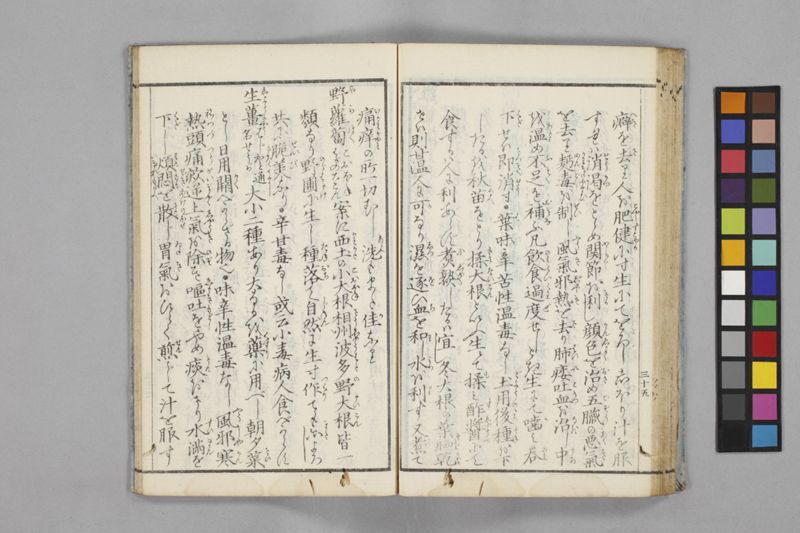
翻刻
【右丁】
癖(へき)を去(さ)り人を肥(こやし)健(すこやか)にす生にてをろししぼり汁を服
すれは《振り仮名:消渇|せうかつ|かわきのやまひ 》をとゝめ関節(ふし〴〵)を利(きか)し顔色(かんしよく)を治(おさ)め五臓(ごぞう)の悪気(あくき)
を去り麪毒(めんどく)を制(せい)し風気(ふうき)邪熱(じやき)【ママ】を去り肺痿(はいい)吐血(とけつ)を治(なを)し中(うち)
を温(あたゝ)め不足(ふそく)を補(おぎな)ふ凡 飲食(のみくい)過度(くわど)せしとき生にて噛(か)み呑(のみ)
下(くだ)せは即(さつそく)消(せう)す●葉(は)味辛苦性温毒なし土用後(どようのゝち)種(たね)を下
したるを秋 苗(なへ)をとり揉大根(もみたいこん)といふ生にて揉(も)み酢醤(すしやうゆ)にて
食するは人に利あらず煑熟(にじゆく)したるは宜し冬大根の葉 晒(さらし)乾(かはか)
せは則甘温人に可(か)なり湿(しつ)を逐(を)ひ血(ち)を和(わ)し水(みつ)を利(り)す又 煮(に)て
【左丁】
痛痒(いたみかゆみ)の所一切むし洗(あらふ)もまた佳(か)なり
野蘿匐(のらほく)《割書:こおほね|はだの大こん》案に西土(かみかた)の小大根(こおほね)相州(さうしゆう)波多野(はたの)大根(たいこん)皆一
類なり野圃(のらはたけ)に生し種(たね)落(おち)て自然(じねん)に生す作(つくり)ても亦(また)よろし
共に《振り仮名:脆美|せいび|もろくうまし 》なり●辛甘毒なし或云小毒病人食べからす
生薑(しようきやう)《割書:はじかみ通|名せうが》大小二種あり大なるを薬(くすり)に用べし朝夕 菜(さい)
とし日用 闕(かく)べからざる物也●味辛性温毒なし風邪(ふうしや)寒(かん)
熱(ねつ)頭痛(づつう)《振り仮名:欬逆|がいぎやく|せきあけ 》《振り仮名:上気|しやうき|のほせ 》を除(のぞ)き嘔吐(ゑたきもどし)をやめ痰(たん)をさり水満(すいまん)を
下(くだ)し《振り仮名:煩悶|はんもん|いきれもだへ 》を散(さん)じ胃気(ゐのき)をひらく煎(せん)じて汁を服す
現代語訳
【右丁】
(続き:大根について)
癖(積滞)を除き、人を太らせ健康にする。生のままおろしてしぼった汁を飲めば、消渇(糖尿病様の病)を止め、関節の働きを良くし、顔色を整え、五臓の悪気を除き、麦・小麦粉の毒を制し、風気・邪熱を去り、肺痿・吐血を治し、体の中を温め、不足を補う。そもそも飲食が過度であったとき、生のまま噛んで飲み下せば、即座に消化する。
●葉:味は辛苦、性は温、毒なし。土用の後に種を蒔いたものを秋に苗をとって「揉み大根」という。生のまま揉んで酢醤油で食するのは人に益がない。煮て熟したものは良い。冬大根の葉を晒して乾燥させれば、甘温で人に適し、湿を除き、血を調和し、水(むくみ)を利(通)す。また煮て
【左丁】
痛みやかゆみのある箇所を蒸し洗いするのもまた良い。
野蘿匐(こおほね・はだの大根)
案ずるに、上方(関西)の小大根、相州(相模国)波多野大根は、みな同じ一種類である。野の畑に生じ、種が落ちて自然に生える。栽培してもまたよろしい。ともに脆くて美味しい。●辛甘、毒なし。ある説では小毒があり、病人は食べてはならないという。
生薑(はじかみ、通称・しょうが)
大小二種あり、大きいものを薬に用いるべし。朝夕の菜(おかず)として、日常生活に欠かすことのできないものである。●味は辛、性は温、毒なし。風邪・寒熱・頭痛・欬逆(せき・しゃっくり)・上気(のぼせ)を除き、嘔吐を止め、痰を去り、水満(むくみ)を下し、煩悶(息苦しくもだえること)を散じ、胃気を開く。煎じてその汁を服す
英語訳
**[Right folio]**
*(Continuing: On Daikon Radish)*
It removes accumulations (digestive stagnation), fattens the body, and promotes health. When consumed raw—grated and the juice squeezed out and drunk—it stops *shōkatsu* (a wasting-thirst disease, similar to diabetes), promotes the functioning of the joints, improves the complexion, removes noxious qi from the five viscera, counteracts the toxicity of wheat and flour products, dispels wind-qi and pathogenic heat, treats lung atrophy and vomiting of blood, warms the interior of the body, and supplements deficiency. In general, when one has eaten or drunk to excess, chewing and swallowing it raw will immediately aid digestion.
●**Leaves**: Flavor—acrid and bitter; nature—warm; non-toxic. Those sown after the *doyō* (the 18-day seasonal transitional period before autumn), with seedlings harvested in autumn, are called "*momidaikon*" (kneaded daikon). Eating them raw, kneaded and dressed with vinegar and soy sauce, is not beneficial. Cooking them thoroughly is preferable. The leaves of winter daikon, when bleached and dried, become sweet and warming in nature, suitable for people; they dispel dampness, harmonize the blood, and promote urination. Furthermore, when boiled and used to steam-wash affected areas,
**[Left folio]**
it is also excellent for relieving pain and itching anywhere on the body.
---
**Wild Radish** (*ko-ōhone* / *Hadano daikon*)
On examination, the small daikon of the Kamigata (Kyoto-Osaka) region and the Hadano daikon of Sōshū (Sagami Province) are all of the same variety. They grow in wild fields, with seeds falling and sprouting naturally. They can also be cultivated with good results. Both are tender and delicious. ●Flavor—acrid and sweet; non-toxic. Some sources say they have a slight toxicity and should not be consumed by the sick.
---
**Fresh Ginger** (*hajikamu*, commonly called *shōga*)
There are two varieties—large and small—and the larger should be used medicinally. It is served as a daily side dish morning and evening and is something that cannot be omitted from daily life. ●Flavor—acrid; nature—warm; non-toxic. It removes wind-cold, alternating chills and fever, headache, coughing and hiccupping (*gaigyaku*), and flushing of heat upward (*jōki*); stops vomiting and nausea; removes phlegm; relieves water retention and bloating; disperses restless agitation and distress (*hanmon*); and opens the stomach qi. Decoct and drink the juice—