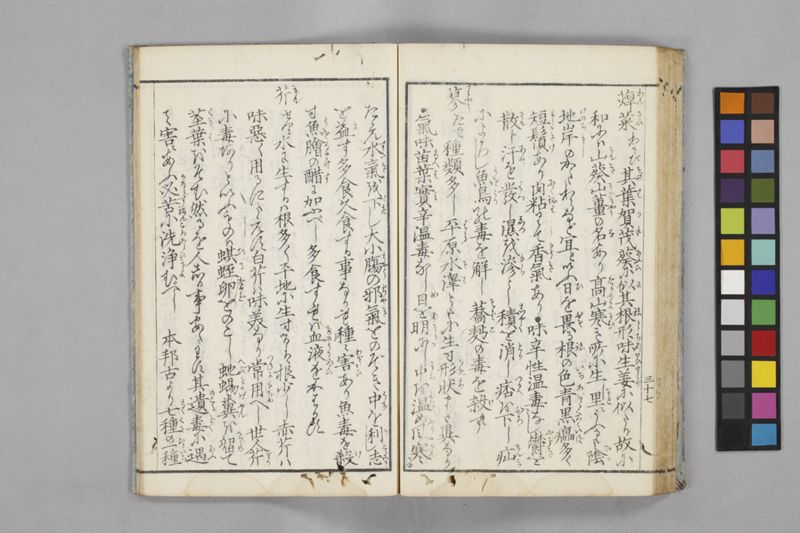
翻刻
【右丁】
蔊菜(かんさい)《割書:わさび》其葉(そのは)賀茂葵(かもあふひ)に似(に)其 根(ね)形(かたち)味(あわひ)生姜(せうが)に似たり故に
和には山葵(さんき)山薑(さんきやう)の名(な)あり高山(たかやな)寒(さむ)き所に生し里(さと)にうふるも陰(ひか)
地(けのち)岸(きし)のかたわらなど宜といふ日(ひ)を畏(おそ)る根(ね)の色(いろ)青黒(あをくろく)㿔(いぼ)#1多く
短鬚(みしかきけ)あり肉(にく)粘(ねば)りて香気(かうき)あり●味辛性温毒なし鬱(ふさき)を
散(さん)じ汗(あせ)を発(はつ)し湿(しつ)を滲(もら)し積(しやく)を消(とか)し痞(つかへ)を下(おろ)し疝(せんき)
によろし魚(うを)鳥(とり)の毒を解し蕎麪(そばこ)の毒を殺(け)す
蓼(りやう)《割書:たで》種類多し平原(はら)水沢(さは)ともに生す形状(かたち)また異なり
●気味 苗(なへ)葉(は)実(み)辛温毒なし目(め)を明(あきらか)にし中(うち)を温(あたゝ)め風寒(ふうかん)に
【左丁】
たえ水気(すいき)を下(くた)し大小 腸(ちやう)の邪気(ぢやき)をのぞき中(うち)を利(り)し志(こゝろさ[し])
を益(ま)す多食久食する事なかれ種々 害(わざ▢ひ)あり魚毒を殺(け)
す魚膾(うをなます)の醋(す)に加ふべし多食すれは血液(ちのうるほひ)をかはかす
芹(きん)《割書:せり》水に生するは根多く平地に生するは根少し赤芹は
味悪く用るにたえす白芹は味美なり常用(つねにもちゆ)へし世人 芹(せり)
に毒ありといふものは蜞蛭(ひる)卵(たまご)をのこし蛇#2蜴(とかげ)糞(ふん)を留(とゞめ)て
茎(くき)葉)は)をそむ然るを人しる事あたわす其 遺毒(のこるどく)に遇(あふ)
て害にあふ必(かならず)苦(ねんころ)に洗浄(あらひきよ)むべし 本邦古より七種(なゝくさ)の一種(ひといろ)
現代語訳
【右丁】
**蔊菜(かんさい)〔わさび〕**
その葉は賀茂葵(かもあおい)に似ており、根の形と味は生姜に似ている。それゆえ、和国では「山葵(さんき)」「山薑(さんきょう)」の名がある。高山の寒冷な場所に生え、里で植える場合も、日陰の地や岸のほとりなどが適しているという。日光を嫌う。根の色は青黒く、疣(いぼ)が多く、短い鬚根(ひげね)がある。肉質は粘り気があって香気がある。
●味は辛、性は温、毒はない。気のふさぎを散じ、汗を発し、湿気を渗(も)らし、積聚(しゃく・体内の凝り固まり)を消し、痞え(つかえ)を下ろし、疝気(せんき)に良い。魚・鳥の毒を解し、蕎麦の毒を消す。
---
**蓼(りょう)〔たで〕**
種類が多く、平原(野原)・水沢(沼や湿地)ともに生える。形状もまたそれぞれ異なる。
●気味:苗・葉・実ともに辛温、毒なし。目を明らかにし、中(胃腸)を温め、風寒(風邪や寒さによる病邪)に
【左丁】
耐え、水気(水分の滞り)を下し、大小腸の邪気を除き、中(内臓)を通利し、志(こころざし・意志や精神)を益す。多食・久食することなかれ。種々の害がある。魚毒を消す。魚の膾(なます)の酢に加えるとよい。多食すれば血液の潤いを乾かす(血を乾燥させる)。
---
**芹(きん)〔せり〕**
水辺に生えるものは根が多く、平地に生えるものは根が少ない。赤芹は味が悪く、食用に耐えない。白芹は味が美しく、常用するとよい。世間の人がせりには毒があるというのは、蜞蛭(ひる)の卵を残し、蛇・蜴(とかげ)の糞が茎・葉に染みついているためである。しかし人はそれに気づくことができず、その遺毒(残された毒)に遭って害を受けるのである。必ず丁寧に洗い清めるべきである。わが国では古くより七草のうちの一種(である)。
英語訳
**[Right folio]**
**Kansai [Wasabi]** (*Wasabia japonica* / Japanese horseradish)
Its leaves resemble those of *Kamo-aoi* (hollyhock mallow, *Asarum caulescens*), and the shape and flavor of its root are similar to ginger. For this reason, in Japan it goes by the names *sanki* ("mountain hollyhock") and *sankyō* ("mountain ginger"). It grows in cold, high-mountain locations; when cultivated in villages, shaded ground and the edges of riverbanks are said to be suitable. It dislikes direct sunlight. The root is bluish-black in color, covered with many knobby protuberances, and has short root-hairs. The flesh is glutinous (mucilaginous) and fragrant.
●Flavor: acrid; nature: warm; non-toxic. It disperses stagnation and depression (*fusagi*), promotes perspiration, drains dampness, dissolves accumulations (*shaku*, congealed masses in the body), brings down blockages (*tsukae*), and is beneficial for *senki* (hernial/abdominal pain). It resolves the toxins of fish and fowl, and neutralizes the toxicity of buckwheat.
---
**Ryō [Tade]** (*Polygonum* spp. / water pepper / smartweed)
There are many varieties, growing in both open fields and wetlands/marshes. Their forms also differ from one to another.
●Properties of seedlings, leaves, and seeds: acrid, warm, non-toxic. Brightens the eyes, warms the middle (*uchi*, the digestive organs), provides resistance to wind-cold (*fūkan*) ailments,
**[Left folio]**
—reduces water retention (*suiki*), expels pathogenic qi from the large and small intestines, promotes the proper functioning of the viscera, and strengthens the will and mental faculties. However, one should not eat it in large amounts or over a prolonged period—there are various harms from doing so. It neutralizes fish toxins. It may be added to the vinegar used in preparing raw fish dishes (*namasū*). Eating it in excess dries up and depletes the moisture of the blood.
---
**Kin [Seri]** (*Oenanthe javanica* / Japanese parsley / water dropwort)
That which grows in water has many roots; that growing on flat ground has fewer roots. Red *seri* has an unpleasant flavor and is unsuitable for use. White *seri* has a fine flavor and may be used regularly.
When people say that *seri* is poisonous, this is because leeches (*biru*) leave their eggs on it, and snakes and lizards leave their droppings clinging to the stems and leaves. People, however, are unable to detect this and encounter the residual toxins left behind, thereby suffering harm. One must always wash it carefully and thoroughly before eating.
In our country, it has been one of the seven spring herbs (*nanakusa*) since ancient times.