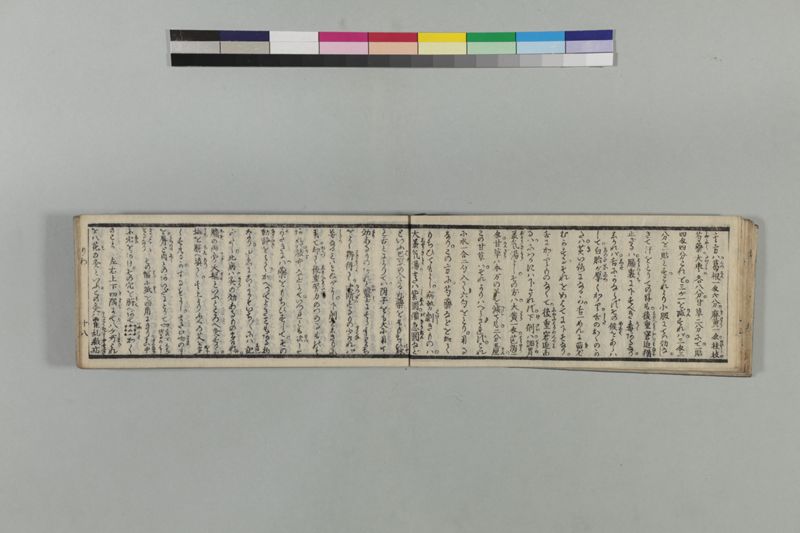
翻刻
其方は。葛根(かつこん)一匁六分。麻黄(まわう)一匁。桂枝(けいし)。
芍薬(しやくやく)。大棗(たいさう)。各八分。甘草二分にて。一貼
四匁四分これを。三が一を減(けん)すれば。三匁三
分を一貼とす。これより小服にては効なし。
さて汗をとりての後も。後重窘迫(しもへはりいけみ)猶(なほ)
止ざるは。腸裏(はらのうち)に下すべき毒(どく)あるなり。
しかれば。舌(した)にかならずその候(めあて)をあらは
して。白胎(しろきたい)が厚(あつ)くかゝり。舌(した)のおくのか
たは。黄(き)いろになるか。舌一めんに黄(き)ば
むかする。それをめはてに下すなり。
舌にかゝりものなくて。後重窘迫(しもにはりのくること)あ
るは。にはかには下されず。下剤(けさい)は。調胃(てうゐ)
承気湯(じようきとう)よし。その方は。大 黄(わう)一匁。芒消(はうせう)二
匁。甘草(かんざう)は本万の半を減(へらし)ても。二分五 厘(りん)。
この甘草は。それよりはへらされず。これ
に水一合二勺入て六勺をとり。用る
なり。この方に。芍薬などを加て
もちひてもよし。病勢 劇(はけし)きものは。
大 承気湯(しやうきとう)。または紫円(しゑん)。備急円(びきうゑん)など
といふ巴豆(はづ)の入たる丸薬をもちひ。脉(みやく)
と舌とによりては。附子をも大に用て
効(こう)あるものあれど。毉士(いし)にすら其わかち
をよく弁得(わきまへえ)て。決断(けつだん)するもの少(すくな)ければ
妄(みたり)なることはせぬがよし。下剤をしきりに
用て。却(かへつ)て後重努力(しもへはりいけみ)のつのるものも
あれば。旅(りよ)中などにて。いつれとも決(けつ)した
がたきには。薬をもちひすして。その
動静(なりゆき)をみて。かへつてよきこともある物
なり。ゆゑにこゝにもいち〳〵には記(しるし)
がたし。此病は。灸(きう)の効あるもの多ければ。
臍(ほそ)の両 旁(わき)。天 枢(すう)といふところへ灸するか。
塩(しほ)を臍(ほそ)へ填(もり)て。其上よりふくろ艾を多(おほ)
くすえるか。するもよし。また口 吻(わき)の寸
を。唇(くちひる)と肉(にく)とのあいだにとりて【唇の図】《割書:この下くち|びるのはし》
《割書:よりはしにて|とるなり》その幅(はゞ)に紙(かみ)を四角にきり。真中(まんなか)
に穴(あな)をあけ。その穴を臍(ほそ)へあて【口吻の寸の図】口吻の寸【図の右にルビ】かく
のことく。左右上下 四隅(よすみ)にて。八ケ所(しよ)。これ
を八 花(こ)の灸といふ。この灸は。霍乱(くわくらん)。癥疝(しやうせんき)
現代語訳
その処方は、葛根一匁六分、麻黄一匁、桂枝・芍薬・大棗各八分、甘草二分で、一服四匁四分である。これを三分の一減らせば、三匁三分を一服とする。これより少ない量では効果がない。
さて汗をかいた後も、後重(肛門の張りや残便感)がなお止まらないのは、腸内に下すべき毒があるからである。そうであれば、舌に必ずその徴候が現れて、白い苔が厚くかかり、舌の奥の方は黄色になるか、舌一面に黄色みを帯びるかする。それを目安として下剤を用いる。
舌に異常がなくて後重があるものは、急に下剤を用いてはならない。下剤は調胃承気湯がよい。その処方は、大黄一匁、芒硝二匁、甘草は本来の半分を減らしても二分五厘である。この甘草はそれより減らしてはならない。これに水一合二勺を入れて六勺まで煎じ詰めて用いる。この処方に芍薬などを加えて用いてもよい。病気の勢いが激しいものは、大承気湯、または紫円、備急円などという巴豆の入った丸薬を用い、脈と舌の状態によっては、附子も大量に用いて効果があるものもあるが、医師でさえその使い分けをよく理解して決断するものは少ないので、軽率なことはしない方がよい。下剤をしきりに用いて、かえって後重が激しくなるものもあるので、旅行中などで、どちらとも決めがたい場合には、薬を用いないでその経過を見て、かえってよいこともある。故にここでも一つ一つは記しがたい。この病気は、灸の効果があるものが多いので、臍の両脇の天枢というところに灸をするか、塩を臍に盛って、その上から袋艾を多くすえるかするのもよい。また口の幅を唇と肉の間で測り、その幅に紙を四角に切り、真ん中に穴をあけ、その穴を臍に当て、このようにして左右上下四隅で八か所に灸をする。これを八花の灸という。この灸は、霍乱(急性胃腸炎)、癥疝気に
英語訳
The prescription consists of: Pueraria root (kakkon) 1 monme 6 bu, ephedra (maou) 1 monme, cinnamon twig (keishi), peony root (shakuyaku), and jujube (taisou) 8 bu each, and licorice (kanzo) 2 bu, making one dose 4 monme 4 bu total. If this is reduced by one-third, one dose becomes 3 monme 3 bu. Smaller doses than this are ineffective.
Now, even after inducing sweating, if tenesmus (anal tension and feeling of incomplete evacuation) still does not stop, it is because there is toxin in the intestines that should be purged. In such cases, signs will necessarily appear on the tongue: a thick white coating will form, and the back of the tongue will turn yellow, or the entire tongue will take on a yellowish tinge. This serves as the indication for using purgatives.
When there are no tongue abnormalities but tenesmus persists, purgatives should not be used hastily. For purgatives, Choi Shouki-to (Regulate the Stomach Decoction) is good. Its formula is: rhubarb (daiou) 1 monme, mirabilite (boushou) 2 monme, and licorice (kanzo) 2 bu 5 rin, even when reduced to half the original amount. This licorice should not be reduced further. Add 1 go 2 shaku of water and boil down to 6 shaku for use. Peony root and other herbs may be added to this formula. For severe cases, Dai Shouki-to (Major承気湯), or pills containing croton seed such as Shien or Bikyu-en may be used. Depending on the pulse and tongue condition, large amounts of aconite may also be effective, but since even physicians rarely understand these distinctions well enough to make decisive judgments, it is better not to act rashly. Since frequent use of purgatives may actually worsen tenesmus, when traveling and it's difficult to make a clear decision, it may be better not to use medicine and observe the natural course of the disease. Therefore, it's difficult to record each case individually here. This disease often responds well to moxibustion, so it's good to apply moxa at points called Tenshu on both sides of the navel, or to heap salt in the navel and burn much bagged moxa on top of it. Also, measure the width of the mouth between the lip and flesh, cut paper into a square of that width, make a hole in the center, place this hole over the navel, and apply moxa at eight points in the four corners - left, right, up, and down. This is called "Eight Flower Moxibustion." This moxibustion is effective for cholera (acute gastroenteritis) and abdominal masses with hernial pain.