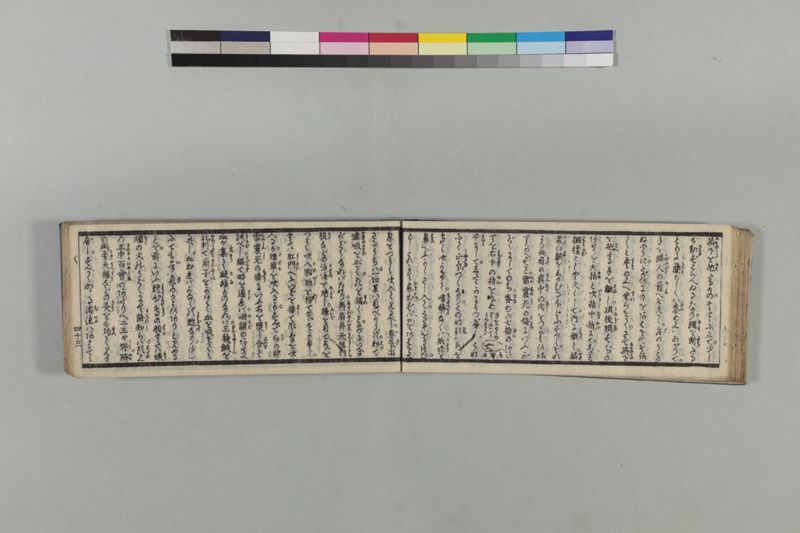
翻刻
臍下(ほそのした)を抱(かゝへ)たるもの。其まゝに立て。少し
も動(うごか)ずこらへゐるなり。縄(なは)を断(たち)たる
ともに。畳(たゝみ)もしくは台(たい)の上へあがりて。
手を縊人(くびれびと)の首(かしら)へそえて。身(み)のうごか
ぬやうに。たがひに力をあはせてそろ
〳〵と畳(たゝみ)の上へ坐(すは)らせて。さて臍下(ほそのした)
を抱(かゝへ)たる手を離(はな)し。項後(うなじ)頸(くび)すぢの
あたりを大 指(ゆひ)と次指(ひとさし)中指(なかゆび)にて。しかと
掴(つかみ)揉(もむ)ことやゝ久くして。内に徹(とほり)て。縊(くびれ)
者(びと)の顔(かほ)をしかむるほどにすべし。それ
より両 肩(かた)の真中(まんなか)の肉(にく)をつかみひね
りかへすこと。雷震死(らいしんし)の條(ところ)にいふが
ごとくにしてのち。脊(せな)の六七 推(すい)のあた
りを右手(みぎのて)の指(ゆび)をかゞめ《割書:手をかくの|ごとくにして|うつなり》【手の絵】《割書:左|脊|右》
平(たひら)にして。したゝかにうつべし。これ
にて正気(しやうき)つくなり。この時 顔(かほ)へ水を
多く吹かけて。嚏薬(くさめくすり)なくば。紙條(こより)を
鼻(はな)へふかくさし入て。くさめをさすべし。
もしこれにて息(いき)出(いで)ずば。口をあはせて
息をつよく吹入て見るべし。息気(いき)出
ざるうちは。一切薬は用べからず。却(かへつ)て
噓吸(いきのかよひ)を止て。死を招(まね)くこと。前にいへる
がごとくなればなり。再(ふたゝび)肩井(けんせい)天枢(てんすう)内(うち)
股(もゝ)などの活(くわつ)法を施(ほどこ)し。鞴(ふいご)を用て気を
つよく吹入。胸肋(あばら)を按(おし)て気をかへし。
または肛門(こうもん)へふいごを接(さし)て風気を吹
入るか。煙草(たばこ)を吹入るか。すべてら【らの横に長四角】の部
雷震死(らいしんし)の條(くだり)にいふ所を照(てら)し合(あはせ)て
試(こゝろむ)べし。縊(くびくゝり)て時を過(すぐ)れば。咽頭(のんど)のあたりへ
血が集(あつまり)て凝結(こる)ものなれば。三稜鍼(さんりやうしん)を
乱刺(おほくさし)て。角子(すいふくべ)をかけて血を吸せてみ
るべし。血出ればかならず甦(よみがへる)なり。少し
にても気息(いき)のかよひありと見ゆる
ことを。前にいふ燈心(とうしん)。鳥(とり)の羽(は)。または蝋(らう)
燭(そく)の火のうごくにて診(うかゞひ)知(し)らば。頭上(あたま)
の正中(まんなか)百会(ひやくゑ)のあたりへ二三が所(しよ)。臍(ほそ)
の両 旁(わき)天枢(てんすう)などの灸(きう)をも灼(すへ)て見る
べし。すべてかゝる治法(ぢはふ)はあはてゝ
現代語訳
臍下を抱えた者は、そのまま立って、少しも動かずに耐えているのである。縄を断ったと同時に、畳もしくは台の上へ上がって、手を首つりした人の頭に添えて、身体が動かないように、互いに力を合わせてそろそろと畳の上へ座らせて、さて臍下を抱えた手を離し、項(うなじ)・頸筋のあたりを親指と人差し指・中指で、しっかりと掴んで揉むことやや久しくして、内に徹って、首つりした人の顔をしかめるほどにすべきである。それより両肩の真ん中の肉を掴んでひねり返すこと、雷震死の条に言うがごとくにしてのち、背中の六、七椎のあたりを右手の指を曲げて平にして、したたかに打つべきである。これで正気がつくのである。この時顔へ水を多く吹きかけて、嚏薬がなければ、紙撚りを鼻へ深く差し入れて、くしゃみをさせるべきである。もしこれで息が出なければ、口を合わせて息を強く吹き入れて見るべきである。
息が出ないうちは、一切薬は用いてはならない。かえって呼吸を止めて、死を招くこと、前に言ったがごとくなのである。再び肩井・天枢・内股などの蘇生法を施し、ふいごを用いて気を強く吹き入れ、胸肋を按じて気を返し、または肛門へふいごを接して風気を吹き入れるか、煙草を吹き入れるか、すべて雷震死の条に言う所を照らし合わせて試すべきである。首つりして時を過ぎれば、咽頭のあたりへ血が集まって凝結するものなので、三稜鍼を多く刺して、吸角をかけて血を吸わせてみるべきである。血が出ればかならず蘇るのである。少しでも呼吸の通いがあると見えることを、前に言う灯心、鳥の羽、または蝋燭の火の動くので診察して知れば、頭上の正中・百会のあたりへ二、三か所、臍の両脇・天枢などの灸をも据えて見るべきである。すべてこのような治法は慌てて
英語訳
The person holding below the navel should remain standing as is, enduring without moving at all. Simultaneously with cutting the rope, climb onto the tatami or platform, place hands on the hanged person's head, and with combined strength to prevent the body from moving, slowly seat them on the tatami. Then release the hands that were holding below the navel, and with the thumb, index finger, and middle finger, firmly grasp and massage the nape of the neck and neck muscles for quite a while until it penetrates inward and makes the hanged person grimace. Then grasp the flesh at the center of both shoulders and twist it back, as described in the section on lightning strike death. After this, curve the fingers of the right hand flat and strike firmly at the area of the 6th and 7th vertebrae of the spine. This will restore consciousness. At this time, splash much water on the face, and if there is no sneezing medicine, insert a paper twist deep into the nose to induce sneezing. If breathing does not return with this, place mouth to mouth and try blowing in breath strongly.
While there is no breathing, no medicine should be used at all. On the contrary, it will stop respiration and invite death, as mentioned before. Again apply resuscitation techniques to the shoulder well (kensei), celestial pivot (tenshu), inner thigh and other points, use bellows to blow air in strongly, press the chest and ribs to restore breathing, or attach bellows to the anus to blow in air, or blow in tobacco smoke. All of these should be tried by referencing what is described in the section on lightning strike death. If time has passed since the hanging, blood will collect and coagulate around the throat area, so pierce many three-edged needles and apply suction cups to draw out the blood. If blood comes out, the person will surely revive. If even a little breathing can be observed through the movement of lamp wicks, bird feathers, or candle flames as mentioned before, moxibustion should also be applied at 2-3 points around the crown of the head at the midline and baihui point, and at points like tenshu on both sides of the navel. All such treatments should not be done hastily