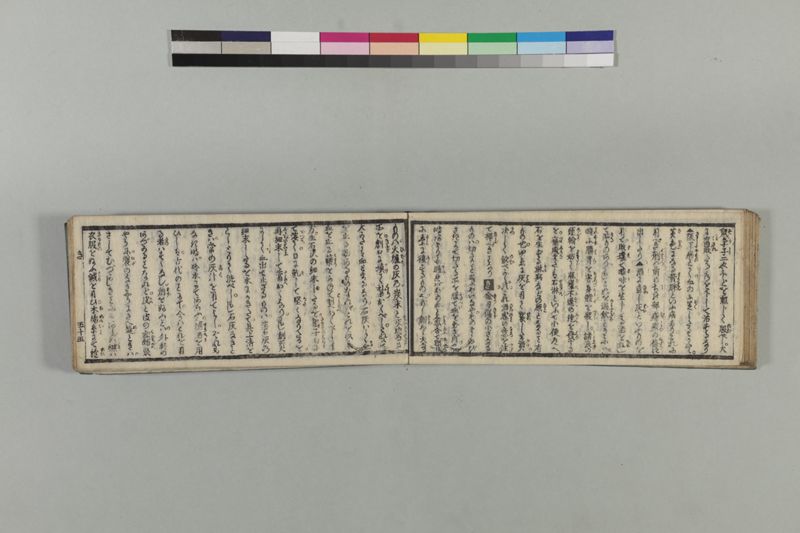
翻刻
鼠李子(そりし)二匁ほどを煎じて服(のむ)べし。大
に腐敗(くされ)たる水を下して治するなり
▲阪下病(さかしたやまひ)とて。血のふ足(そく)したるより。
黄色(きいろ)になる黄胖(わうはん)といふ病あり。これに
用べき剤(くすり)は前のち【ちの横に長四角】の部 痔疾(ぢしつ)の條(くだり)に
出したり▲酒に直(なほ)し灰(ばい)といふものを
用て。敗壊(すえ)て酸味(すみ)を生じたる酒を直(なほ)し
て酤(うる)ものあり。もしこれを過飲(のみすぎる)ときには。
暗(われしらず)に腸胃(はら)を害(そこね)。身體(からだ)を疲(つから)し。諸液(しよえき)の
運輸(めぐり)を妨(さまたげ)て。麻痺(しびれ)不遂(ふきゝ)の證(しよう)を発(はつ)する
を。痛風(つうふう)。または石淋(せきりん)といふて小便道へ
石を生ずる淋(りん)病などの原(もと)となること有
もの也。ゆゑに灰(はい)を用て製(せい)したる酒(さけ)は。
決(けつ)して飲(のむ)べからず。これ酒客(さけのみ)の意(こゝろ)を注(つけ)
て択(えらぶ)べきことなりき【きは白抜文字】金刃傷(きりきず)の小さなる
ものは。切たりと思ふやいなや。そのまゝゆび
さきにて切たる所を圧(おさへ)て。血を出さず。半
時あまりも過(すぐ)れば。おのれと愈合(いえあふ)て。即日(そくじつ)
に素(もと)に復(ふく)するもの也。もし創(きず)やゝ大なる
ものは。火爐(ひばち)の灰の。炭末と灰塊(はいのかたまり)なき
所を。創(きず)口に填(つけ)て紮(くゝり)おくべし。これにて
大かたは血とまるなり。石灰はよく血
を止る効あるものなれば。これを以て
血を止る薬(くすり)をかねて製(こしらへ)おくべし。其
方。生石灰の細末したるを。鶏子白(たまごのしろみ)に
て溲(でつち)て。日に乾(ほ)して堅(かた)くなりたるを。
再(ふたゝび)細末(さいまつ)して蓄(たくはへ)おくなり。もし創所大
にして血出て止ざるものは。生石灰の
細末したるを水にかきたて。其上清を
こしとりて洗べし。もし石灰なきと
きは。常の灰汁(あく)を用てよし。それも
なき時は。冷水にてあらふ也。焼酒(せうちう)を用
ひしは。古代のことにて。今はこれを用
る者(もの)はすくなし。創(きず)をぬふことは。外科の
あづかることなれど。皮(かは)と皮の齟齬(くひちがは)ぬ
やうに。襞(ひだ)のなきやうにさへ縫(ぬふ)ときは。
さしてむづかしきことにもあらず。鍼(はり)は
衣服(きるもの)をぬふ鍼(はり)を用ひ。木綿糸(もめんいと)にて縫(ぬひ)
現代語訳
鼠李子(そりし)二匁ほどを煎じて服用すべきである。大いに腐敗した水を下して治すのである。
▲阪下病(さかしたやまひ)といって、血の不足から黄色になる黄胖(おうはん)という病気がある。これに用いるべき薬剤は、前の血の部、痔疾の条に出した。
▲酒に直し灰というものを用いて、敗壊して酸味を生じた酒を直して売るものがある。もしこれを過度に飲むときには、知らず知らずのうちに腸胃を害し、身体を疲労させ、諸液の循環を妨げて、麻痺不遂の症状を発するを、痛風、または石淋といって小便道に石を生ずる淋病などの原因となることがあるものである。ゆえに灰を用いて製した酒は、決して飲むべからず。これは酒飲みが注意して選ぶべきことである。
▲金刃傷(切り傷)の小さなものは、切ったと思うやいなや、そのまま指先で切った所を圧迫して、血を出させず、半時間余りも過ぎれば、自然と愈合して、即日元に復するものである。もし傷がやや大きなものは、火鉢の灰の、炭末と灰塊のない所を、傷口に詰めて縛っておくべきである。これで大体は血が止まるのである。
石灰はよく血を止める効果があるものであるから、これを用いて血を止める薬をあらかじめ製しておくべきである。その方法は、生石灰の細末したものを、鶏卵の白身で練って、日に乾して堅くなったものを、再び細末して蓄えておくのである。
もし傷所が大きくて血が出て止まらないものは、生石灰の細末したものを水にかき立て、その上清を濾し取って洗うべきである。もし石灰がないときは、普通の灰汁を用いてよい。それもないときは、冷水で洗うのである。
焼酎を用いたのは、古代のことで、今はこれを用いる者は少ない。傷を縫うことは、外科の担当することであるが、皮と皮が食い違わないように、襞がないようにさえ縫うときは、さして難しいことでもない。針は衣服を縫う針を用い、木綿糸で縫う。
英語訳
Buckthorn seeds (sorishi) about 2 monme should be decocted and taken. This treats by purging greatly putrefied water.
▲There is a disease called sakashita-yamai (downward disease), which is jaundice (ohan) that turns yellow due to blood deficiency. The medicines to be used for this were described in the previous blood section, in the hemorrhoids passage.
▲Some people use something called "correcting ash" in sake to fix sake that has spoiled and developed a sour taste, then sell it. If one drinks this excessively, it unknowingly harms the intestines and stomach, exhausts the body, obstructs the circulation of various bodily fluids, and causes symptoms of paralysis and dysfunction, becoming the cause of gout or stone strangury, which is a urinary disease that produces stones in the urinary tract. Therefore, sake made using ash should absolutely not be drunk. This is something that sake drinkers should pay attention to and choose carefully.
▲For small blade wounds, as soon as one realizes they have been cut, immediately press the cut area with fingertips to prevent bleeding. If more than half an hour passes, it will naturally heal and return to normal on the same day. If the wound is somewhat large, fill the wound opening with ash from a brazier that has no charcoal powder or ash lumps, and bind it. This will generally stop the bleeding.
Lime has good blood-stopping effects, so one should prepare blood-stopping medicine using this in advance. The method is: knead finely powdered quicklime with egg white, dry it in the sun until it hardens, then powder it finely again and store it.
If the wound is large and bleeding won't stop, stir finely powdered quicklime in water, filter out the clear supernatant and wash with it. If there is no lime, ordinary lye can be used. If that is also unavailable, wash with cold water.
Using shochu was an ancient practice; few people use it now. Suturing wounds is the domain of surgery, but as long as one sews so that skin edges don't misalign and there are no folds, it is not particularly difficult. Use needles for sewing clothes and cotton thread for suturing.