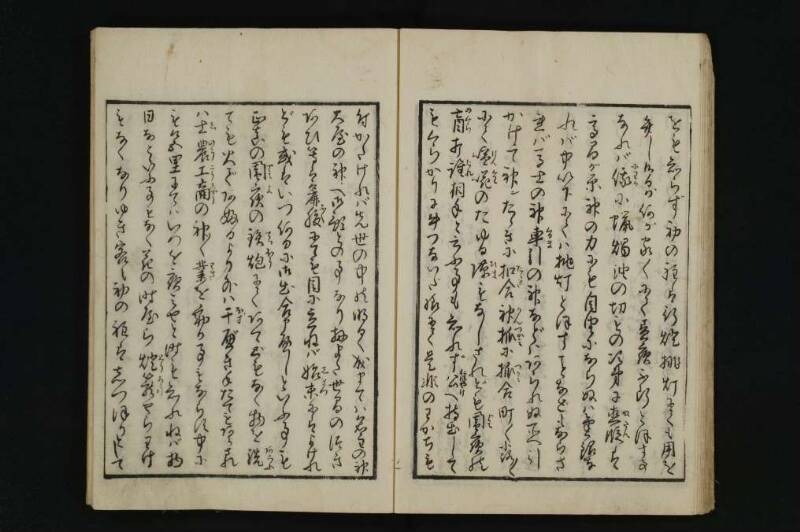
翻刻
をも知らず初の程は行灯挑灯にても用を
弁しけるが何が家々にて昼夜不断とほす事
なれば俄(にわか)に蝋燭油の切もの次第に直段(ねたん)は
高間が原神の力にも自由にならぬは金銀な
れば中以下にては挑灯とほすことなどもならさ
れば馬士の神 車(くるま)引の神などはあられぬ所へ引
かけて神ンたゝきに扣(たゝき)合 神(かん)抓(つかみ)に抓(つかみ)合町々小路〳〵
にて喧嘩(けんくわ)のたゆる隙(ひま)もなしされども闇(やみ)夜の
盲(めくら)打 誰(たれ)相手と云ふ事も知れず公(おほやけ)へ持出して
もくらかりに牛つないだ様にて是非のわかちも
付かたければ先世の中の明るく成まては名主の神
大屋の神へ御預との事なり扨また世間のつき
あひ等は麁 服(ふく)にても目に立ねば始未(しまつ)にはよけれ
ども或はいつ何日に御出合申へしといふ事も
正真の闇夜(やみよ)の鉄炮(てつほう)にてあてどもなく物を洗(あらふ)
ても火であふるより外は干(ほす)べき手たてもあらされ
は士農工商(しのうこうしやう)の神々 業(わさ)を勧る事もならす中に
も色里にてはいつを夜みせと時も知れねば物
日なとゝいふ事もなく花の時やら灯篭(とうろう)やらわけ
もなくなりゆき客も初の程はしつほりとして
現代語訳
分からなくなった。最初のうちは行灯や提灯でも用を足していたが、どの家でも昼夜絶え間なく灯すことになったので、急に蝋燭や油などの値段が次第に高くなった。高天原の神の力でも自由にならないのは金銀であるから、中級以下の者たちは提灯を灯すこともできなくなった。そのため馬子の神や車引きの神などは、とんでもない所に引っかけて神同士で殴り合い、掴み合い、町々や小路で喧嘩の絶える暇もない。しかし暗夜の盲打ちで、誰が相手かということも分からず、公に訴え出ても暗がりで牛を繋いだようなもので、是非の判断もつかないので、とりあえず世の中が明るくなるまでは名主の神や大家の神にお預けということになった。さてまた世間の付き合いなどは、粗末な服装でも目立たないので始末には良いけれども、或いは「いつ何日にお目にかかりましょう」ということも、真っ暗闇での鉄砲のように当てどもなく、物を洗っても火で炙る以外は乾かす手立てもないので、士農工商の神々が業を営むこともできない。中でも遊里では、いつが夜見世の時かも分からないので、物日などということもなく、花の時やら灯籠やら訳も分からなくなってしまい、客も最初のうちはしっとりとして
英語訳
became indistinguishable. At first, people managed their affairs with lanterns and paper lanterns, but since every household had to keep lights burning constantly day and night, the prices of candles and oil suddenly began to rise steadily. Even the power of the gods of Takamagahara could not control gold and silver freely, so those of middle class and below could no longer afford to light their lanterns. Therefore, the gods who were grooms and cart-pullers would bump into absurd places and fight amongst themselves, striking and grappling with each other, with no respite from quarrels in the streets and alleys. However, in this blind striking in the dark night, no one could tell who their opponent was, and even when brought before the authorities, it was like tying up cattle in the darkness—no judgment of right or wrong could be made. So it was decided that until the world became bright again, such matters would be entrusted to the neighborhood headman gods and landlord gods. Now, as for social interactions, shabby clothing was not conspicuous, which was economical, but when trying to arrange meetings saying "let us meet on such and such a date," it was like firing a gun in pitch darkness with no target. Since there was no way to dry things after washing except by fire, the gods of the four social classes—warriors, farmers, artisans, and merchants—could not carry on their trades. Especially in the pleasure quarters, since no one could tell when it was time for the night shows, there were no special occasion days, and the distinction between flower-viewing time and lantern time became meaningless. Even the customers, who at first were calm and composed,