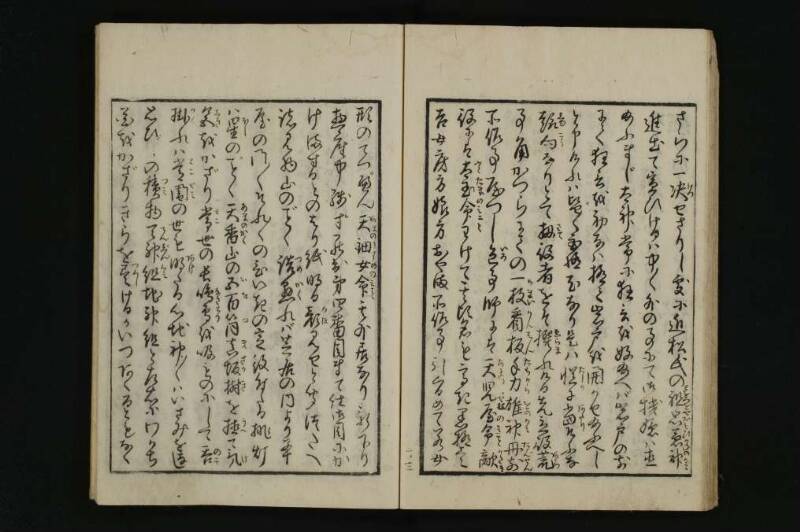
翻刻
さらに一 決(けつ)せさりし処に近松氏の祖(とをつをや)思兼神(おもひかねのかみ)
進出て宣ひけるは中々外の事にて御機嫌は直
給ふまじ太神常に狂言を好給へば岩戸の前
にて狂言を初なは極て岩戸を開かせ給ふへし
と申けれは皆々至極尤なり是は慥(たしか)に当(あたり)そふな
趣向(しゆこう)なりとて扨(さて)役者をそ撰(ゑらま)れける先立役 荒(あら)
事角かつらにての一枚看板(ちまいかんはん)手力(たちから)雄神(をのかみ)丹前(たんせん)
所作事やつし色(いろ)事師には天児屋命(あまつこやねのみこと)敵(かたき)
役には太玉命(ふとたまのみこと)わけて其頃名も高き黒極上々
吉女房方娘方おやま所作事引くるめて若女
形のてつぺん天鈿女命(あまのうすめのみこと)其外居なり新下り
惣座中残ず罷出第四番目まて仕御目にか
けまするとのはり紙明日 顔(かほ)見せと聞つたへ
諸見物山のごとく詰懸(つめかく)れば芝居の内より茶
屋の門々それ〳〵のひいきの定紋付たる挑灯
は星(ほし)のごとく天香(あまのかく)山の五百筒(いをつ)真坂樹(まさかき)を植(うへ)て気(け)
色(しき)をかざり常(とこ)世の長 嗚鳥(なきとり)を吸ものにして呑(のみ)
掛(かく)れは常闇(とこやみ)の世も明(あけ)たる心地神々はいさみをなし
思ひ〳〵の積(つみ)物 天神組(てんじんくみ)地神組と左右にわかち
花をかざりきらを尽(つくし)けるかいつあくるともなく
現代語訳
さらに決着がつかなかったところに、近松氏の祖先である思兼神が進み出て申し上げたことには、「とても他の方法では御機嫌は直らないでしょう。天照大神は常に狂言をお好みになるので、岩戸の前で狂言を始めれば、きっと岩戸を開けてくださるでしょう」と申したので、皆々が「至極もっともである。これは確実に当たりそうな趣向だ」と言って、さて役者を選んだのである。まず立役で荒事、角髪(みずら)での一枚看板は手力雄神、丹前での所作事、やつし事、色事師には天児屋命、敵役には太玉命、わけてもその頃名高い黒髪の極上々吉の女房方、娘方、女形、所作事をひっくるめて若女形の頂点は天鈿女命。その他、居なりから新下りまで、座中残らず出演して「第四番目まで仕つかまつり御覧に入れます」との張り紙で、明日顔見せと聞き伝わると、見物客が山のように詰めかけたので、芝居の内から茶屋の門々まで、それぞれの贔屓の定紋をつけた提灯が星のごとく輝き、天香山の五百本の真榊を植えて景色を飾り、常世の長鳴鳥を吸い物にして飲みかけると、常闇の世も明けたような心地がして、神々は勇み立ち、思い思いの積み物を天神組、地神組と左右に分かち、花を飾り、きらびやかさを尽くしたが、いつ明けるともなく
英語訳
When still no decision could be reached, Omoikane-no-kami, the ancestor of Chikamatsu, stepped forward and declared: "By no other means will her divine mood be restored. Since the Great Goddess always favors kyōgen theater, if we begin performing kyōgen in front of the rock cave, she will surely open the cave door." Everyone said, "This is extremely reasonable. This seems like a plan that will surely succeed," and so they began selecting actors. First, for the leading male role (tachiyaku) in aragoto style, with horn-shaped hair (mizura) as the star performer: Tajikarao-no-kami. For tanzzen robes, choreographed pieces, humble roles, and romantic leads: Ame-no-Koyane-no-mikoto. For the villain role: Futotama-no-mikoto. Most notably, the famous black-haired supreme courtesan of that time for wife and daughter roles, and the pinnacle of young female impersonators (wakonnagata) for all choreographed pieces: Ame-no-Uzume-no-mikoto. In addition, from regular performers to newcomers, the entire troupe would appear, with a poster announcing "We shall perform through the fourth act for your viewing pleasure." When word spread that tomorrow would be the face-showing performance (kaomise), spectators crowded in like mountains. From inside the theater to the gates of the tea houses, lanterns bearing the family crests of various patrons shone like stars. They planted five hundred sacred sakaki trees from Mount Amenokagu to decorate the scene, and as they drank soup made from the eternal long-crowing birds of the eternal world, it felt as though the world of eternal darkness had dawned. The gods became excited and arranged their various offerings, dividing into heavenly deity and earthly deity groups on left and right, decorating with flowers and displaying the utmost splendor, though dawn seemed nowhere in sight.