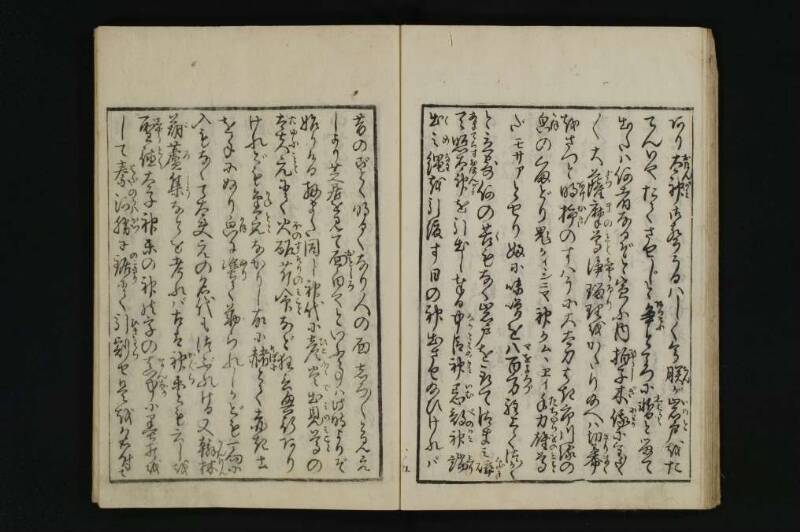
翻刻
あり太神(おほんがみ)御声うるはしく今 朕(ちん)が岩戸(いわと)をた
てんいやたてさせじと争(あらそふ)ところに暫(しばらく)と留て
出たは何者なるぞと宣ふ内 拍子木(ひやうしぎ)俄(にわか)にくわた〳〵
〳〵大 薩摩尊(ざつまのみこと)浄瑠璃(しやうるり)をかたり給へは切幕(きりまく)
をさつと明(あけ)柿(かき)のすはうに大太刀はき市川流の
貌(かほ)のくまどり鬼かイヽンニヤ神かムヽヱイ手力雄尊(たちからをのみこと)
だモサアとせりふに味噌を八百万(やをよろづ)程上てつか〳〵
と立寄何の苦(く)もなく岩戸を取てつまみ砕(くだき)
天照太神(あまてらすおほんがみ)を引出し奉る中臣神(なかとみのかみ)忌部神(いむべのかみ)端(しり)
出之縄(くめなわ)を引渡す日の神出させ給ひければ
昔のごとく明るくなり人の面しろ〳〵と見え
しより芝居を見て面白(おもしろ)やといふ事は此時よりぞ
始りける扨また同じ神代に彦火々出見尊(ひこほゝでみのみこと)の
太先元(たゆふもと)にて火酢芹命(ほのすそりのみこと)など狂言興行あり
けれども金元(かねもと)なかりし故に赭(そぼに)とて赤き土
を手にぬり貌(かほ)に塗(ぬり)て勤られしかども一向に
入もなくて太夫元の名代もつぶれける又 翰林(かんりん)
葫蘆集(ころしう)なとを考れば古は神楽(かぐら)とも云しを
聖徳(しやうとく)太子神楽の神の字の真中(まんなか)に墨打を
して秦河勝(はだのかはかつ)に鋸(のこきり)にて引割(ひきわら)せ是を名付て
現代語訳
ある太神は御声麗しく「今、朕が岩戸を閉めようとするのを、いや閉めさせじと争っているところに、『しばらく』と制して出てきたのは何者であるか」と宣う内に、拍子木が俄かにくわたくわたと鳴り、大薩摩尊が浄瑠璃を語りなさると、切幕をさっと開けて、柿色の装束に大太刀を履き、市川流の顔の隈取り、鬼か「いいんにゃ」、神か「むむえい」、手力雄尊だ「もさあ」と台詞に味噌を八百万ほど付けて、つかつかと立ち寄り、何の苦もなく岩戸を取ってつまみ砕き、天照大神を引き出し奉る。中臣神・忌部神が注連縄を引き渡し、日の神が出でなさったので、昔のごとく明るくなり、人の顔が白々と見えるようになった。これより芝居を見て「面白や」というのは、この時より始まったのである。さてまた同じ神代に、彦火々出見尊の太夫元にて火酢芹命などの狂言興行があったけれども、金元がなかったので、赭という赤い土を手に塗り、顔に塗って勤めたけれども、一向に客入りもなくて、太夫元の名代もつぶれてしまった。また翰林の葫蘆集などを考えれば、古は神楽とも言ったのを、聖徳太子が神楽の「神」の字の真中に墨打ちをして、秦河勝に鋸で引き割らせ、これを名付けて
英語訳
The Great Goddess spoke in a beautiful voice: "Now, as I try to close my rock cave door and you contest saying 'nay, do not let it be closed,' who is this that appears calling 'wait, wait!' to stop us?" While she spoke thus, the wooden clappers suddenly beat "kuwata-kuwata-kuwata," and as Ō-Satsuma-no-mikoto recited jōruri, the backdrop curtain opened with a swish. Dressed in persimmon-colored costume with a great sword, wearing Ichikawa-style face makeup—whether demon with "iiinya" or deity with "mumueii"—Tajikarao-no-mikoto appeared with "mosaa," adding about eight million dollops of ham to his lines. He strode forward briskly, effortlessly grasped and crushed the rock door, and pulled forth Amaterasu-Ōmikami. Nakatomi-no-kami and Imube-no-kami handed over the sacred rope, and when the Sun Goddess emerged, it became bright as in olden times, and people's faces could be seen clearly in white light. From this time began the practice of watching theater and saying "how delightful!" Also in the same age of the gods, there was a kyōgen performance featuring Honosusori-no-mikoto and others under the management of Hikohohodemi-no-mikoto, but since there was no financial backing, they painted their hands and faces with red clay called sobo, yet there were no audiences at all and the troupe leader's enterprise collapsed. Furthermore, considering works like the Kanrin Koroshū, what was anciently called kagura was renamed when Prince Shōtoku made an ink mark in the middle of the character "shin" (神) in "kagura" and had Hata no Kawakatsu saw it in half, calling this new form