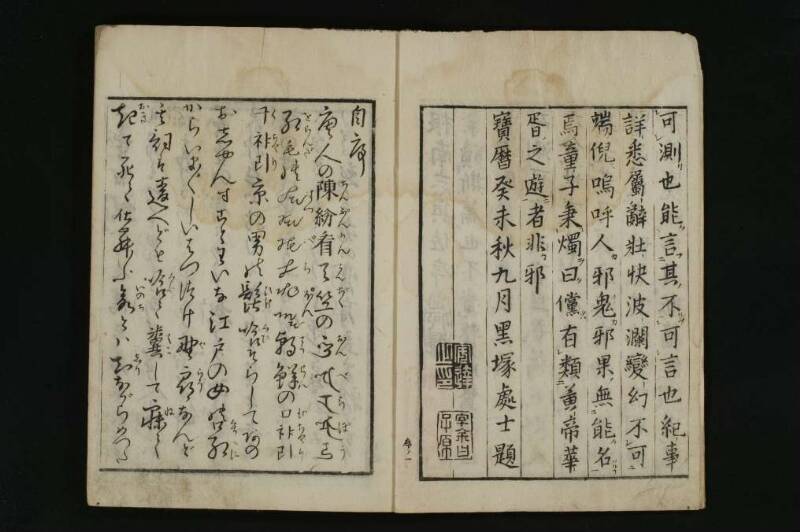
翻刻
_レ可_レ測 ̄リ也能 ̄ク言_二 ̄フ其 ̄ノ不_一レ ̄ルヲ可_レ言也紀-事
詳-悉属-辞壮-快波-瀾変-幻不_レ可_二
端倪_一 ̄ス嗚呼人 ̄カ邪鬼 ̄カ邪果 ̄シテ無_二能 ̄ク名_一 ̄クルヿ
焉童-子秉_レ ̄ル燭 ̄ヲ曰 ̄ク儻 ̄クハ有_レ類_二黄-帝華-
胥 ̄ノ之遊_一 ̄ニ者非 ̄カ邪
宝暦癸未秋九月黒塚処士題
自序
唐人の陳紛看(ちんぷんかん)天竺(てんぢく)の□□□□□(おんべらぼう)
紅毛(をらんだ)のSutupelpomu(すつぺらぽん)朝鮮(てうせん)のㅁ챠리ㅋ챠리(むちやりくちやり)京の男の髭喰(ひげくひ)そらしてあの
おしやんすことわいな江戸の女の口紅(くちへに)
からいま〳〵しいはつつけ野郎(やらう)なんど
其詞は違へども喰(くふ)て糞(はこ)して寝(ね)て
起(おき)て死て仕舞ふ命(いのち)とは知(しり)ながらめつた
現代語訳
測ることができるものを測ることができ、言うことができないものを言うことができるのである。事柄を記すこと詳細で、文辞は壮快、波瀾万丈で変幻自在、その端緒を窺い知ることができない。ああ、人なのか鬼なのか、果たして名付けようがないものである。童子が燭を手に取って言うには「もしかするとこれは黄帝や華胥の遊びに類するものではないだろうか」と。
宝暦癸未秋九月 黒塚処士題
自序
唐人の陳紛看(ちんぷんかん)、天竺の□□□□□(おんべらぼう)、紅毛(オランダ)のSutupelpomu(すつぺらぽん)、朝鮮のㅁ챠리ㅋ챠리(むちやりくちやり)、京の男の髭喰(ひげくい)そらして、あのおしゃんすことわいな、江戸の女の口紅(くちべに)からいま〜しいはつつけ野郎などと、その言葉は違えども、食って糞して寝て起きて死んで仕舞う命とは知りながらめったに
英語訳
It can measure what can be measured and speak of what cannot be spoken. The recording of events is detailed, the literary style is magnificent and vigorous, with dramatic waves of change and magical transformations that cannot be fathomed at their source. Ah, whether human or demon, it is truly beyond naming! A child holding a candle says, "Perhaps this is akin to the wanderings of the Yellow Emperor and Huaxu?"
Autumn, ninth month of Hōreki Mizunoto-hitsuji year [1763] - Inscribed by the Recluse of Kurozuka
Preface by the Author
The Chinese Chen Punkan (chinpunkan), the Indians' □□□□□ (onberabō), the Dutch Sutupelpomu (sutsuperapon), the Koreans' ㅁ챠리ㅋ챠리 (muchyari-kuchyari), the Kyoto men's whisker-eating nonsense, that affected "oshyansu" speech, the lip rouge of Edo women, those damned hattsuke fellows - though their words differ, knowing that life consists of eating, defecating, sleeping, waking, and finally dying, yet rarely...