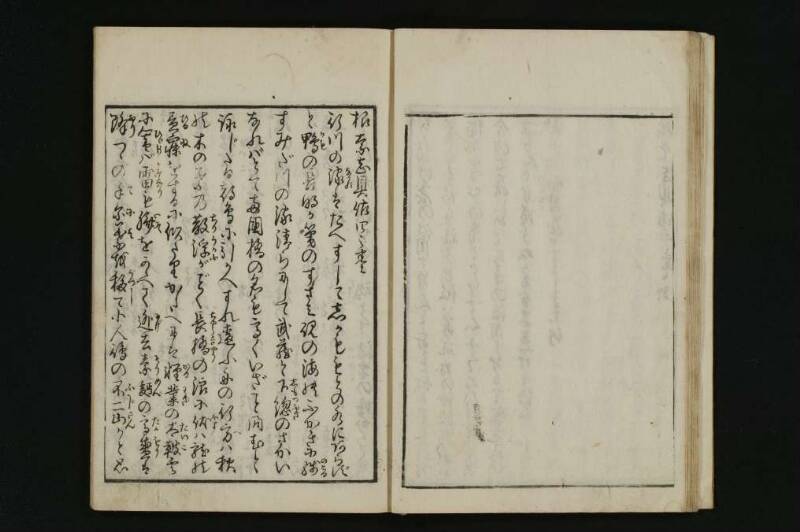
翻刻
根奈志具佐四之巻
行川の流(なかれ)はたへすしてしかももとの水にあらず
と鴨(かも)の長明か筆のすさみ硯の海のふかきに残(のこる)
すみだ川の流清らにして武蔵と下総(しもつふさ)のさかい
なればとて両国橋の名も高くいざこと問むと
詠じたる都鳥に引かへすれ違ふ舟の行 方(へ)は秋
の木の葉の散浮(ちりうかふ)がごとく長橋(ちやうきやう)の浪に伏(ふす)は竜の
昼寝(ひるね)をするに似たりかたへには軽業(かるわざ)の太鞁(たいこ)雲
に響(ひゞけ)ば雷(かみなり)も臍(へそ)をかゝへて逃(にげ)去 素麺(そうめん)の高盛(たかもり)は
降(ふり)つゝの手爾葉を移(うつし)て小人島の不二山(ふじさん)かと思
現代語訳
根奈志具佐四之巻
行く川の流れは絶えることなく、しかも元の水ではない―と鴨長明が筆のすさびに硯の海の深きに残した。隅田川の流れは清らかで、武蔵と下総の境であるということで両国橋の名も高い。「いざ事問わん」と詠じた都鳥とは引き替えに、すれ違う舟の行方は秋の木の葉が散り浮かぶようで、長い橋の波に伏すのは竜が昼寝をするのに似ている。かたわらには軽業の太鼓が雲に響けば、雷も臍を抱えて逃げ去る。素麺の高盛りは降り積む雪の手習葉を写して、小人島の富士山かと思われる。
英語訳
Volume Four of Nenashigusa
"The flow of the river never ceases, yet it is not the same water"—so wrote Kamo no Chōmei in his literary musings, remaining in the depths of the inkstone sea. The flow of the Sumida River is pure, and because it forms the boundary between Musashi and Shimōsa provinces, Ryōgoku Bridge is also famous. In contrast to the capital bird to whom the poet sang "Come, let me ask you of things," the passing boats go their way like autumn leaves scattering and floating, and lying low in the waves of the long bridge resembles a dragon taking its afternoon nap. Nearby, when the drums of acrobats resound to the clouds, even thunder flees clutching its belly. The high pile of sōmen noodles, copying the calligraphy practice leaves of falling snow, appears like Mount Fuji of the land of little people.