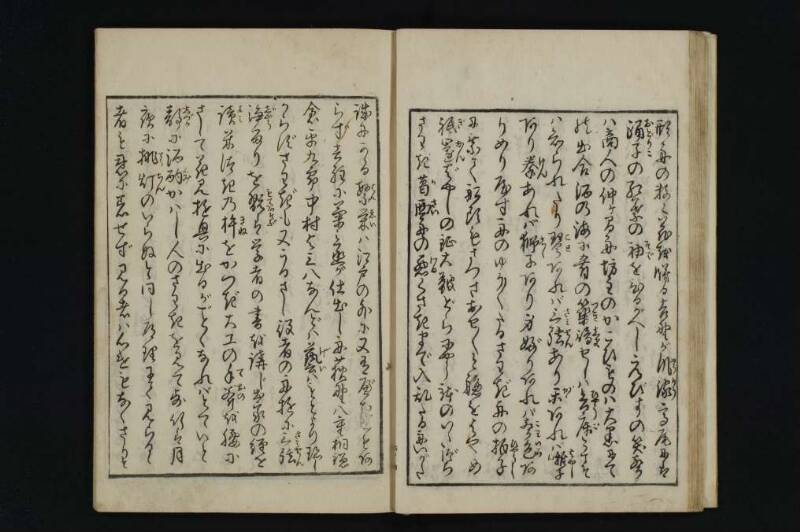
翻刻
形舟の数々花を飾る吉野が風流(ふうりう)高尾には
踊子(おどりこ)の紅葉の袖(そで)をひるがへしえびすの笑声
は商人の仲ケ間舟坊主のかこひものは大黒にて
の出合酒の海に肴の築島(つきしま)せしは兵庫(ひやうご)とこそ
は知られたり琴(こと)あれば三弦(さみせん)あり楽(がく)あれば雌子(はやし)
あり拳(けん)あれば獅子(しゝ)あり身ぶりあれば声色(こわいろ)あ
りめりやす舟のゆう〳〵たるさわぎ舟の拍子(ひやうし)
に乗て船頭もさつさおせ〳〵と艪をはやめ
祇園(ぎおん)ばやしの鉦大皷どらにやう鉢のいたづら
さわぎ葛西(かさい)舟の悪(わる)くさきまで入乱たる舟いがた
誠にかゝる繁栄(はんゑい)は江戸の外に又有べき□もあ
らず去程に菊之丞が仕出し舟荻野八重桐鎌
倉平九郎中村与三八なんどは芸(げい)はもとより珍し
からずさわぎも又うるさし役者の舟遊に三弦(さみせん)
浄(じやう)るりを翫(もてあそぶ)は学者の書を講じ出家の経を
読(よみ)米つきの杵(きね)をかつぎ大工の手斧(ておの)を腰に
さして花見遊興に出るがごとくなればとていと
静(しづか)に酒 酌(くみ)かはし人のさわきを見て歩行は月
夜に挑灯(てうちん)のいらぬと同し道理にて見らるゝ
者も恩に着せず見る者は心遣もなくさりと
現代語訳
屋形舟の数々は花を飾る吉野の風流、高尾には踊り子の紅葉の袖をひるがえし、恵比寿の笑い声は商人の仲間、舟坊主の囲い者は大黒での出会い、酒の海に肴の築島を作ったのは兵庫とこそ知られている。琴があれば三味線があり、楽があれば囃子があり、拳があれば獅子があり、身振りがあれば声色がある。メリヤス舟のゆうゆうたる騒ぎ、騒ぎ舟の拍子に乗って船頭もさっさと「おせおせ」と櫓を早め、祇園囃子の鉦、大鼓、銅鑼、にょう鉢のいたずら騒ぎ。葛西舟の悪臭がするまで入り乱れた舟いかだ、誠にこのような繁栄は江戸の外にまたあるべき所もない。さる程に菊之丞の仕出し舟、荻野八重桐、鎌倉平九郎、中村与三八などは芸はもとより珍しからず、騒ぎもまたうるさい。役者の舟遊びに三味線浄瑠璃を弄ぶのは、学者が書を講じ、出家が経を読み、米つきが杵を担ぎ、大工が手斧を腰にさして花見遊興に出るようなものであって、そのためとても静かに酒を酌み交わし、人の騒ぎを見て歩くのは、月夜に提灯がいらないのと同じ道理で、見られる者も恩に着せず、見る者は心遣いもなく、さりとて。
英語訳
The numerous pleasure barges decorated with flowers display the elegance of Yoshino; at Takao, dancers flutter their maple-colored sleeves, and Ebisu's laughter belongs to the merchants' companions. The boat monks' kept women represent encounters with Daikoku, and it is known that Hyōgo created islands of delicacies in seas of sake. Where there are koto, there are shamisen; where there is music, there are musical accompaniments; where there is ken (finger games), there are lion dances; where there are gestures, there are voice mimicry. The leisurely commotion of the meriyasu boats, and riding the rhythm of the noisy boats, even the boatmen quicken their oars with calls of "push, push!" The gongs, large drums, bronze gongs, and singing bowls of Gion festival music create a mischievous clamor. The boat rafts become so intermingled that even the foul-smelling Kasai boats join the chaos. Truly, such prosperity cannot be found anywhere outside of Edo. Even so, Kikunojō's elaborate boats, Ogino Yaegiri, Kamakura Heikurō, Nakamura Yosahachi and others - their performances are no longer novel, and their commotion has become tiresome. Actors playing with shamisen and jōruri during boat excursions is like scholars lecturing on books, monks reading sutras, rice-pounders carrying their pestles, and carpenters wearing their hatchets at their waists when going out for flower-viewing festivities. Therefore, drinking sake very quietly and walking around observing people's revelry follows the same principle as not needing lanterns on a moonlit night - those being observed don't feel indebted, and those observing have no worries, and yet...