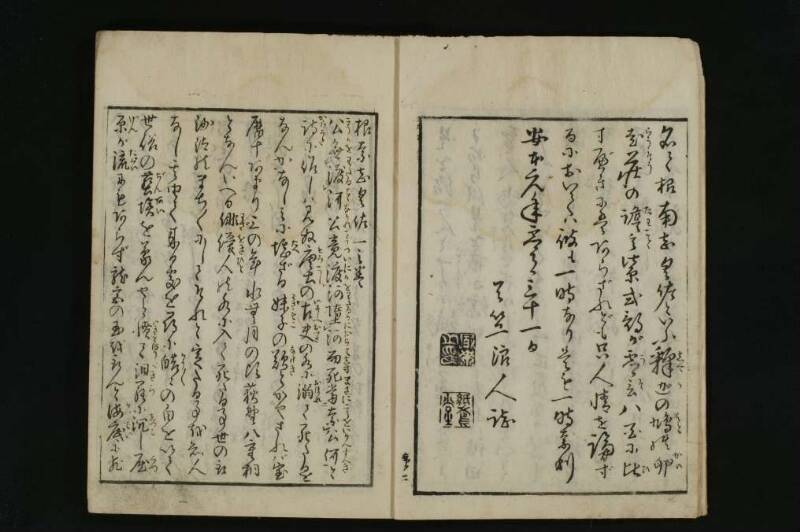
翻刻
名て根南志具佐といふ釈迦(しやか)の鳩(はと)の卵(かい)
老荘(らうそう)の譫言(たわこと)紫式部が空言(うそ)八百に比(ひ)
すべきにはあらざれども只人情を論ず
るにおいては彼も一時なり是も一時なり
安本元年霜月三十一日
天竺浪人誌
根南志具佐一之巻
公無_レ渡_レ河公竟渡_レ河堕_レ河而死当_二奈_レ公何(こうかをわたることなかれこうついにかをわたるかにおちてしすまさにこうをいかんすへき)_一と
詩(からうた)に作しは見ぬ唐土(もろこし)の古(いにしへ)夫(おつと)の水に溺(おほれ)て死たるを
なんかなしみに堪(たへ)ざる妹子(わぎもこ)の歎(なけき)とかやされば宝
暦十あまり三の年水無月の頃荻野八重桐
となんいへる俳優人(わざをきひと)の水に入て死たる事世の取
沙汰のまち〳〵にしてそれと定たる事を知人
なし其由て来る処を尋に皓々(かう〳〵)の白を以て
世俗の塵埃(ぢんあい)を蒙んやと憤(いきとほり)て泪羅(べきら)に沈(しつみ)し屈(くつ)
原(げん)が流(たぐい)にもあらず竜宮の玉を取んと海底(かいてい)に飛
現代語訳
名付けて根南志具佐という。釈迦の鳩の卵、老荘の戯言、紫式部の嘘八百に比すべきものではないけれども、ただ人情を論ずることにおいては、彼も一時のもの、これも一時のものである。
安永元年霜月三十一日
天竺浪人誌
根南志具佐一之巻
「公よ河を渡ることなかれ。公ついに河を渡り、河に堕ちて死す。まさに公をいかんすべき」と
詩に作したのは、見知らぬ唐土の昔、夫が水に溺れて死んだのを、なんとも悲しみに堪えられない妻の嘆きだとかいう。されば宝暦十三年水無月の頃、荻野八重桐とかいう俳優が水に入って死んだ事が世間の取り沙汰となっているが、それと定まった事を知る人はいない。その由来するところを尋ねるに、清らかな白さをもって世俗の塵埃を被ろうやと憤って汨羅に沈んだ屈原の類でもなく、竜宮の玉を取ろうと海底に飛び込んだ
英語訳
I name this "Konnan Shigusa" (Root South Gesture). Though it cannot be compared to Shakyamuni's dove eggs, the ravings of Laozi and Zhuangzi, or Murasaki Shikibu's countless lies, when it comes to discussing human nature, both theirs and mine are but momentary expressions.
Anei First Year, Eleventh Month, Thirty-first Day
Recorded by a wandering monk from India
Root South Gesture, Volume One
"My lord, do not cross the river. My lord finally crosses the river, falls into the river and dies. What is to be done about my lord?"
This was composed as a poem expressing the lament of a wife in ancient China who could not bear the grief of her husband drowning and dying. Similarly, around the sixth month of Hōreki 13, an actor named Ogino Yaegiri is said to have entered the water and died, which became the talk of the town, but no one knows the definite facts. When I investigate the origin of this, it was not like Qu Yuan, who in his anger at having his pure whiteness stained by worldly dust, sank into the Miluo River, nor was it like someone diving to the ocean floor to retrieve jewels from the dragon palace