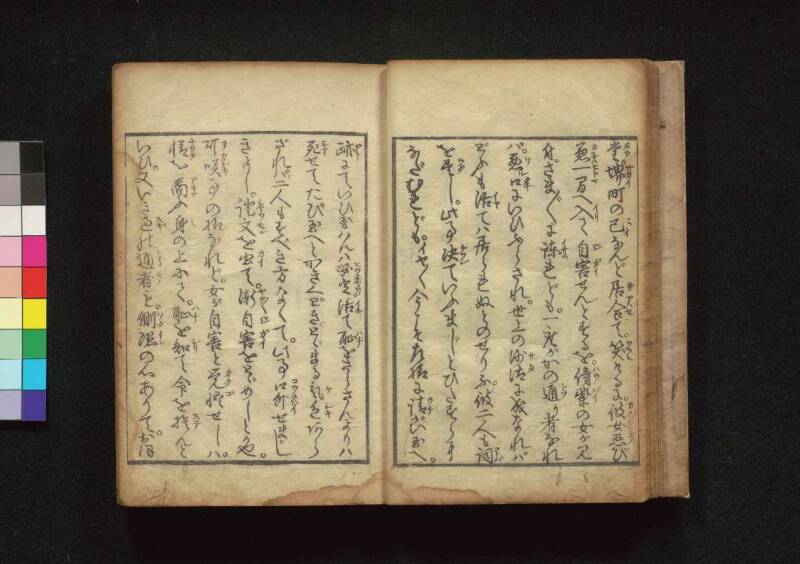
翻刻
堂(タウ)。堺(サカイ)町の己(ミイ)なんど居合(ヰアハセ)て。笑(ワラヒ)けるに。彼(カノ)女忍(シノ)び
兼(カネ)。一間(ヒトマ)へ入(イリ)て自害(ジガイ)せんとするを。傍輩(ハウバイ)の女が見
付。さま〴〵に諫(イサム)れども。一座がかの通(トヲ) ̄リ者なれ
ば。悪 ̄ル口(クチ)にいひふらされ。世上の沙汰(サタ)に成なれば
どふも活(イキ)ては居られぬとのせりふ。彼二人も詞(コトバ)
を尽(ツク)し。此事 決(ケツシ)ていふまじとひたすらに
なだむれども。イヤ〳〵今こそ左様に請(ウケ)がい玉へ。
跡(アト)にていひ玉はんは必定(ヒツチヤウ)。活(イキ)て恥(ハヂ)をさらさんよりは
死(シナ)せてたび玉へとかきくどき。とゞまる気色(ケシキ)あら
ざれば。二人もすべき方なくて。此事 口外(コウクハイ)せまじ
きよし。証文(シヤウモン)を書(カイ)て。漸(ヤウ〳〵)自害(ジガイ)をとゞめしとかや
可咲(オカシキ)事の様なれど。女が自害と覚悟(カクゴ)せしは。
情(ナサケ)を商(アキナ)ふ身(ミ)の上にて。恥(ハチ)を知(シリ)て命を捨(ステ)んと
いひ。又いき過(スギ)の通者(トヲリモノ)も。側隠(ソクイン)の心ありて。おほ
現代語訳
堂、堺町の己などが居合わせて笑ったところ、かの女は忍びかねて、一間へ入って自害しようとするのを、傍輩の女が見つけて、様々に諫めたけれども、「一座があの通りの者なれば、悪口に言い触らされ、世上の沙汰になればどうしても生きてはいられぬ」との台詞。かの二人も言葉を尽くして、「この事は決して言うまい」とひたすらになだめたけれども、「いやいや、今こそそのように請け合い玉え。後になって言い玉うのは必定。生きて恥をさらすよりは死なせて給え」とかき口説き、留まる気色がないので、二人もどうしようもなくて、この事を口外しないという証文を書いて、ようやく自害を止めたということである。可笑しいことのようであるが、女が自害と覚悟したのは、情を商う身の上であって、恥を知って命を捨てようと言い、また生き過ぎの通りすがりの者も、側隠の心があって、おお...
英語訳
...dō, and Mii from Sakai-chō were present and laughed. The woman could not bear the shame and went into another room intending to commit suicide, but her colleague saw her and tried to dissuade her in various ways. However, she said, "Since everyone present is that sort of person, they will spread malicious gossip, and if it becomes the talk of society, I simply cannot go on living." The two women exhausted their words, desperately trying to comfort her, saying "We absolutely will not speak of this matter," but she pleaded, "No, no, please promise me now. You will surely speak of it later. Rather than live and expose myself to shame, let me die," and showed no sign of relenting. The two had no choice but to write a written pledge that they would not reveal this matter to anyone, and thus finally prevented her suicide. Though this may seem like an amusing story, the woman's resolve to commit suicide was because, being in the business of selling affection, she knew shame and was willing to give up her life. Even the passing strangers showed compassionate hearts...