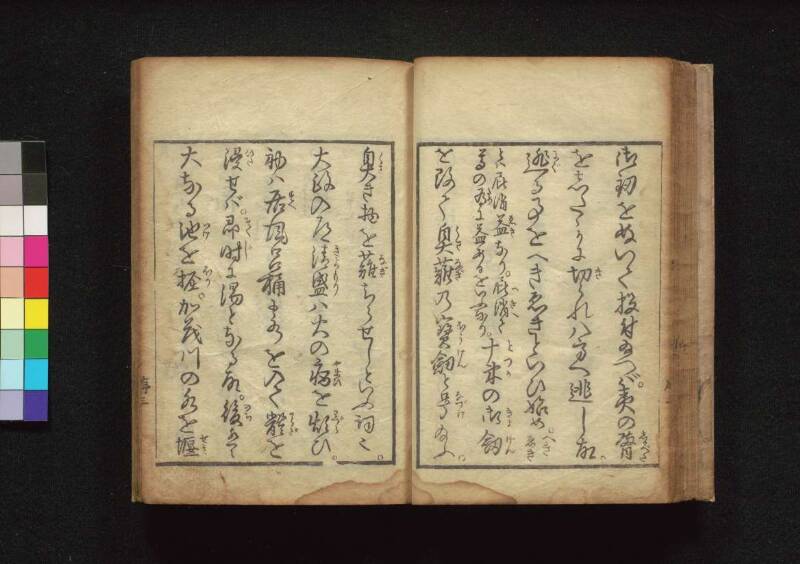
翻刻
御剣をぬいて投(なげ)付給へば。夷の臀(しりべた)
をしたゝかに切(き)られ八方へ逃し故。
逃(にぐ)る事をへきゑきといひ始め。《割書:へき|ゑき》
《割書:とは屁消 益(ゑき)なり。屁消(へきへ)て|尊の為(ため)に益あるをいふなり。》十束(とつか)の御剣(きよけん)
を改て臭薙(くさなぎ)の宝剣(ほうけん)と号(なづけ)給ふ。
臭(くさ)き物を薙(なぎ)ちらせしといふ詞也。
大政入道 清盛(きよもり)は火の病(やまひ)を煩(わづら)ひ。
初は居(すへ)風呂桶に水を入て体(からだ)を
浸(ひた)せば。即時(そくじ)に湯となる故。後(のち)は
大なる池(いけ)を掘(ほり)。加茂川の水を堰(せき)
現代語訳
御剣を抜いて投げ付けられたので、夷の尻を激しく切られ、八方へ逃げ散った故に、逃げることを「へきえき」と言い始めた。《割書:へきえきとは屁消益なり。屁が消えて尊のために益があることを言うなり。》十束の御剣を改めて草薙の宝剣と名付けられた。
臭いものを薙ぎ散らしたという意味である。
大政入道清盛は火の病を患い、初めは据え風呂桶に水を入れて体を浸すと、即座に湯となる故に、後には大きな池を掘り、鴨川の水を堰き止めて
英語訳
When [the Prince] drew his sword and hurled it at them, the barbarians' buttocks were severely cut, and they scattered in all directions, which is why fleeing came to be called "hekieki." {{Side note: "Hekieki" means "fart-extinguishing benefit" - when farts are extinguished, bringing benefit to the Prince.}} The ten-span sacred sword was renamed the Kusanagi treasure sword.
This means "cutting down foul things."
Taira no Kiyomori, the Grand Minister who became a monk, suffered from a fire disease. At first, when he put water in a sitting bath tub and immersed his body, it immediately turned to hot water, so later he dug a large pond and dammed the Kamo River's water...