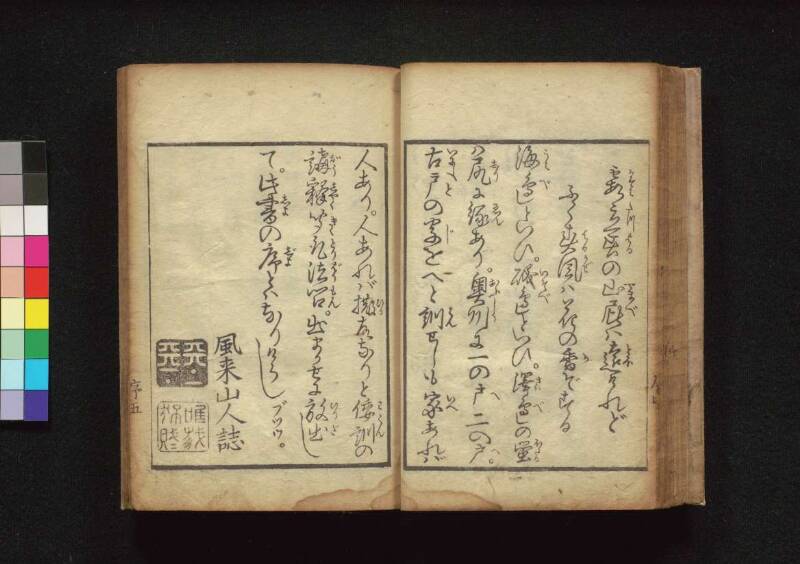
翻刻
霞立(かすみたつ)春(はる)の山屁(やまべ)は遠(とほ)けれど
ふく春風(はるかぜ)は花の香(か)ぞする
海辺(うみべ)といひ。磯辺(いそべ)といひ。沢辺(さはべ)の蛍(ほたる)
は尻(しり)に縁(ゑん)あり。奥州(おふしう)に一の戸(へ)二の戸(へ)。
古(いにしへ)戸(と)の字をへと訓(くん)せしも家(いへ)あれば
人あり。人あれば撒(ひる)故なりと倭訓(わくん)の
講釈(かうしやく)聞取(きゝとり)法問(ばうもん)。出まかせに放出(ひりだ)し
て。此 書(しよ)の序(じよ)とはなりけらし《割書:ブツツ》。
風来山人誌
現代語訳
霞立つ春の山辺は遠けれど
吹く春風は花の香ぞする
海辺といい、磯辺といい、沢辺の蛍は尻に縁がある。奥州に一の戸、二の戸。古く「戸」の字を「へ」と読んだのも、家があれば人がおり、人がいれば屁をするからだと、和訓の講釈を聞きかじった法問。出まかせに放り出して、この書の序となったのであろう《ブツツ》。
風来山人記
英語訳
Though the misty mountain slopes of spring are far away,
The blowing spring wind carries the scent of flowers.
Speaking of "umibe" (seaside), "isobe" (rocky shore), and "sawabe" (marsh edge) - the fireflies of the marsh have a connection to the buttocks. In Ōshū there are "Ichi-no-he" and "Ni-no-he." That the character "戸" (door/house) was anciently read as "he" is because where there are houses, there are people, and where there are people, there is farting - such is the scholarly interpretation of Japanese readings that I half-heard. Spouting this nonsense off the cuff, it has become the preface to this book 《*fart sound*》.
Written by Fūrai Sanjin