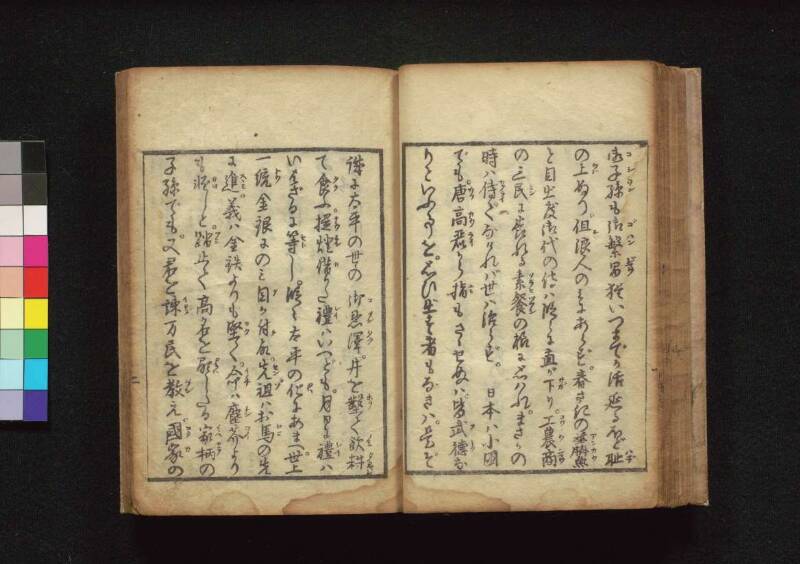
翻刻
御子孫(コシソン)も御繁昌(ゴハンジヤウ)猶いつまでか活延るほど恥(ハヂ)
の上(ウハ)ぬり。但 ̄シ浪人のみにあらず。春さきの華臍魚(アンカウ)
と目出度御代の侍は段々に直が下(サガ)り。工農商(コウノウシヤウ)
の三 民(ミン)に養れる素餐(クラヒツクシ)の様に思はれ。まさかの
時は待(サムライ)でなければ世は治らず。日本は小国
でも。唐(カラ)高麗(カウライ)から指(ユヒ)もさゝせぬは。皆 武徳(フトク)な
りといふ事を。思ひ出す者もなきは。是ぞ
誠に太平の世の 御恩沢(コヲンタク)。井を鑿(ホリ)#1て飲(ノミ)耕(タカヤシ)
て食(クラ)ふ。提燈(テウチン)借(カ)りた礼(レイ)はいへども。月日に礼(レイ)は
いはざるに等(ヒト)し。段々太平の化(クハ)にあまへ世上
一 統(トウ)金銀にのみ目(メ)か付 ̄ク故。先祖(センゾ)はお馬(ウマ)の先
に進(スヽミ)。義は金鉄よりも堅(カタ)く。命(イノチ)は塵芥(チンカイ)より
も軽(カロ)しと。踏(フミ)止て高名を顕(アラハ)したる家柄(イヘカラ)の
子孫でも。又君を諌(イサメ)万民を教(ヲシ)え。国家(コクカ)の
現代語訳
子孫も御繁昌で、なおいつまでか生き延びるほど恥の上塗り。ただし浪人のみではない。春先のあんこう魚と同じく、めでたい御代の侍は段々と値段が下がり、工農商の三民に養われる食いつぶしのように思われている。いざという時は武士でなければ世は治まらず、日本は小国でも、中国や朝鮮から指一本差させないのは、皆武徳によるということを思い出す者もいないのは、これこそ
誠に太平の世の御恩沢である。井戸を掘って飲み、耕して食う。提灯を借りた礼は言うけれども、月日に礼は言わないのと同じである。段々太平の教化に甘えて、世の中一統、金銀にのみ目がつく故に、先祖は馬の先に進み、義は金鉄よりも堅く、命は塵芥よりも軽しと、踏み止まって高名を現した家柄の子孫でも、また君を諫め万民を教え、国家の
英語訳
Their descendants also prosper, living on and on, piling shame upon shame. But it is not only the masterless samurai. Like anglerfish in early spring, the samurai of this auspicious reign have gradually declined in value and are regarded like parasites being fed by the three classes of artisans, farmers, and merchants. In times of crisis, the world cannot be governed without samurai, and though Japan is a small country, the fact that it does not allow even a finger to be pointed at it by China or Korea is all due to martial virtue—yet no one remembers this. This is truly
the benevolent blessing of a peaceful world. We dig wells and drink, we plow and eat. Though we say thanks when borrowing a lantern, we do not thank the sun and moon—it is the same principle. Gradually growing complacent in the civilization of peace, all society has set its eyes only on gold and silver. Therefore, even the descendants of houses whose ancestors advanced ahead of their horses, whose righteousness was harder than metal, whose lives were lighter than dust and refuse, who stood firm and achieved great fame, and who also remonstrated with their lords, taught the common people, and [served] the nation...