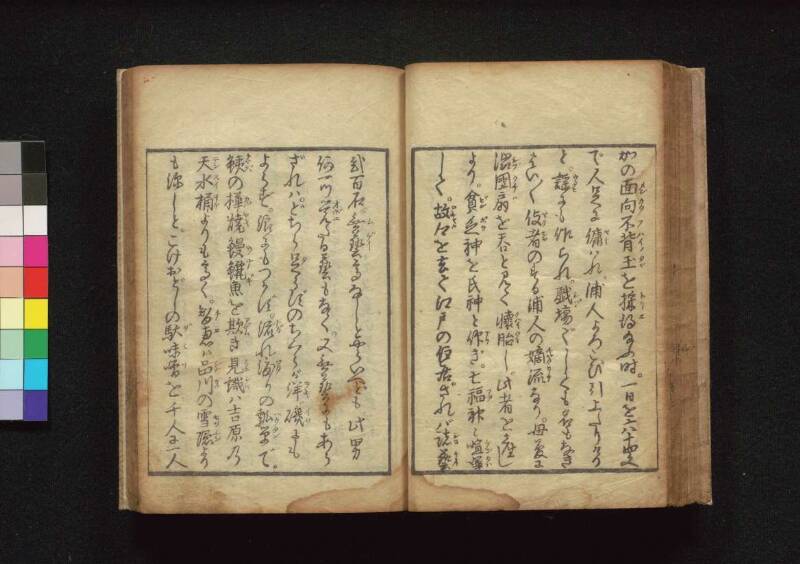
翻刻
かの面向不背玉(メンコウフハイノタマ)を採得(トリエ)給ふ時。一日を六十四文
で人足に傭(ヤト)はれ。浦人よろこび引上たりけり
と。謡(ウタヒ)にも作られ。戯場(シバイ)でしても名もなき
はい〳〵使者(ヤクシヤ)のする浦人の嫡流(チヤクリウ)なり。母夢に
渋団扇(シブウチハ)を呑と見て懐胎(クハイタイ)し。此者を産し
より。貧乏(ビンボウ)神を氏神と仰(アフ)ぎ。七 福(フク)神と喧嘩(ケンクハ)と
して。故郷(コキヤウ)を去て江戸の住居。されば諸芸(シヨケイ)
弐百石。無芸(ムゲイ)高なしとやらいへども。此男
何一つ覚(オボエ)たる芸もなく。又無芸にもあら
ざれは。どちら足(タ)らずのちくらが洋(ヲキ)。磯(イソ)にも
よらず。浪にもつかず。流(ナガ)れ渡(ワタ)りの瓢箪(ヘウタン)で。
鮧(ナマズ)の樺焼(カバヤキ)鰻鱺(ウナギ)魚ヲ欺(アザム)キ見識(ケンシキ)は吉原の
天水桶(テンスイオケ)よりも高く。智恵(チヱ)は品川(シナガハ)の雪隠(セツチン)より
も深しと。こけおどしの駄味噌(ダミソ)を。千人に一人
現代語訳
かの面向不背の玉を採り得給う時、一日を六十四文で人足に雇われ、浦人喜び引き上げたりけりと、謡にも作られ、芝居でしても名もなき端役の役者のする浦人の嫡流なり。母、夢に渋団扇を呑むと見て懐胎し、この者を産してより、貧乏神を氏神と仰ぎ、七福神と喧嘩として、故郷を去って江戸の住居。されば諸芸二百石、無芸禄なしとやら言えども、この男何一つ覚えたる芸もなく、また無芸にもあらざれば、どちらも足らずの竹籠の沖、磯にも寄らず、波にもつかず、流れ渡りの瓢箪で、鯰の蒲焼で鰻を欺き、見識は吉原の天水桶よりも高く、智恵は品川の雪隠よりも深しと、こけおどしの駄味噌を、千人に一人
英語訳
When he obtained that precious jewel called "men-kō-fuhai" (facing forward, never turning away), he was hired as a day laborer for sixty-four mon per day, and the coastal people rejoiced and pulled him up—this story was even made into a noh song and performed in theaters by nameless bit-part actors as the legitimate heir of those coastal people. His mother dreamed of swallowing a plain fan and conceived; after giving birth to this person, she worshipped the god of poverty as her tutelary deity, quarreled with the seven gods of good fortune, and left her hometown to live in Edo. Now they say "various arts are worth two hundred koku of rice, no arts mean no stipend," but this man had mastered no single art, yet was not entirely without talent either. Being insufficient in both respects, like a bamboo basket in the open sea—touching neither shore nor wave, a drifting gourd—he deceives people by passing off grilled catfish as grilled eel. His insight is higher than the rainwater barrels of Yoshiwara, his wisdom deeper than the latrines of Shinagawa—such pompous nonsense, believed by one person in a thousand