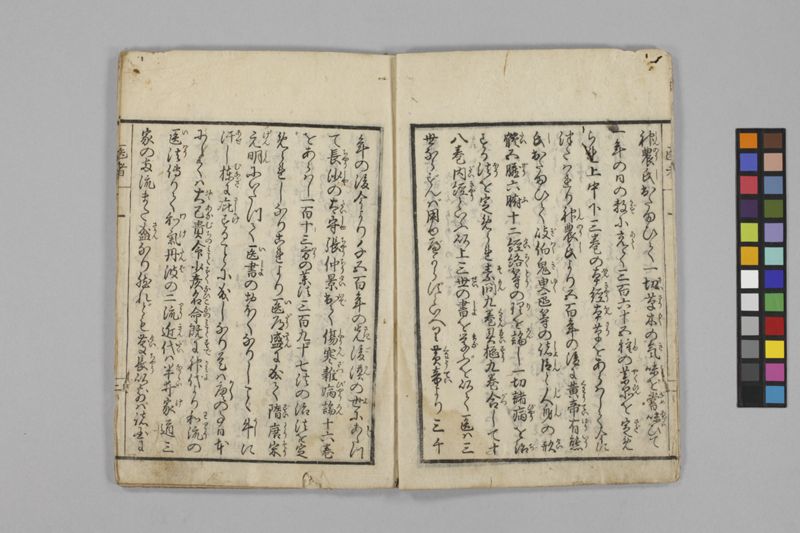
翻刻
神農(しんのう)氏(し)出たまひて一 切草木(さいさうもく)の気味(きみ)を嘗(なめ)味(あぢは)ひて
一年の日の数(かず)に充(あて)て三百六十五 種(しゆ)の薬品(やくひん)を定(さだ)め
られ上中下三巻の本経(ほんきやう)本草(ほんさう)をあらはして今に
つたはれり神農氏(しんのうし)より五百年の後に黄帝有熊(くわうていゆういう)
氏(し)出たまひて岐伯(ぎはく)鬼曳区(きゆく)【鬼庾区ヵ】等の諸臣(しよしん)と人身(じんしん)の形(けい)
体(たい)五 臓(ざう)六 腑(ふ)十二 経絡(けいらく)等(とう)の理(り)を論(ろん)し一切諸 病(びやう)を治(ぢ)
する法(ほう)を定められ素問(そもん)九 巻(くわん)霊枢(れいすう)九巻 合(がつ)して十
八巻 内経(だいきやう)といふ以上三 世(せい)の書(しよ)を学(まな)ぶを以て医は三
世ならずんば用ゆべからずといへり黄帝(くわうてい)より三千
年の後今より千五百年の先(さき)後漢(ごかん)の世(よ)にあたつ
て長沙(ちやうしや)の太守(たいしゆ)張仲景(ちやうちうけい)出(いで)て傷寒雑病論(しやうかんざつびやうろん)十六巻
をあらはし一百十三 方(はう)の薬法三百九十七法の治法を定
められしなりこれより医道(いだう)盛(さかん)に成て隋(ずい)唐(とう)宋(そう)
元(げん)明(みん)にいたつて医書(いしよ)のおほくなりしこと牛(うし)に
汗(あせ)し棟(むなぎ)に庇(さしかけ)することに成しなり是は唐(から)の事日本
にしては大己貴命(おゝあなむちのみこと)少彦名命(すくなひこなのみこと)既(すで)に神代(かみよ)より和流(わりう)の
医法(いはう)伝りて和気(わけ)丹波(たんば)の二 流(りう)近代(きんだい)は半井家(なからいけ)道三
家の両流また盛(さかん)なり然れども慶長(けいちやう)以前は諸国に
現代語訳
神農氏が現れて、あらゆる草木の味を舐めて味わい、一年の日数に合わせて三百六十五種の薬品を定められ、上中下三巻の本経本草を著して今に伝わっている。神農氏から五百年後に黄帝有熊氏が現れて、岐伯・鬼臾区等の諸臣と人体の形態、五臓六腑、十二経絡等の理論を論じ、あらゆる病気を治療する方法を定められ、素問九巻・霊枢九巻、合わせて十八巻の内経という書を作られた。以上三世(伏義・神農・黄帝)の書を学ぶことから、医者は三世を学ばなければ用いるべきではないと言われている。黄帝から三千
年後、今から千五百年前の後漢の世に当たって、長沙の太守張仲景が現れて『傷寒雑病論』十六巻を著し、百十三方の薬法と三百九十七法の治療法を定められた。これより医道が盛んになり、隋・唐・宋・元・明に至って医書が非常に多くなったことは、牛が汗をかき、棟に庇をかけるほどであった。これは唐土のことで、日本においては大己貴命・少彦名命が既に神代より和流の医法を伝え、和気・丹波の二流、近代は半井家・道三家の両流もまた盛んである。しかしながら慶長以前は諸国に
英語訳
Emperor Yan Shennong appeared and tasted all varieties of plants and trees, establishing 365 types of medicinal substances to match the number of days in a year. He compiled the Bencao (Materia Medica) in three volumes (upper, middle, and lower), which has been transmitted to the present day. Five hundred years after Shennong, the Yellow Emperor Youxiong appeared and, together with his ministers Qibo, Guiyuqu, and others, discussed the theory of human body structure, the five organs, six bowels, twelve meridians, and established methods for treating all diseases. He created the Inner Canon consisting of the Plain Questions in nine volumes and the Spiritual Pivot in nine volumes, totaling eighteen volumes. Since one must study the works of these three sages (Fuxi, Shennong, and Yellow Emperor), it is said that a doctor should not practice without mastering these three traditions. Three thousand
years after the Yellow Emperor, which corresponds to fifteen hundred years before the present, during the Later Han dynasty, Zhang Zhongjing, the governor of Changsha, appeared and compiled the "Treatise on Cold Damage and Miscellaneous Diseases" in sixteen volumes, establishing 113 medicinal formulas and 397 treatment methods. From this time, the medical way flourished greatly, and by the Sui, Tang, Song, Yuan, and Ming dynasties, medical books became so numerous that they could make oxen sweat and fill storage houses to the rafters. This concerns Chinese affairs. In Japan, the deities Ōanamuchi no Mikoto and Sukunahikona no Mikoto had already transmitted Japanese-style medical methods since the age of gods, and the two schools of Wake and Tanba, and in recent times the Nakarai and Dōsan families, have both flourished. However, before the Keichō era, throughout the provinces