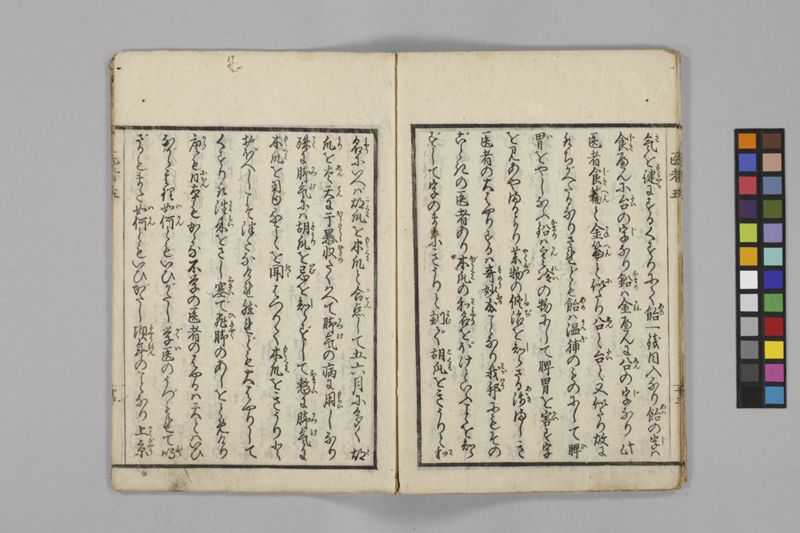
翻刻
気(き)を健(すこやか)にするくすりにて飴(あめ)一銭目入なり飴(あめ)の字(じ)は
食(じき)へんに台(たい)の字(じ)なり鉛(なまり)は金(かね)へんに【沿-氵】(ゑん)の字(じ)なり此
医者/食篇(じきへん)と金篇(かねへん)と似たり【沿-氵】(ゑん)と台(たい)と又似たり故に
取ちがへたるなりされども飴(あめ)は温補(うんほ)のものにして脾(ひ)
胃(い)をやしなふ鉛(なまり)は寒冷(かんれい)の物にして脾胃を害(かい)す字
を見あやまりより薬物(やくぶつ)の修治(しゆぢ)を知(し)らざる浅(あさ)ましき
医者の大はやりするは奇妙(きめう)成(なる)ことなり我邦(わがはう)にもその
ごときの医者あり木瓜(ぼくくわ)の和名(わみやう)をぼけといふことを知ら
ずして字のまゝにきうりと訓(よむ)で胡瓜(こくわ)をきうりと和(わ)
名(めやう)にいへば胡瓜(こくわ)を木瓜(もくくわ)と合点(かてん)して五六月に多く胡(き)
瓜(うり)を炎天(ゑんてん)に干暴収(ほしさらしおさめ)たくはへて脚気(かつけ)の病に用(もちい)しなり
殊(こと)に脚気(かつけ)には胡瓜(きうり)を忌(いむ)を知(し)らずして憖(なまらい)に脚気(かつけ)に
木瓜(もくくわ)を用ゆることを聞(きく)はつりて木瓜(もくくわ)をきうりと
おぼへしこそつたなけれ然れども大はやりして
くすり取/往来(わうらい)をさし塞(ふさい)で飛脚(ひきやく)のあしをとめけり
唐(から)も日本(にほん)もかゝる不学の医者をはやるは天とはいひ
ながら其理/如何(いかん)ともいひがたし学医(がくい)のうづもれて鳴(なる)
ざるもまた如何(いかん)ともいひがたし 頃年(きやうねん)のことなり上京(かみぎやう)
現代語訳
気を健やかにする薬で、飴一銭目を入れるのである。飴の字は食偏に台の字である。鉛は金偏に沿(さんずい無し)の字である。この医者は食偏と金偏が似ており、沿と台もまた似ているため、取り違えたのである。しかしながら飴は温補の物で脾胃を養うが、鉛は寒冷の物で脾胃を害する。字を見間違えることから薬物の修治を知らない浅ましい医者が大流行するのは奇妙なことである。
我が国にもそのような医者がいる。木瓜の和名を「ぼけ」ということを知らずに、字のままに「きうり」と読んで、胡瓜を「きうり」と和名で言うので、胡瓜を木瓜と合点して、五六月に多くの胡瓜を炎天に干して乾燥させ収蔵して、脚気の病に用いたのである。特に脚気には胡瓜を忌むことを知らずに、なまじっか脚気に木瓜を用いることを聞きかじって、木瓜を「きうり」と覚えたのはつたないことである。しかしながら大流行して、薬を取りに来る人々の往来で道を塞ぎ、飛脚の足を止めるほどであった。
中国も日本もこのような不学の医者が流行するのは天のこととは言いながら、その理由はどうにも言い難い。学のある医者が埋もれて名を上げないのもまたどうにも言い難いことである。近年のことである。上京で
英語訳
It is a medicine that strengthens the qi, containing one qian of malt sugar (飴). The character for malt sugar (飴) has the food radical with the character 台. Lead (鉛) has the metal radical with the character 沿 (without the water radical). This doctor confused them because the food radical and metal radical look similar, and the characters 沿 and 台 also look similar, so he mixed them up. However, malt sugar is a warming and tonifying substance that nourishes the spleen and stomach, while lead is a cold substance that harms the spleen and stomach. It is strange that such a pitiful doctor who doesn't know the proper preparation of medicinal substances due to misreading characters should become so popular.
In our country too, there are such doctors. Not knowing that the Japanese name for quince (木瓜) is "boke," he read the characters literally as "kiuri" (cucumber). Since cucumber is called "kiuri" in Japanese, he mistakenly thought cucumber was the same as quince (木瓜). In the fifth and sixth months, he would dry many cucumbers in the blazing sun and store them to use for treating beriberi. Particularly ignorant that cucumbers should be avoided in beriberi cases, he had heard superficially that quince is used for beriberi, and foolishly thought quince was "kiuri" (cucumber). This was quite pathetic. Nevertheless, he became so popular that the coming and going of people seeking medicine blocked the roads and stopped the couriers.
Both China and Japan see such unlearned doctors become popular - while we say this is heaven's will, the reason is truly difficult to explain. That learned physicians remain buried in obscurity without gaining recognition is also difficult to explain. This happened in recent years. In Kamigyo (upper Kyoto)