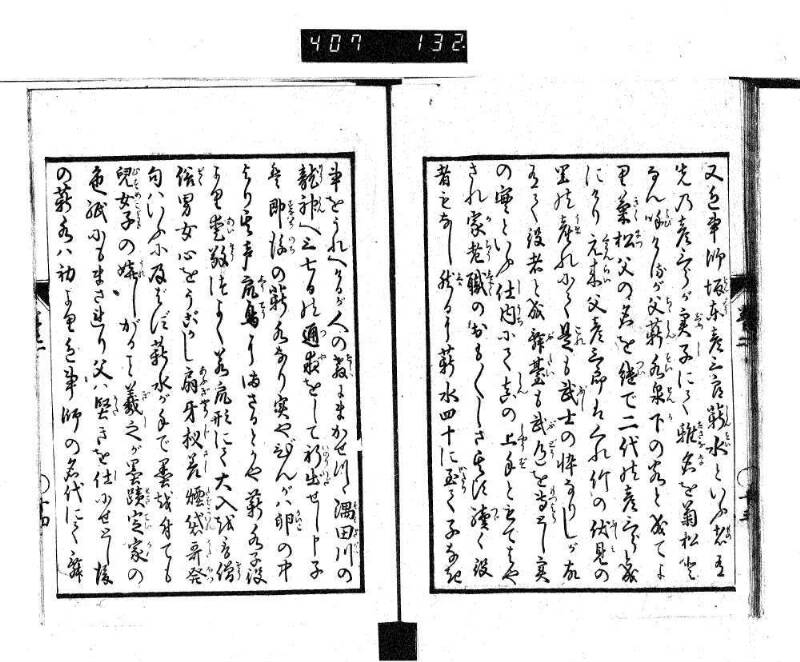
翻刻
【右丁】
又色事師/坂東(ばんどう)彦三郎/薪水(しんすい)といふ者(もの)有
先の彦三郎が実子(じつし)にて稚名(をさなな)を菊松と
なん呼(よび)けるが父(ちゝ)薪水(しんすい)泉下(せんか)の客と成てよ
り菊松(きくまつ)父の名を継(つい)で二代の彦三郎らと成
にけり元来(くわんらい)父彦三郎はくれ竹の伏見(ふしみ)の
里の産(うま)れにて是(これ)も武士(ぶし)の枠なりしが故
有て役者と成/舞台(ぶたい)も武道(ぶどう)を専(もつはら)とし実
の実といふ仕内(しうち)にて真(しん)の上手(しやうず)ともてはや
され家老職(からうしよく)のおも〱しさ其頃/続(つゞ)く役
者もなし然(しか)るに薪水四十に至(いたり)て子なき
【左丁】
事をうれへけるが人の教(おしへ)にまかせつゝ隅田川(すみだがわ)の
竜神(りうしん)へ三七日の通夜(つや)をして祈(いのり)出(いだ)せし申子
は即(すなはち)後(のち)の薪水なり実やびんがは卵(かいこ)の中
より其声/衆鳥(しうてう)にまさるとかや薪水子役
より愛敬(あいそう)つよく若衆形にて大入を取/僧(そう)
俗(ぞく)男女心をうごかし扇(おふぎ)牙杈差(やうじさし)煙袋(たばこいれ)哥(うた)発(はつ)
句はいふに及ばず薪水が手で墨を付ても
兒女子(むすめこども)の嬉(うれ)しがること義之(ぎし)が墨/蹟(せき)定家(ていか)の
色紙にもまされり父は堅(かた)きを仕(し)にせとし後
の薪水は初より色事師の名代にて舞
現代語訳
【右丁】
また色事師の坂東彦三郎薪水という者がいた。先の彦三郎の実子で、幼名を菊松と呼んでいたが、父薪水が泉下の客(死者)となってから、菊松は父の名を継いで二代目の彦三郎となった。もともと父彦三郎は呉竹の伏見の里の生まれで、これも武士の身分であったが、訳あって役者となった。舞台でも武道を専らとし、「実の実」という芸風で真の上手としてもてはやされ、家老職の重々しさで、その頃に続く役者もいなかった。しかしながら薪水は四十に至って子がない
【左丁】
ことを嘆いていたが、人の教えに従って隅田川の竜神へ二十一日間の通夜をして祈り出した申し子が、すなわち後の薪水である。まことに雛が卵の中からその声が諸鳥に勝るというように、薪水は子役から愛嬌が強く、若衆形で大入りを取り、僧俗男女の心を動かし、扇、楊枝差し、煙草入れ、歌、発句は言うに及ばず、薪水が手で墨を付けても、娘や子供たちが喜ぶこと王羲之の墨跡や定家の色紙にも勝った。父は堅実な芸を身につけよとしたが、後の薪水は初めから色事師の名代として舞台に
英語訳
【Right page】
There was also an iroegoto-shi (romantic lead actor) named Bandō Hikosaburō Shinsui. He was the real son of the previous Hikosaburō, with the childhood name Kikumatsu. After his father Shinsui became a guest of the underworld (died), Kikumatsu inherited his father's name and became the second-generation Hikosaburō. Originally, his father Hikosaburō was born in Kuretake village in Fushimi and was also of samurai status, but for certain reasons became an actor. Even on stage he specialized in martial arts, and with his "true reality" style of performance, he was celebrated as a genuine master. With the dignity of a chief retainer, there were no other actors of his caliber in those days. However, when Shinsui reached forty, he grieved over having no children.
【Left page】
Following someone's advice, he went to the dragon god of the Sumida River and prayed through twenty-one nights of vigil. The child born from these prayers was none other than the later Shinsui. Truly, like a chick whose voice surpasses all other birds even from within the egg, Shinsui from his child actor days had strong charm and drew large audiences in wakashū-gata roles, moving the hearts of monks, laypeople, men and women alike. Not only fans, toothpick cases, tobacco pouches, songs, and haiku, but even when Shinsui merely touched something with ink, the joy of girls and children surpassed even the calligraphy of Wang Xizhi or the poetry cards of Teika. While his father emphasized mastering solid techniques, the later Shinsui was from the beginning renowned as an iroegoto-shi on stage.