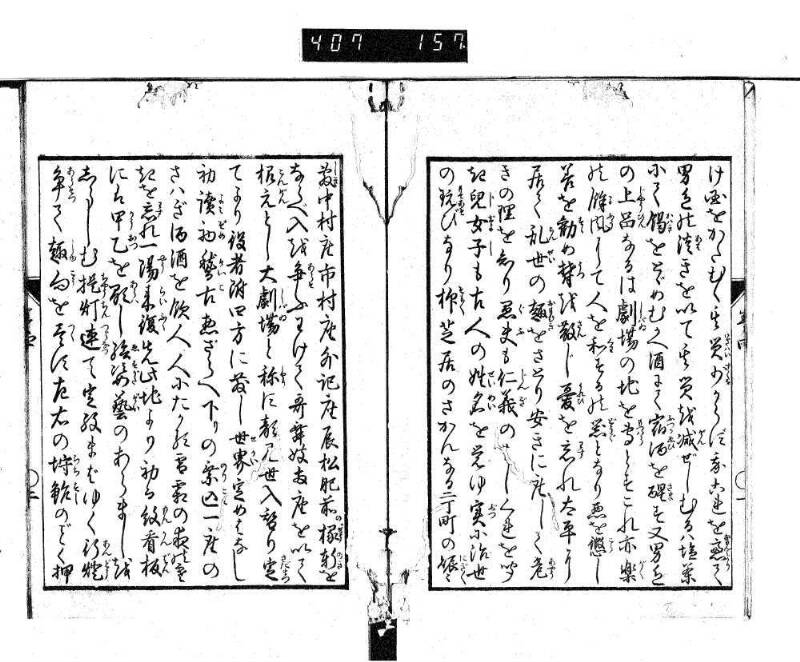
翻刻
【右丁】
け国をかたむく其/災(わざはい )少(すくな)からず我これを慮(おもんはかり)て
男色の淡(あは)きを以て其災を減(げん)ぜしむるは塩茶
にて渇(かはき)をとゞめむかへ酒にて宿酒(ふつかゑひ)を醒(さま)す又男色
の上品(じやうひん)なるは劇場(しばゐ)の地を専(もつはら)とすこれ亦/楽(がく)
の余風(よふう)にて人を和(くわ)するの器(どうぐ)となり悪を懲(こら)し
善を勧(すゝ)め欝(うつ)を散(さん)じ憂(うれひ)を忘(わす)れ太平に
居て乱世(らんせい)の趣(おもむき)をさとり安きに座して危(あやう)
きの理を知り愚夫(ぐふ)も仁義(じんぎ)のはしくれを聞
き児女子(じじよし)も古人の姓名(せいめい)を覚ゆ実(じつ)に治世
の玩(もてあそ)びなり抑(そも〳〵)芝居のさかんなる二丁町の賑々(にぎ〳〵)
【左丁】
敷(しき)中村座市村座外記座辰松肥前/椂(のぜう)軒(のき)を
ならべ入を争(あらそ)ふわけて哥舞妓両座を以て
根元(こんげん)とし大/劇場(しばゐ)と称(しやう)す顔見世入替り定(さだまつ)
てより役者附四方に散し世界(せかい)定めはなし
初/読初(よみぞめ)稽古(けいこ)惣ざらへ下 ̄リの乗込(のりこみ)一座の
さはぎ酒酒を飲人人にたかる雪霜の夜の寒
きを忘(わす)れ一/陽(やう)来復(らいふく)先此地より初る紋看板(もんかんばん)
には甲乙(かうおつ)を顕(あらは)し絵姿(ゑすがた)芸(げい)のあらましを
しらしむ提灯(ちやうちん)連(つらなつ)て定紋まばゆく行灯(あんどう)
争(あらそつ)て趣向(しゆこう)を尽(つく)す左右の埒鮓(らちすし)のごとく押
現代語訳
【右丁】
け国を傾ける、その災いは少なくない。我はこれを思慮して、男色の淡泊さをもってその災いを減らそうとするのは、塩茶で渇きを止め、迎え酒で二日酔いを覚ますようなものである。また男色の上品なものは劇場の地を専らとする。これもまた音楽の余韻として人を和ませる道具となり、悪を懲らしめ善を勧め、憂鬱を散らし憂いを忘れさせる。太平の世にあって乱世の趣を悟らせ、安全な所に座して危険な道理を知らしめ、愚かな者も仁義の端くれを聞き、女子供も古人の姓名を覚える。実に治世の娯楽である。そもそも芝居の盛んな二丁町(中村町・市村町)の賑やかさといったら、
【左丁】
中村座・市村座・外記座・辰松・肥前の座が軒を並べ、観客を争う。特に歌舞伎両座をもって根元とし、大劇場と称する。顔見世・入れ替わりが定まってより、役者番付は四方に散らばり、世界設定も定まりがない。初読み・稽古・総ざらえ・下がりの乗り込みと一座の騒がしさ、酒、酒を飲み、人、人にたかる。雪霜の夜の寒さを忘れ、一陽来復もまずこの地より始まる。紋看板には優劣を表し、絵姿は芸のあらましを知らしめる。提灯が連なって定紋がまばゆく、行灯が競って趣向を尽くす。左右の埒は寿司のように押し
英語訳
【Right Page】
and overturn the country—such disasters are not few. I contemplate this and seek to reduce such calamities through the restraint of male love, which is like stopping thirst with salt tea or curing a hangover with more alcohol. Moreover, the refined forms of male love are found primarily in the theatrical quarters. This too serves as an instrument for harmonizing people through the lingering influence of music, punishing evil and encouraging good, dispelling melancholy and helping people forget their sorrows. Living in peaceful times, people come to understand the nature of turbulent eras; sitting in safety, they learn the principles of danger. Even foolish men hear fragments of benevolence and righteousness, and women and children learn the names of ancient worthies. Truly, this is the entertainment of a well-governed age. Indeed, the bustling liveliness of the prosperous theater district of Nichōmachi is remarkable—
【Left Page】
The Nakamura-za, Ichimura-za, Geki-za, Tatsumatu, and Hizen theaters line up their eaves and compete for audiences. Particularly, the two kabuki theaters serve as the foundation and are called the great theaters. Since the face-showing performances and cast changes became established, actor rankings spread in all directions, and stage settings have no fixed form. From first readings, rehearsals, dress rehearsals, to the final entrance processions—the whole troupe is in an uproar. Sake, sake they drink; people, people cluster together. They forget the cold of snowy, frosty nights, and the return of yang energy begins first from this place. The crest signboards display rankings of excellence, and portrait pictures show the general scope of the arts. Lanterns line up with dazzling family crests, and standing lamps compete in elaborate designs. The barriers on both sides are packed like sushi—