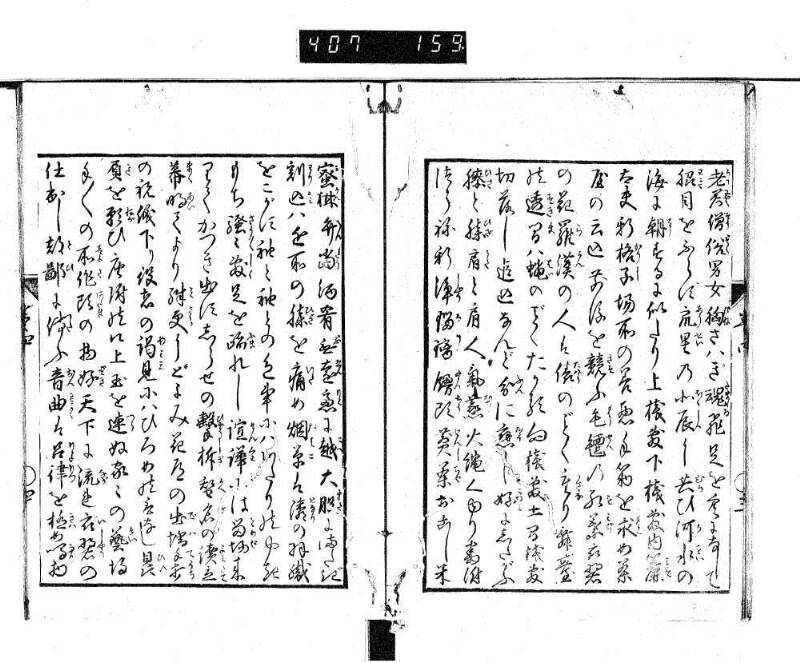
翻刻
【右丁】
老若(ろうにやく)僧俗(そうぞく)男女/胸(むね)さはぎ魂(たましゐ)飛足を空になして
脇(わき)目をふらず衆星(しうせい)の北辰(ほくしん)に共(むか)ひ河水(かすい)の
海に朝(てう)するに似たり上桟敷下桟敷内/簾(みす)
太夫新/格子(かうし)場所の善悪手筋を求(もと)め茶
屋の云込前後を競(きそ)ふ毛氈(もうせん)の紅葉(もみぢ)衣装
の花/羅漢(らかん)の人は俵(たはら)のごとく重(かさな)り舞台
の透間(すきま)は蝿(はい)のごとくたかる向桟敷土間桟敷
切落し追込なんど分(ふん)に応(おほ)し好(このみ)にしたがふ
膝(ひさ)と膝(ひざ)肩(かた)と肩人気/蒸(むし)火縄くゆり番附
つらね新/浄瑠璃(しやうるり)饅頭(まんちう)煎茶(せんちや)おこし米
【左丁】
蜜柑(みかん)弁当(へんたう)酒肴/無遠慮(ぶゑんりよ)に越(こへ)大/股(また)にまたぎ
割込(わりこみ)は近所の膝(ひざ)を痛(いた)め烟草(たはこ)は隣(となり)の羽織
をこがす袖と袖との色事にはつたりのやき
もち騒々敷(さわ〳〵しく)足を踏(ふま)れし諠譁(けんくわ)には留場(とめば)来
りてかつき出すしらせの撃拆(ひやうしぎ)替名(かへな)の読立(よみたて)
幕(まく)明(あい)てより殊更(ことさら)にどよみ花道の出端(では)手打(てうち)
の祝儀下 ̄リ役者の謁見(めみえ)にはひろめの取なし贔(ひい)
屓(き)を願(ねが)ひ座附の口上玉を連(つら)ぬ家々の芸(けい)得
手〱の所作(しよさ)頭(あたま)の物/好(ずき)天下に流(なが)れ衣装(いしやう)の
仕出し都鄙(とひ)に伝(つた)ふ音曲(おんきよく)は呂律(りよりつ)を極(きわ)め鳴(なり)物
現代語訳
【右丁】
老若男女、僧俗を問わず、胸騒ぎして魂が飛び、足を宙に浮かせて脇目もふらず、まるで多くの星が北極星に向かい、河水が海に注ぐように集まってくる。上桟敷、下桟敷、内簾、太夫席、新格子など、場所の良し悪しや見やすさを求めて、茶屋への依頼で前後の席を競い合う。毛氈の紅葉のような美しさ、衣装の花のような華やかさ。羅漢像のような人々は俵のように重なり合い、舞台の隙間には蝿のように群がる。向桟敷、土間桟敷、切落し、追込みなど、身分に応じ好みに従って席を選ぶ。膝と膝、肩と肩が触れ合い、人いきれで蒸し暑く、火縄がくゆり、番付が連なる。新浄瑠璃、饅頭、煎茶、おこし米、
【左丁】
蜜柑、弁当、酒肴を無遠慮に食べ、大股でまたぎ、割り込みは近所の人の膝を痛め、煙草は隣の羽織を焦がす。袖と袖が触れ合う色恋沙汰には、嫉妬で騒々しく、足を踏まれた喧嘩には留場係がやってきて連れ出す。知らせの拍子木、代役の読み上げ、幕が開いてからは特にどよめきが起こる。花道の出端では手打ちの祝儀、下がり際の役者のお目見えには祝いの取り成し、贔屓を願い、座付きの口上は玉を連ねるよう。それぞれの家の芸、得意な所作、頭の物好きは天下に広まり、衣装の仕立ては都市部から地方へと伝わる。音曲は呂律を極め、鳴り物は
英語訳
【Right Page】
Old and young, monks and laypeople, men and women—all with hearts racing and souls flying, feet barely touching the ground, eyes fixed straight ahead without a sideways glance. Like countless stars turning toward the North Star, like river water flowing toward the sea, they gather. Upper box seats, lower box seats, curtained sections, leading actor seats, new latticed areas—seeking good locations and clear sightlines, competing for front and back seats through tea house arrangements. The beauty of felt mats like autumn leaves, the splendor of costumes like flowers. People packed like Buddhist statues or stacked rice bales, swarming like flies in every gap around the stage. Opposite box seats, ground-level boxes, drop-off sections, standing areas—chosen according to one's station and preference. Knee to knee, shoulder to shoulder, the air thick with body heat, match cords smoldering, programs lined up in rows. New joruri, steamed buns, green tea, puffed rice,
【Left Page】
tangerines, lunch boxes, sake and side dishes consumed without ceremony. People stride with wide steps, those pushing in hurt their neighbors' knees, tobacco burns the sleeves of nearby haori jackets. When sleeves brush in romantic encounters, jealousy creates noisy disturbances; when feet are stepped on and fights break out, the ushers come to escort the troublemakers out. The sound of wooden clappers announcing news, the reading aloud of substitute actor names. After the curtain rises, the murmur grows especially loud. At the actors' entrance on the flower path, there are celebratory hand-clapping and gratuities; when actors make their final appearances, there are festive arrangements and requests for patronage. The theater manager's speeches flow like strung pearls. Each acting family's specialties, their signature performances, the aesthetic preferences of connoisseurs spread throughout the land, and costume designs are transmitted from the capital to the provinces. The musical accompaniment reaches the heights of articulation, and the instrumental music—