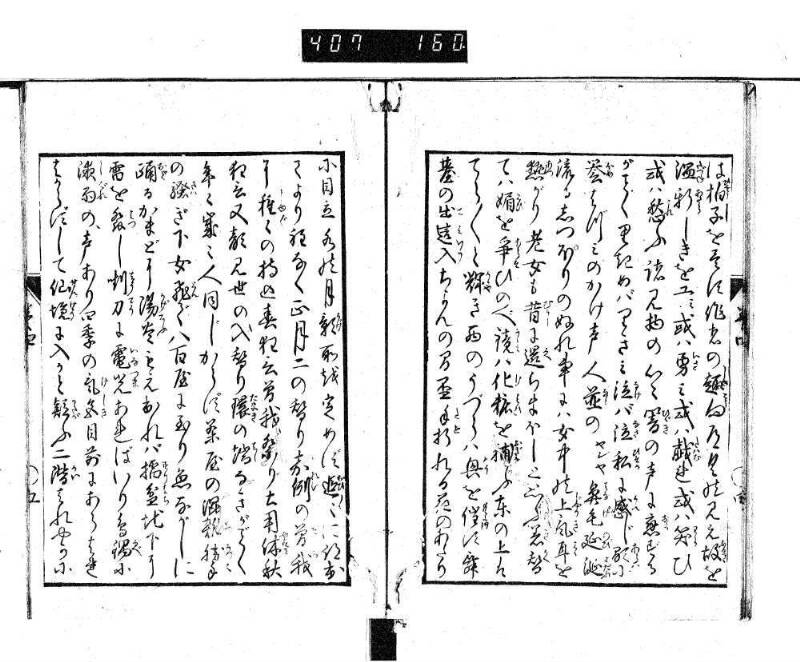
翻刻
【右丁】
は柏子(ひようし)を尽す作者の趣向(しゆこう)道具の見え故(ふるき)を
温(たづね )新(あたら)しきを工 ̄ミ或は勇(いさ)み或は戯(たはむ)れ或は笑(わら)ひ
或は愁(うれ)ふ諸見物の心々/響(ひゞき)の声に応(おう)ずる
がことくりきめばりきみ泣(なけ)ば泣(なき)私(ひそか)に感(かん)じ顕(あらは)に
誉(ほめ)はづみのかけ声人/並(なみ)の ̄ヤンヤ鼻毛(はなげ)延(のび)涎(よだれ)
流るしつぽりのぬれ事には女中の上気(じやうき)耳(みゝ)を
熱(あつ)がり老女も昔(むかし)に還(かへ)らまほしと思ふ着替(きかへ)
ては媚(こび)を争(あらそ)ひのべ鏡(かゝみ)は化粧(けはひ)を補(おぎな)ふ東の上は
てら〱と輝(かゝや)き西のうづらは興(かう)を催(もよほ)す舞
台の出這入(ではいり)ちよんの間盃/手折(てを)れる花のあたり
【左丁】
に目立水の月/影(かげ)所を定めず追々(おひ〳〵)に跡出
てより程なく正月二の替り嘉/例(れい)の曽我(そか)
に種々(しゆ〴〵)の持込春狂言曽我祭り土用/休(やすみ)秋
狂言又顔見世の入替り環(たまき)の端(はし)なきがごとく
年々歳々人同じからず茶屋の混雑(こんざつ)勝手(かつて)
の騒(さは)ぎ下女/飛(とん)で八百屋に至り魚ながしに
踊(おど)るかまどに陽炎(かげろふ)もえ出れば擂盆(すりはち)地下に
雷を発(はつ)し剉刀(はうてう)に電光(いなつま)あればいり鳥/鍋(なべ)に
液雨(しぐれ)の声あり四季の気色(けしき)目前にあらはれ
はからずして仙境(せんけう)に入かと疑(うたが)ふ二/階(かい)はれやかに
現代語訳
【右丁】
は拍子を尽くす。作者の趣向、道具の見せ方は古いものを尋ね求め、新しいものを工夫する。あるときは勇ましく、あるときは戯れ、あるときは笑い、あるときは愁う。諸見物の心それぞれが、響きの声に応じるかのように、力んで見れば力み、泣けば泣く。ひそかに感動し、あからさに褒め称え、はずみをつけた掛け声、人並みのヤンヤという声援。鼻毛も伸び、涎も流れる。しっとりとした濡れ場には女中たちが上気し、耳を熱がり、老女も昔に戻りたいと思う。着替えては媚を競い合い、手鏡は化粧を補う。東の上手は照り映えて輝き、西の鶉は興趣を催す。舞台の出入り、ちょっとの間の酒杯、手折られる花のあたり
【左丁】
に目立つ水の月影、居場所を定めず。追々に後を引いて程なく、正月、二月の替わり、恒例の曽我物に種々の趣向を持ち込んだ春狂言、曽我祭り、土用休み、秋狂言、また顔見世の入れ替わり。輪に端がないように年々歳々人は同じではない。茶屋の混雑、勝手場の騒ぎ、下女は飛ぶように八百屋に至り、魚河岸で踊る。竈に陽炎が燃え出れば、擂り鉢が地下に雷を発し、包丁に稲妻があれば、煎り鳥鍋に時雨の声がある。四季の気色が目前に現れ、計らずして仙境に入ったかと疑う。二階は晴れやかに
英語訳
【Right Page】
reaches the ultimate in rhythm and timing. The playwright's creative concepts and the staging of props seek out the old while devising the new. Sometimes brave, sometimes playful, sometimes laughing, sometimes sorrowful. Each spectator's heart responds as if answering the resonant voices—when the performance is intense, they become intense; when it's sad, they weep. Secretly moved and openly praising, enthusiastic calls ring out with the crowd's typical "Yanya!" cheers. Nose hairs grow long and saliva drools. During tender love scenes, the maidservants flush with excitement, their ears burning hot, and even elderly women wish they could return to their youth. With each costume change, the actors compete in charm, and hand mirrors supplement their makeup. The upper stage area to the east glitters brilliantly, while the lower western section stirs the audience's interest. The comings and goings on stage, brief moments with sake cups, around the area where flowers are plucked
【Left Page】
the moonlight on water catches the eye, never settling in one place. Gradually following one after another, before long comes New Year, then the February program change, the customary Soga plays with various innovations worked into the spring performances, Soga festivals, summer closures, autumn plays, and then the kaomise season changeovers. Like a circle without beginning or end, year after year the people are never the same. The tea houses are crowded, the kitchens bustle with activity, servant girls fly about reaching the vegetable vendors, dancing at the fish market. When heat shimmer rises from the cooking stoves, mortars thunder underground, and when lightning flashes from kitchen knives, the sound of winter rain comes from the pots of roasted fowl. The atmosphere of the four seasons appears before one's eyes, and one wonders if one has inadvertently entered a fairy realm. The second floor is bright and cheerful