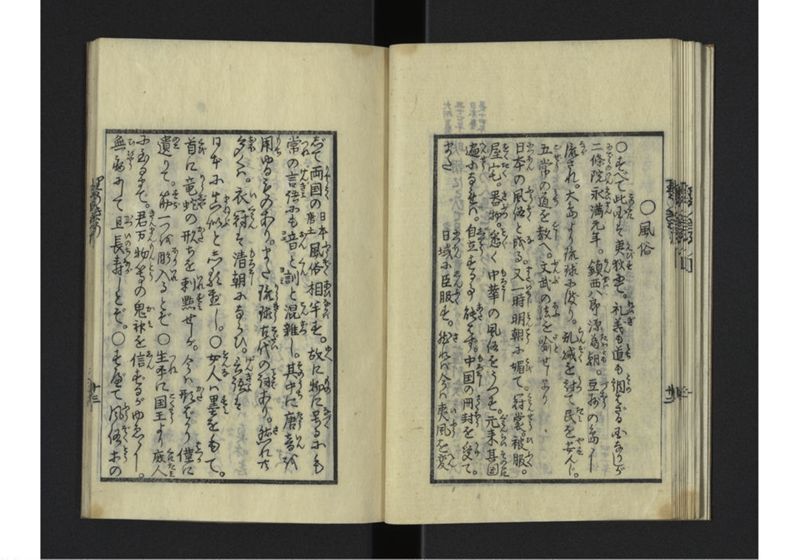
翻刻
〇風俗
〇すべて 此国(このくに)は 夷狄(えびす)にて。 礼儀(れいぎ)も 道(ミち)も 調(とゝの)はざる国なりしが
二條院(にでうのいん)永満(えいまん)元年。 鎮西(ちんぜい)八郎源 為朝(ためとも)。 豆州(ずしう)の島に
流(なが)され。大島より琉球に渡り。 乱賊(らんぞく)を 討(うつ)て 民(たミ)を 安(やす)んじ。
五常(ごぜう)の 道(ミち)を 教(をし)ヘ。 文武(ぶんぶ)の 法(ほふ)を 喩(さと)せしより
日本(につほん)の 風俗(ふうぞく)と 成(な)る。 又(また)一時(いちじ)明朝(ミんてう)に 媚(こび)て。 冠裳(くわんせう)。 被服(ひふく)。
屋宅(をくたく)。 器物(きぶつ)。 悉(こと〴〵)く 中華(もろこし)の風俗をうつす。 元来(ぐわんらい)其国(そのくに)
遍小(へんせう)なれバ。 自立(じりつ)する事 能(あた)はず。 中国(もろこし)の 冊封(さくほう)を受(うけ)て。
また 日域(につほん)に 臣服(しんふく)す。 然(さ)れバ今ハ 夷風(いふう)を 変(へん)
じて 両国(りやうこく)の《割書:日本|唐土》 風俗(ふうぞく)相半(あいなかバ)す。 故(ゆへ)に 物(もの)に 号(なづく)るにも
常(つね)の 言語(げんぎよ)にも 音(おん)と 訓(くん)と 混雑(こんざつ)し。 其中(そのうち)に 唐音(たういん)を
《割書:コエ ヨミ》
用(もち)ゆるものあり。また 琉球(りうきう)古代(こだい)の 詞(ことば)あり。 然(さ)れ共
多(おほ)くハ。 衣冠(いくわん)は 清朝(もろこし)にならひ。 言語(げんぎよ)は
日本に 真似(まねぶ)としるべし。〇 女人(をんな)ハ 墨(すミ)をもて。
首(くび)に 竜蛇(りうじや)の 形(かた)ちを 刺點(いれずミ)せしが。今ハ 形(かた)ばかり 僅(わつか)に
遺(のこ)りて。 筋(すぢ)一つを 彫入(ほりいれ)るとぞ○生平(つね)に国王(こくわう)より庻人(くにたミ)
に至るまで。君万(きんまん)物等(もんとう)の 鬼神(かミ)を 信(しん)ずるゆゑに。
無病(むびやう)にして 且(かつ)長寿(いのちなが)しとぞ。〇すべて 風俗等(ふうぞくとう)の
現代語訳
○風俗
○すべてこの国は蛮族の地で、礼儀も道徳も整っていない国であったが、二条院の永万元年(1165年)、鎮西八郎源為朝が伊豆国の島に流され、大島より琉球に渡り、反乱軍を討って民を安定させ、五常の道を教え、文武の法を諭したことから、日本の風俗となった。また一時期、明朝に媚びへつらって、冠や衣装、被服、屋敷、器物など、すべて中華の風俗を真似るようになった。もともとその国は非常に小さく、自立することができないため、中国の冊封を受け、また日本にも臣従している。そのため今では蛮族の風習を変えて、両国(日本と中国)の風俗が半々に混じっている。
故に物に名前をつけるにも、普通の言語においても、音読みと訓読みが混在し、その中に唐音を用いるものもあり、また琉球古来の言葉もある。しかしながら多くの場合、衣冠は清朝に倣い、言語は日本を真似ていると理解すべきである。
○女性は墨を用いて首に竜蛇の形を入れ墨していたが、今では形だけがわずかに残り、筋一つを彫り入れるだけだという。
○普段から国王から庶民に至るまで、君万物等の鬼神を信じているため、無病で且つ長寿であるという。
○すべて風俗等の...
英語訳
○Customs
○Originally, this country was a land of barbarians where neither etiquette nor moral principles were properly established. However, in the first year of Eiman of Emperor Nijo (1165), Chinzei Hachiro Minamoto no Tametomo was exiled to an island in Izu Province. He crossed from Oshima to Ryukyu, suppressed rebellions, brought peace to the people, taught the Way of the Five Constants, and instructed them in civil and military laws. From this time, Japanese customs were adopted. Later, for a time, they flattered the Ming Dynasty and completely imitated Chinese customs in their caps and robes, clothing, residences, and implements. Originally, since their country is very small and cannot be self-sufficient, they receive investiture from China while also submitting to Japan. Therefore, now they have changed their barbarian customs, and the customs of both countries (Japan and China) are mixed in equal measure.
Thus, in naming things and in ordinary language, Chinese readings and Japanese readings are mixed together. Among these, some use Tang pronunciations, and there are also ancient Ryukyuan words. However, it should be understood that in most cases, their dress and caps follow the Qing Dynasty, while their language imitates Japan.
○Women used to tattoo dragon and snake designs on their necks with ink, but now only traces of this custom remain, with just a single line being carved in.
○In daily life, from the king to commoners, all believe in various spirits and deities, and therefore they are said to be free from illness and long-lived.
○All customs and such...