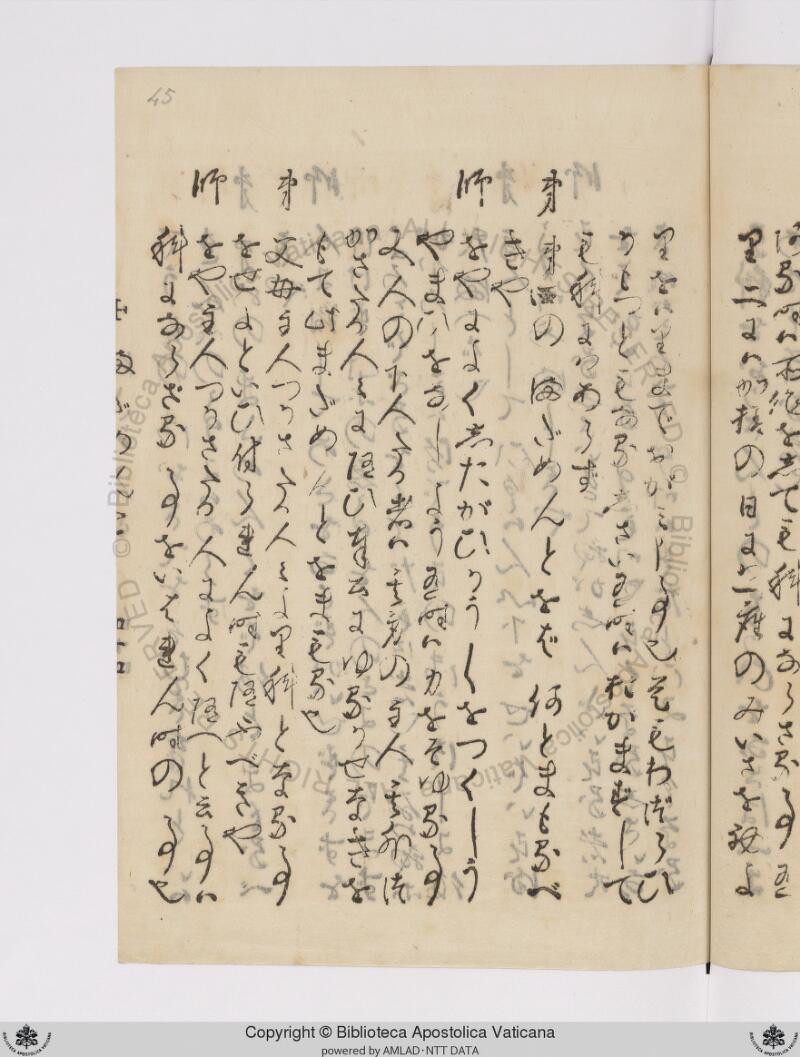
翻刻
りをはりまでおがみ申事也是もわづらひ
かもつともなるしさい有時はおがまずして
も科にはあらず
弟 第四のまだめんとをば何とまもるべ
きや
師 をやによくしたがひかう〳〵をつくしう
やまひをなしよう有時は力をそゆる事
又人の下人たる者は其身の主人其外つ
かさたる人々に随ひ奉公にゆるかせなきを
もて此まだめんとをまもる也
弟 父母主人つかさたる人々より科となる事
をせよといひ付られん時も随ふべきや
師 をや主人つかさたる人によく随へと云事は
科にならざる事をいはれん時の事也
現代語訳
...最後まで拝み申すことである。これも病気や最もな事情がある時は拝まずとも罪にはならない。
弟子:第四の掟をばどのように守るべきでしょうか。
師:親によく従い、孝行を尽くし敬いを怠らないことである。また人の下人たる者はその身の主人、その外司る人々に従い奉公に怠りなきをもってこの掟を守るのである。
弟子:父母・主人・司る人々より罪となることをせよと言いつけられた時も従うべきでしょうか。
師:親・主人・司る人によく従えということは、罪にならざることを言われた時のことである。
英語訳
...to the end. Even in this case, when there is illness or the most reasonable circumstances, not attending does not constitute a sin.
Disciple: How should one observe the fourth commandment?
Master: One should obey one's parents well, fulfill filial piety, and not neglect reverence. Also, those who are servants should follow their masters and other authorities, serving diligently without negligence, thereby observing this commandment.
Disciple: Should one also obey when parents, masters, or authorities order one to do things that would constitute sins?
Master: The instruction to obey parents, masters, and authorities well applies only when they command things that would not constitute sins.