翻刻
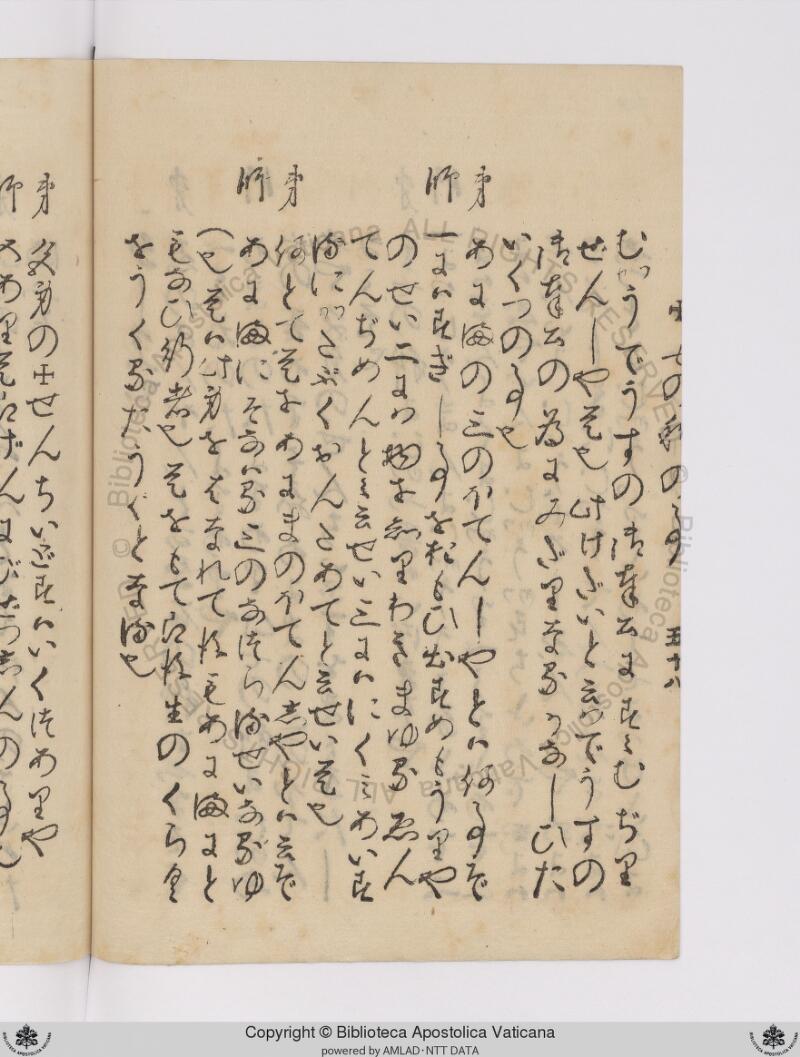
むかうでうすの御奉公にすゝむぢり
ぜんしや是也此けだいと云はでうすの
御奉公の為にみだりなるかなしひた
いくつの事也
弟 あにまの三のほてんしやとは何事ぞ
師 一にはすぎし事をおもひ出すめもうりや
のせい二には物を知りわきまゆるゑん
てんぢめんとゝ云せい三にはにくみあいす
るにかたぶくおんたあてと云せい是也
弟 何とて是をあにまのほてんしやとは云ぞ
師 あにまにそなはる三のなつらるせいなるゆ
へ也是は此身をはなれて後もあにまにと
もなひ行者也是をもて即後生のくらく
をうくるたうぐとなる也
現代語訳
対する、神への奉仕に励む勤勉これである。この怠惰というのは神への奉仕のために、みだりなる悲しみ、倦怠の数々の事である。
弟子:魂の三つの能力とは何事ぞ。
師:一つには過ぎし事を思い出す記憶力、二つには物事を知り分ける理解力という力、三つには憎み愛するに傾く意志という力これである。
弟子:なぜこれを魂の能力というのか。
師:魂に備わる三つの自然な力であるゆえである。これはこの身を離れた後も魂とともに行くものである。これをもって、すなわち後生の楽苦を受ける道具となるのである。
英語訳
...diligence in serving God. This sloth refers to various matters of improper sadness and weariness regarding service to God.
Disciple: What are the three powers of the soul?
Master: First is the power to recall past events - memory; second is the power called understanding that knows and distinguishes things; third is the power called will that inclines toward love and hatred.
Disciple: Why are these called the powers of the soul?
Master: Because they are three natural powers inherent in the soul. These accompany the soul even after departing from this body. Through these, they become the instruments for receiving joy or suffering in the afterlife.