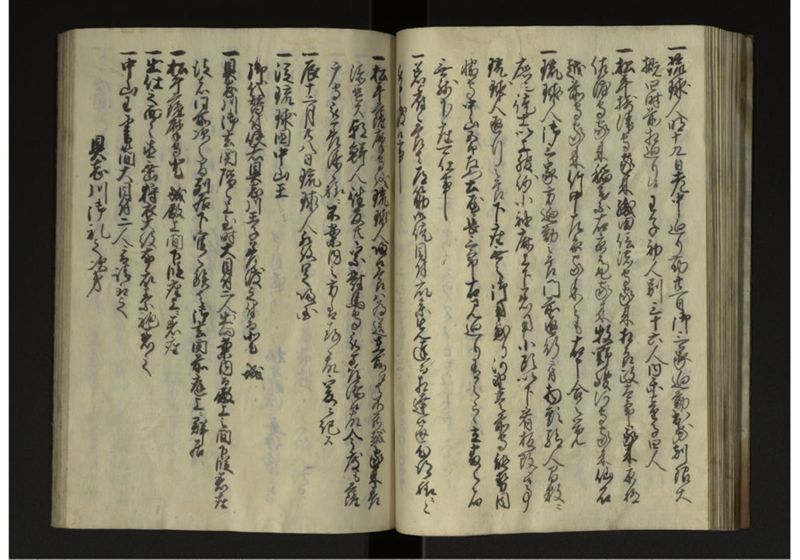
翻刻
一琉球人明十九日老中廻り勤廿一日御三家廻勤出宅刻限大
概四時前相廻り候王子初人別三十六人内楽童子四人
一松平摂津守家来織田信濃守家来相良政太郎家来京極
佐渡守家来稲葉右京亮家来牧野駿河守家来仙石
越前守家来備中左京家来とも右申合之覚
一琉球人御三家方廻勤之節門前通行に付物頭給人員数に
応シ徒士以上服紗小袖麻上下着用小頭以下看板改候事
琉球人通行之節下座無之御用掛り河野豊前守能勢因 幡守中山五郎左衛門土屋長三郎右見廻り有之候はゝ立番之者
無残下座可仕事
一着府之節は道筋御徒目付衆参先達而相達候通心得様にと
被申渡候事
一松平薩摩守儀琉球人帰候節は為送在所えは不罷越家来差
添■■朝鮮人往反共宗對馬守被差添候故今度も薩
摩守被差添候様に不案内之方は存候故爰に記す
一辰十二月十八日琉球人発足帰国
一従琉球国中山王
御代替に付使者具志川王子差渡之付而登 城
一具志川御玄関階之上至時大目付二人出向案内而殿上之間下段着座
従者同所次之間列居下官之族は御玄関前庭上に群居
一松平薩摩守登 城殿上間下段座上に着座
一出仕之面々直垂狩衣大紋布衣素袍着之
一中山王書簡大目付二人に而請取之
具志川御礼之次第
現代語訳
一、琉球人は明日十九日に老中回りの勤めを行い、二十一日に御三家回りの勤めに出宅する。刻限は大概四時前に回ることになっている。王子以下人別三十六人、内楽童子四人である。
一、松平摂津守家来、織田信濃守家来、相良政太郎家来、京極佐渡守家来、稲葉右京亮家来、牧野駿河守家来、仙石越前守家来、備中左京家来ともに右申し合わせの覚え
一、琉球人が御三家方回りの勤めの際、門前通行につき、物頭・給人の員数に応じ、徒士以上は服紗・小袖・麻上下を着用し、小頭以下は看板を改めること
琉球人通行の際は下座はしない。御用掛かりの河野豊前守・能勢因幡守・中山五郎左衛門・土屋長三郎右が見回りに来た場合は、立番の者も遠慮なく下座を行うこと
一、着府の際は道筋の御徒目付衆が参上し、先だって相達した通りに心得るようにと申し渡されていること
一、松平薩摩守は琉球人が帰る際の送りとして在所へは赴かず、家来を差し添える。朝鮮人の往復には宗対馬守が差し添えられる故に、今度も薩摩守が差し添えられるであろう。不案内の方もおられるであろう故、ここに記す
一、辰十二月十八日 琉球人発足帰国
一、琉球国中山王より
御代替わりにつき使者具志川王子を差し渡すことについて登城
一、具志川は御玄関階の上に至る時、大目付二人が出向いて案内し、殿上の間下段に着座
従者は同所次の間に列居し、下官の族は御玄関前庭上に群居
一、松平薩摩守登城 殿上間下段座上に着座
一、出仕の面々は直垂・狩衣・大紋・布衣・素袍を着用
一、中山王の書簡を大目付二人にて受け取る
具志川御礼の次第
英語訳
1. The Ryukyuan people will perform their duty of visiting the rōjū (senior councillors) tomorrow on the 19th, and will depart to perform their duty of visiting the Go-sanke (three branch families) on the 21st. The scheduled time is generally before 4 o'clock. There are thirty-six people in total including the prince and below, with four musical child attendants among them.
1. Retainers of Matsudaira Settsu-no-kami, retainers of Oda Shinano-no-kami, retainers of Sagara Seitarō, retainers of Kyōgoku Sado-no-kami, retainers of Inaba Ukyō-no-suke, retainers of Makino Suruga-no-kami, retainers of Sengoku Echizen-no-kami, and retainers of Bitchū Sakyō - all have made the aforementioned arrangements.
1. When the Ryukyuan people perform their duty of visiting the Go-sanke families and pass through the gate entrance, according to the number of monogashira (military officers) and kyūnin (stipended retainers), those ranked as ashigaru-gashira (foot soldier leaders) and above shall wear fukusa (silk cloth), kosode (short-sleeved kimono), and hemp kamishimo (formal dress), while those ranked as kogashira (minor officers) and below shall have their insignia inspected.
When Ryukyuan people pass through, there is no requirement to bow down. However, if the officials in charge - Kōno Buzen-no-kami, Nose Inaba-no-kami, Nakayama Gorōzaemon, or Tsuchiya Chōzaburō - come for inspection, the guards on duty must perform the bow without hesitation.
1. Upon arrival at the capital, the御徒目付 (infantry inspectors) along the route shall attend, and instructions have been given to follow the guidelines previously communicated.
1. Matsudaira Satsuma-no-kami does not travel to his domain to see off the Ryukyuan people when they return, but assigns retainers to accompany them. Since Sō Tsushima-no-kami is assigned to accompany Korean envoys on their journeys, Satsuma-no-kami will likely be assigned this time as well. As some may be unfamiliar with this practice, it is recorded here.
1. Year of the Dragon, 12th month, 18th day: Ryukyuan people departed to return to their country
1. From the Chūzan King of the Ryukyu Kingdom:
Regarding the dispatch of Prince Gushikawa as an envoy due to the change of reign - audience at the castle
1. When Gushikawa reached the top of the entrance hall stairs, two ōmetsuke (senior inspectors) came forward to guide him and he took his seat in the lower section of the jōdan room. His attendants lined up in the adjacent room of the same location, while the lower-ranking officials gathered in groups in the front courtyard of the entrance hall.
1. Matsudaira Satsuma-no-kami attended the castle audience and took his seat in the upper part of the lower section of the jōdan room.
1. Those in attendance wore hitatare (court dress), kariginu (hunting robes), daimon (formal crested garments), hōi (court robes), or suōu (plain robes).
1. The letter from the Chūzan King was received by two ōmetsuke.
Procedures for Gushikawa's formal audience