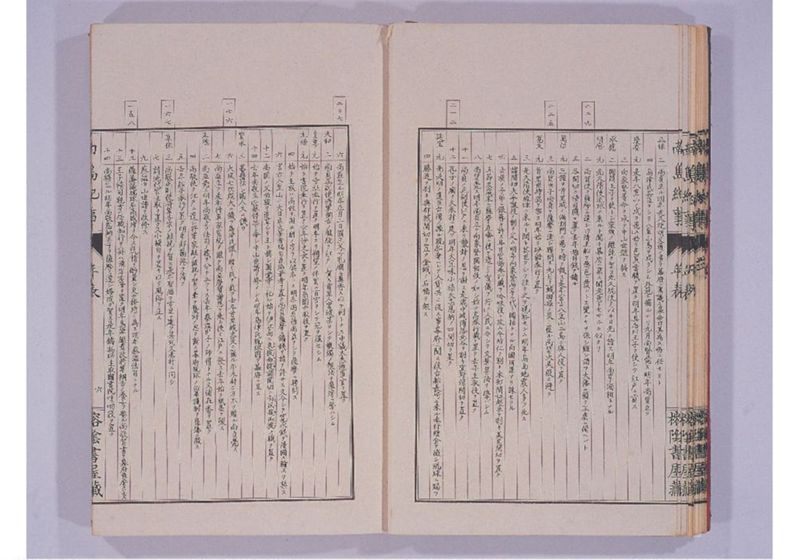
翻刻
正保 二 尚貞生る明年光久琉明交通の事を幕府に稟議す幕命曰其為す所に任せよと
四 島津氏其臣をして八重山島を戍らしむ外寇に備るなり九月尚賢薨す明年尚質立つ
慶安 元 是年八重山の戍を罷む」始て芭蕉当職を置く明年具志川王子を使して江戸に貢す
三 向象賢等命を承て中山世鑑を編す
承応 二 国頭王子を使とし家綱の継統を賀す光久琉使を以ゐ日光に詣す明年尚亨国相となる
明暦 元 光久清使琉球に来ると聞き幕府に稟す閣老意とせさるに似たり
二二九 二 尚質使を薩摩に遣し曰清主船を弊邑に発んとす変なきを保し難し請ふ大藩に頼て不虞に備へんと
三 各間切に横目職を置く」去年鳩目銭を鋳る
万治 元 巨鐘を首里城の漏刻門に懸け時を報す是年宮古八重山二島に与人役を置く
二二五 三 尚質世子尚貞を薩摩に遣し聘問す九月王城回禄の災に罹る尚質大美殿に避く
寛文 元 首里世持橋を架す明年始て砂糖奉行を置く
三 光久清使琉球に来ると聞き其臣をして往て之を視察せしむ明年鳥島地震人多く死す
五 諸間切夫卒課役の制を定む明年向象賢尚亨に代り国相となる向国用罪あり誅せらる
六 士族の子弟に銀簪を許す耳目官物奉行職を吟味役と改む今帰仁を割き本部間切越来を割き美里間切を置く
七 五節及歳末に薩摩在番に使を遣して賀儀を行ふ」人民に令して文筆算法を学ばしむ
八 尚質薨す明年尚貞立つ向象賢国相故の如し始て高奉行職を置く去年主取役を置く
十一 尚貞の正副使江戸に来り襲封の恩を謝す是歳中城浦添北谷を割き宜野湾間切を置く
二一三 一二 孔子の廟を久米村に建つ明年大宜味小禄久志恩納の四間切を置く
延宝 元 先是明の遺臣台湾に拠る琉船奪はれて人貨共に没す事幕府に聞す後台船長崎に来る奉行贖金を徴し琉球に賜ふ
四 勝連を割き与那城間切を置く金城の石橋を架す
二〇七 六 尚益生る明年正月二日国王父子孔廟に奠香す以て例となす」中議大夫通事官を置く
天和 二 尚貞正副使将軍綱吉の継統を江戸に賀す首里人宮城某をして蝋燭の製法を薩摩に学はしむ
貞享 元 始て寺社奉行を置く明年より朔望の拝賀に百官をして冠を服せしむ
元禄 元 始て書院奉行を置く去年沙吏長を置く明年系図中取役を置く
四 始て王族は尚姓を用ゐ朝の字を以偏名とす明年尚貞孫尚益をして薩摩に聘問す
六 宮古八重山に大目差大筆者脇目差脇筆者を置く尚貞薩摩に鋳銭を請ふ許さす又令して寛永銭を清国に輸すを禁す
十二 尚円の父尚稷を追尊して王と称し円覚寺に祀る始て伊江島に東掟(こちんち)西掟(にしんち)諸間切に南風掟(はいんち)西掟(にしんち)の職を置く
十四 去年尚敬生る」蔡鐸等に命し中山世譜を修めしむ明年島津氏琉球図を幕府に呈す
宝永 三 蕃藷枯れ国人大に饑う
一七六 六 大風七次歳大に饑う島津氏銀を贈り民を救ふ去年首里城火災に罹る亦木材二万本を贈る尚貞薨す
七 尚益立つ是年将軍家宣統を継く尚益慶賀謝恩を兼ね使を江戸に発す去年始て紙墨を製す
正徳 二 尚益薨す明年尚敬立つ法司の職を分ち三つとす去年蔡温世子の師伝となる又浦在番を置く
四 尚敬使を江戸に遣し将軍家継の継統を賀し兼て襲封の恩を謝す幕府琉球の沿革職制を薩摩に徴す
五 去年船手奉行を置く明年那覇港を𣿰ふ
一六七 享保 三 尚敬正副使将軍吉宗の継統を賀す是年聖庿を首里に建つ其式久米村に同し
七 請地代官主取を置く又小横目を置き以て風俗を正す
九 蔡温中山世譜を改修す
一五八 十三 薩藩議琉球石高盛増を令す民情を酌量し更て掛増と為す明年蔡温法司となる
十三 王子按司親方に任職知行を与へ漢字右筆を置く明年島津継豊故将軍綱吉の養女を娶る尚敬賀書を幕府薩摩に呈す
十四 尚穆生る明年尚敬恩納王子を薩摩に遣し婚成を賀す是年鋳物師主取国書院嗩吶役を置く
現代語訳
正保二 尚貞が生まれる。明年、光久が琉球と明の交通の事を幕府に稟議する。幕府の命に曰く「その為すところに任せよ」と。
四 島津氏がその臣をして八重山島を守らせる。外寇に備えるためなり。九月、尚賢が薨去する。明年、尚質が立つ。
慶安元 この年、八重山の守備を罷める。始めて芭蕉当職を置く。明年、具志川王子を使として江戸に貢する。
三 向象賢等が命を承けて中山世鑑を編纂する。
承応二 国頭王子を使とし家綱の継統を賀する。光久が琉球使を以いて日光に詣でる。明年、尚亨が国相となる。
明暦元 光久が清使が琉球に来ると聞き、幕府に稟する。閣老は意としないに似たり。
二二九 二 尚質が使を薩摩に遣わし言う「清主が船を弊邑に発せんとす。変なきを保し難し。請う、大藩に頼りて不虞に備えん」と。
三 各間切に横目職を置く。去年、鳩目銭を鋳る。
万治元 巨鐘を首里城の漏刻門に懸け、時を報ずる。この年、宮古・八重山二島に与人役を置く。
二二五 三 尚質が世子尚貞を薩摩に遣わし聘問する。九月、王城が回禄の災に罹る。尚質は大美殿に避く。
寛文元 首里に世持橋を架す。明年、始めて砂糖奉行を置く。
三 光久が清使が琉球に来ると聞き、その臣をして往いてこれを視察させる。明年、鳥島で地震があり人多く死す。
五 諸間切の夫卒課役の制を定める。明年、向象賢が尚亨に代わり国相となる。向国用に罪ありて誅せられる。
六 士族の子弟に銀簪を許す。耳目官・物奉行職を吟味役と改める。今帰仁を割き本部間切、越来を割き美里間切を置く。
七 五節及び歳末に薩摩在番に使を遣わして賀儀を行う。人民に令して文筆算法を学ばせる。
八 尚質が薨去する。明年、尚貞が立つ。向象賢が国相故の如し。始めて高奉行職を置く。去年、主取役を置く。
十一 尚貞の正副使が江戸に来たり襲封の恩を謝する。この歳、中城・浦添・北谷を割き宜野湾間切を置く。
二一三 十二 孔子の廟を久米村に建つ。明年、大宜味・小禄・久志・恩納の四間切を置く。
延宝元 先にこれ明の遺臣が台湾に拠る。琉球船が奪われて人貨共に没収される。事を幕府に聞す。後に台湾船が長崎に来る。奉行が贖金を徴し琉球に賜う。
四 勝連を割き与那城間切を置く。金城の石橋を架す。
二〇七 六 尚益が生まれる。明年正月二日、国王父子が孔廟に奠香する。以て例となす。中議大夫通事官を置く。
天和二 尚貞の正副使が将軍綱吉の継統を江戸に賀する。首里人宮城某をして蝋燭の製法を薩摩に学ばせる。
貞享元 始めて寺社奉行を置く。明年より朔望の拝賀に百官をして冠を服させる。
元禄元 始めて書院奉行を置く。去年、沙吏長を置く。明年、系図中取役を置く。
四 始めて王族は尚姓を用い、朝の字を以て偏名とする。明年、尚貞が孫尚益をして薩摩に聘問させる。
六 宮古・八重山に大目差・大筆者・脇目差・脇筆者を置く。尚貞が薩摩に鋳銭を請うも許されず。また令して寛永銭を清国に輸すを禁ずる。
十二 尚円の父尚稷を追尊して王と称し、円覚寺に祀る。始めて伊江島に東掟(こちんち)・西掟(にしんち)、諸間切に南風掟(はいんち)・西掟(にしんち)の職を置く。
十四 去年、尚敬が生まれる。蔡鐸等に命じ中山世譜を修めさせる。明年、島津氏が琉球図を幕府に呈する。
宝永三 蕃薯が枯れ、国人大いに饑える。
一七六 六 大風が七度あり歳大いに饑える。島津氏が銀を贈り民を救う。去年、首里城が火災に罹る。また木材二万本を贈る。尚貞が薨去する。
七 尚益が立つ。この年、将軍家宣が統を継ぐ。尚益が慶賀謝恩を兼ね使を江戸に発する。去年、始めて紙墨を製する。
正徳二 尚益が薨去する。明年、尚敬が立つ。法司の職を分かちて三つとする。去年、蔡温が世子の師伝となる。また浦在番を置く。
四 尚敬が使を江戸に遣わし将軍家継の継統を賀し、兼ねて襲封の恩を謝する。幕府が琉球の沿革職制を薩摩に徴する。
五 去年、船手奉行を置く。明年、那覇港を浚渫する。
一六七 享保三 尚敬の正副使が将軍吉宗の継統を賀する。この年、聖廟を首里に建つ。その式は久米村に同じ。
七 請地代官主取を置く。また小横目を置き、以て風俗を正す。
九 蔡温が中山世譜を改修する。
一五八 十三 薩摩藩が議し琉球石高の盛増を令する。民情を酌量し、更めて掛増とする。明年、蔡温が法司となる。
十三 王子・按司・親方に任職知行を与え、漢字右筆を置く。明年、島津継豊が故将軍綱吉の養女を娶る。尚敬が賀書を幕府・薩摩に呈する。
十四 尚穆が生まれる。明年、尚敬が恩納王子を薩摩に遣わし婚成を賀する。この年、鋳物師主取・国書院・嗩吶役を置く。
英語訳
Shōhō 2: Shō Tei was born. The following year, Mitsuhisa consulted with the shogunate regarding Ryukyu-Ming diplomatic relations. The shogunal command said, "Let them do as they will."
4: The Shimazu clan had their retainers guard Yaeyama Island to prepare against foreign invasion. In the 9th month, Shō Ken died. The following year, Shō Shitsu ascended.
Keian 1: This year, the Yaeyama garrison was dismissed. For the first time, a banana fiber magistrate was appointed. The following year, Prince Gushikawa was sent as an envoy to make tribute to Edo.
3: Shō Shōken and others received orders and compiled the Chūzan Seikan.
Jōō 2: Prince Kunigami served as envoy to congratulate Ietsuna's succession. Mitsuhisa had Ryukyu envoys visit Nikko. The following year, Shō Kō became prime minister.
Meireki 1: When Mitsuhisa heard that Qing envoys were coming to Ryukyu, he reported to the shogunate. The senior councilors seemed to pay little attention.
229 [years before 1884] 2: Shō Shitsu sent envoys to Satsuma saying, "The Qing lord intends to dispatch ships to our territory. We cannot guarantee there will be no trouble. Please, we request reliance on the great domain to prepare for contingencies."
3: Inspector positions were established in each magiri. Last year, dove-eye coins were minted.
Manji 1: A great bell was hung at the water-clock gate of Shuri Castle to announce the time. This year, yonin administrators were appointed to the two islands of Miyako and Yaeyama.
225: 3: Shō Shitsu sent his heir Shō Tei to Satsuma for diplomatic purposes. In the 9th month, the royal castle suffered fire disaster. Shō Shitsu took refuge in Ōbi Palace.
Kanbun 1: The Yomochi Bridge was built at Shuri. The following year, a sugar magistrate was appointed for the first time.
3: When Mitsuhisa heard that Qing envoys were coming to Ryukyu, he had his retainers go and inspect the situation. The following year, there was an earthquake on Tori Island and many people died.
5: The system of corvée labor for various magiri was established. The following year, Shō Shōken replaced Shō Kō as prime minister. Shō Kokuyō was executed for crimes.
6: Sons of the samurai class were permitted to wear silver hairpins. The positions of inspector general and goods magistrate were reformed into examination roles. Nakijin was divided to create Motobu magiri, and Goshiku was divided to create Misato magiri.
7: Envoys were sent to the Satsuma officials for congratulatory ceremonies at the five seasonal festivals and year's end. The people were ordered to study writing and mathematics.
8: Shō Shitsu died. The following year, Shō Tei ascended. Shō Shōken remained prime minister as before. For the first time, a land tax magistrate position was established. Last year, chief administrator positions were established.
11: Shō Tei's principal and deputy envoys came to Edo to give thanks for the favor of succession. This year, Nakagusuku, Urasoe, and Chatan were divided to create Ginowan magiri.
213: 12: A Confucian temple was built in Kume village. The following year, four magiri were established: Ōgimi, Oroku, Kushi, and Onna.
Enpō 1: Previously, Ming loyalists had established themselves in Taiwan. Ryukyu ships were seized and both people and cargo confiscated. This matter was reported to the shogunate. Later, Taiwan ships came to Nagasaki. The magistrate collected ransom money and gave it to Ryukyu.
4: Katsuren was divided to create Yonashiro magiri. The stone bridge at Kanagusuku was built.
207: 6: Shō Eki was born. The following year on the 2nd day of the 1st month, the king and his son offered incense at the Confucian temple, making this the established custom. Middle councilor interpreter positions were established.
Tenna 2: Shō Tei's principal and deputy envoys congratulated Shogun Tsunayoshi's succession in Edo. A certain Miyagi from Shuri was sent to learn candle-making methods in Satsuma.
Jōkyō 1: For the first time, a temples and shrines magistrate was appointed. From the following year, all officials were required to wear caps during new moon and full moon congratulatory ceremonies.
Genroku 1: For the first time, a library magistrate was appointed. Last year, a secretary general position was established. The following year, a genealogy administrator position was established.
4: For the first time, the royal family used the Shō surname and adopted the character "Chō" as their given names. The following year, Shō Tei had his grandson Shō Eki conduct diplomatic missions to Satsuma.
6: Chief inspectors, chief scribes, assistant inspectors, and assistant scribes were appointed to Miyako and Yaeyama. Shō Tei requested permission to mint coins from Satsuma but was refused. He also ordered prohibition of exporting Kan'ei coins to Qing.
12: Shō En's father Shō Shoku was posthumously honored with the title of king and enshrined at Engaku-ji. For the first time, east magistrate (kochinchi) and west magistrate (nishinchi) positions were established on Ie Island, and south wind magistrate (hainchi) and west magistrate (nishinchi) positions were established in various magiri.
14: Last year, Shō Kei was born. Sai Taku and others were ordered to revise the Chūzan Seifu. The following year, the Shimazu clan presented a map of Ryukyu to the shogunate.
Hōei 3: Sweet potatoes withered and the people suffered great famine.
176: 6: There were seven great storms and severe famine. The Shimazu clan sent silver to rescue the people. Last year, Shuri Castle suffered fire disaster. They also sent 20,000 pieces of timber. Shō Tei died.
7: Shō Eki ascended. This year, Shogun Ienobu succeeded to power. Shō Eki dispatched envoys to Edo combining congratulations and thanks. Last year, paper and ink production began.
Shōtoku 2: Shō Eki died. The following year, Shō Kei ascended. The chief justice position was divided into three. Last year, Sai On became tutor to the crown prince. Harbor officials were also appointed.
4: Shō Kei sent envoys to Edo to congratulate Shogun Ietsugu's succession and give thanks for succession favors. The shogunate requested information about Ryukyu's history and administrative system from Satsuma.
5: Last year, a naval magistrate was appointed. The following year, Naha harbor was dredged.
167: Kyōhō 3: Shō Kei's principal and deputy envoys congratulated Shogun Yoshimune's succession. This year, a Confucian temple was built at Shuri in the same style as Kume village.
7: Land petition magistrate administrators were appointed. Small inspectors were also appointed to reform customs.
9: Sai On revised the Chūzan Seifu.
158: 13: The Satsuma domain ordered increases to Ryukyu's assessed rice yield. Considering popular sentiment, this was changed to additional assessments. The following year, Sai On became chief justice.
13: Princes, aji, and oyakata were given official appointments and stipends, and Chinese scribes were appointed. The following year, Shimazu Tsugutoyo married the adopted daughter of former Shogun Tsunayoshi. Shō Kei presented congratulatory letters to the shogunate and Satsuma.
14: Shō Boku was born. The following year, Shō Kei sent Prince Onna to Satsuma to congratulate the marriage. This year, metalworker administrators, national academy, and suona musician positions were established.