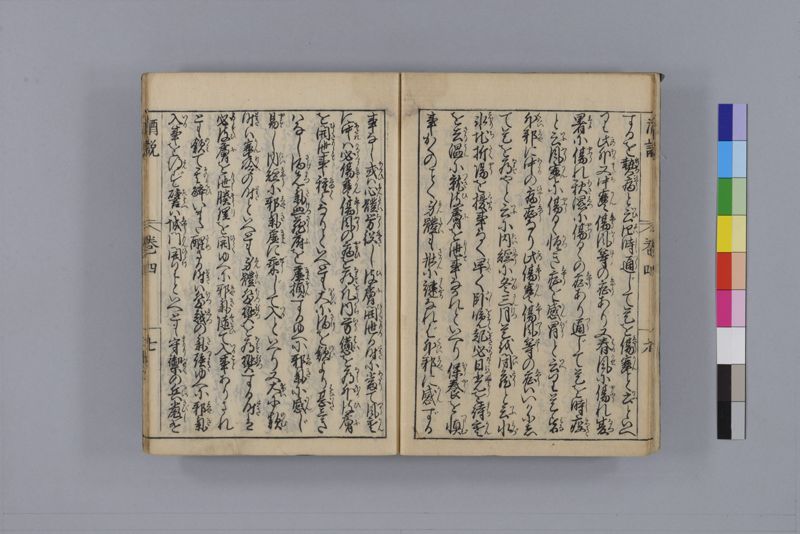
翻刻
【右丁】
するを熱病(ねつひやう)と云(いひ)四時(しいし)通(つう)じて是を傷寒(しやうかん)と云(いへ)といへ
り此外(このほか)又(また)中寒(ちかん)傷風(しやうふう)等(とう)の症(しやう)あり又 春(はる)風(かせ)に傷(やふら)れ夏(なつ)
暑(しよ)に傷(やふら)れ秋(あき)湿(しつ)に傷(やふら)るゝの症(しやう)あり通(つう)じて是を時疫(しゑき)
と云(いふ)風寒(ふうかん)に傷(やふら)るゝ軽(かろ)き症(しやう)を感冒(かんぼう)と云(いへ)り是 皆(みな)
外邪(くわいしや)に中(あたる)の病症(ひやうしやう)なり此(この)傷寒(しやうかん)傷風(しやうふう)等(とう)の症(しやう)はいかにし
て是を為(なす)やと云(いふ)に内経(たいきやう)に冬(ふゆ)三月(さんけつ)是を閉蔵(へいさう)と云(いふ)水(みづ)
氷(こほり)地(ち)析(さく)陽(やう)を擾(みたる)事なく早(はや)く臥(ふし)晩(をそく)起(をき)必(かならす)日光(につくわう)を待(まち)寒(かん)
を去(さり)温(うん)に就(つき)皮膚(ひふ)を泄(もらす)事なかれといへり保養(ほうやう)を愼(つゝしむ)
事かくのことく身体(しんたい)も壮(さかん)に健(すくやか)なれば外邪(くはいしや)に感(かん)ずる
【左丁】
事なし或(あるひ)は心体(しんたい)労役(らうゑき)し皮膚(ひふ)開(ひらき)泄(もる)る時(とき)に当(あたり)て風寒(ふうかん)
に中(あたれ)は必(かならす)傷寒(しやうかん)傷風(しやうふう)の病(やまひ)を為(なす)凡(をよそ)内(うち)労憊(らうはい)を為(なし)外(ほか)皮膚(ひふ)
を開(ひらき)泄(もらす)事 種々(しゆ〳〵)なりといへとも大(おほい)に酒(さけ)を飲(のむ)より甚(はなはた)しき
はなし酒(さけ)先(まつ)気血(きけつ)蔵府(さうふ)を虚損(きよそん)するゆへに邪気(しやき)に感(かん)じ
易(やす)し内経(たいきやう)に邪気(しやき)虚(きよ)に乗(ぜう)じて入(いる)といへり又 大(おほい)に飲(のむ)
時(とき)は寒冷(かんれい)の時(とき)といへとも身体(しんたい)発熱(ほつねつ)を為(なす)熱(ねつ)する時(とき)は
必(かならす)皮膚(ひふ)を泄(もらし)腠理(そうり)を開(ひらく)ゆへに邪気(しやき)随(したかひ)て入事(いること)ありされ
とも飲(のみ)て其醉(そのえひ)いまた醒(さめ)さる時(とき)は発越(ほつゑつ)の気(き)強(つよき)ゆへに邪気(しやき)
入(いる)事を得(え)ず譬(たとへ)は城門(しやうもん)開(ひらけ)りといへとも守禦(まもりふせく)の兵(へい)厳(きびし)け
現代語訳
【右丁】
するものを熱病と言い、四季を通じてこれを傷寒と言うとされている。この他にもまた中寒、傷風等の症状がある。また春の風に傷られ、夏の暑さに傷られ、秋の湿気に傷られる症状がある。通じてこれを時疫と言う。風寒に傷られる軽い症状を感冒と言っている。これらは皆、外邪に当たる病症である。この傷寒、傷風等の症状はどのようにして起こるのかと言うと、『内経』に「冬の三ヶ月、これを閉蔵と言う。水は氷り地は裂け、陽気を乱すことなく、早く寝て遅く起き、必ず日光を待ち、寒さを避けて温かい所につき、皮膚から気を漏らしてはならない」とある。養生を慎むことがこのようであり、身体も壮健であれば外邪に感ずる
【左丁】
ことはない。あるいは心身が労役し、皮膚が開いて漏れる時に当たって風寒に当たれば、必ず傷寒、傷風の病気になる。およそ内では疲労困憊し、外では皮膚を開いて漏らすことは種々あるといえども、大いに酒を飲むより甚だしいものはない。酒はまず気血と臓腑を虚損するゆえに邪気に感じやすい。『内経』に「邪気は虚に乗じて入る」とある。また大いに飲む時は寒冷の時といえども身体は発熱する。熱する時は必ず皮膚から漏れ、腠理を開くゆえに邪気が随って入ることがある。しかし飲んでその酔いがまだ醒めない時は発越の気が強いゆえに邪気が入ることができない。譬えば城門が開いているといえども守り防ぐ兵が厳しけ
英語訳
[Right page]
is called heat disease, and throughout the four seasons this is called cold damage (shanghan). In addition to this, there are also symptoms of inner cold (zhonghan), wind damage (shangfeng), and others. There are also symptoms from being injured by spring wind, summer heat, and autumn dampness. Generally these are called seasonal epidemics (shiyi). Light symptoms from wind-cold injury are called common cold (ganmao). These are all disease symptoms from being struck by external pathogens. How do these cold damage and wind damage symptoms occur? The Inner Classic states: "The three months of winter are called closed storage. Water freezes and earth cracks. Do not disturb the yang qi. Sleep early and rise late, always wait for sunlight, avoid cold and seek warmth, and do not let qi leak from the skin." When one is careful about such cultivation and the body is robust and healthy, one will not be affected by external pathogens.
[Left page]
However, when the mind and body are overworked and the skin opens and leaks, if one encounters wind-cold at such times, one will certainly develop cold damage or wind damage illness. Generally speaking, while there are various ways to become internally exhausted and externally open the skin and leak qi, nothing is more severe than drinking large amounts of alcohol. Alcohol first causes depletion and damage to qi, blood, and the organ systems, making one easily susceptible to pathogenic qi. The Inner Classic says "pathogenic qi takes advantage of deficiency to enter." Also, when drinking heavily, even in cold weather the body generates heat. When heated, the skin necessarily leaks and the interstices open, allowing pathogenic qi to follow and enter. However, when drinking while still intoxicated, the qi of effusion is strong, so pathogenic qi cannot enter. It is like a city gate being open but with strict defending soldiers