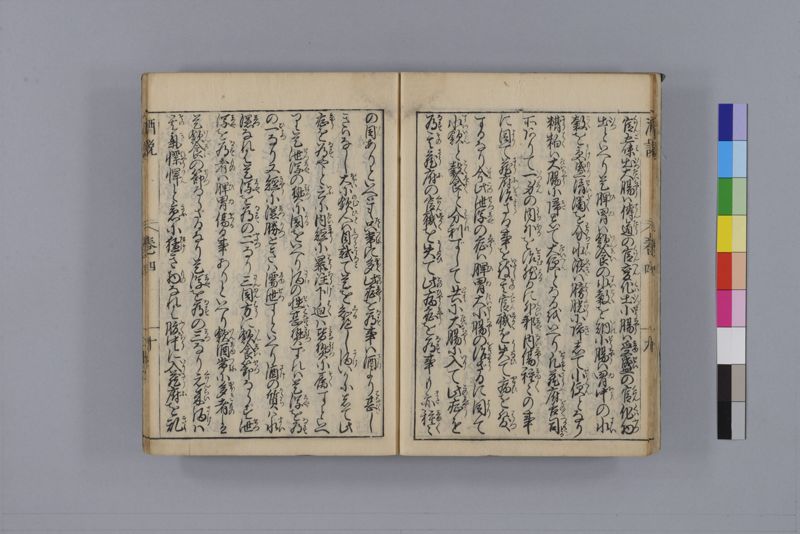
翻刻
【左丁】
官(くわん)五味(ごみ)出(いつ)大腸(たいちやう)は伝道(てんたう)の官(くわん)変化(へんくは)出(いつ)小腸(せうちやう)は受盛(しゆせい)の官(くわん)化物(くはふつ)
出(いつ)といへり是 脾胃(ひゐ)は飲食(いんしい)の水穀(すいこく)を納(いれ)小腸(せうちやう)は胃中(ゐちう)の水(すい)
穀(こく)を受盛(うけもり)清濁(せいだく)を分(わかち)水液(すいゑき)は膀胱(ばうくわう)に帰(き)して小便(せうへん)となり
糟粕(さうはく)は大腸(たいちやう)に帰(き)して大便(たいへん)となるをいへり凡(をよそ)蔵府(さうふ)各(をの〳〵)司(つかさとる)
所ありて一身(いつしん)の内(うち)外(ほか)を治(をさむ)然(しか)るに外邪(くわいしや)内傷(ないしやう)種々(しゆ〳〵)の事
に因(より)て蔵府(さうふ)治(をさまら)さる事を致(いたし)其(その)官職(くわんしよく)を失(うしなひ)て病(やまひ)を発(はつ)
するなり今(いま)此(この)泄瀉(せつしや)の症(しやう)は脾胃(ひゐ)大小腸(たいせうちやう)の治(をさまら)ざるに因(より)て
水飲(すいいん)と穀食(こくしよく)と分利(わかれ)ずして共(とも)に大腸(たいちやう)に入(いり)て此症(このしやう)を
為(なす)其(その)蔵府(さうふ)の官職(くわんしよく)を失(うしなひ)て此(この)病症(ひやうしやう)を為(なす)事も亦(また)種々(しゆ〳〵)
【左丁】
の因(いん)ありといへとも只(たゝ)常(つね)に多(おほく)此症(このしやう)を為(なす)事は酒(さけ)より甚(はなはた)し
きはなし大(おほい)に飲人(のむひと)は自(みつから)試(こゝろみ)て是を知(しる)へし酒(さけ)いかにして此
症(しやう)を為(なす)やと云(いふ)に内経(たいきやう)に暴注(はうちう)下迫(げはく)は皆(みな)熱(ねつ)に属(そく)すといへ
り是 泄瀉(せつしや)の熱(ねつ)に因(よる)をいへり酒(さけ)の性(せい)甚(はなはた)熱(ねつ)ず【濁点は衍】れは是 瀉(しや)を為(なす)
の一(ひとつ)なり又 経(きやう)に湿(しつ)勝(かつ)ときは濡(しゆ)泄(せつ)すといへり酒(さけ)の質(かたち)は水(すい)
湿(しつ)なれは是 瀉(しや)を為(なす)の二(ふたつ)なり三因方(さんゐんはう)に飲食(いんしい)節(せつ)ならず泄(せつ)
瀉(しや)を為者(なすもの)は脾胃(ひゐ)傷(やふる)る事ありといへり飲酒(いんしゆ)常(つね)に多(おほき)者(もの)は
是 飲食(いんしい)の節(せつ)ならざるなり是 瀉(しや)を為(なす)の三(みつ)なり元来(くわんらい)酒(さけ)は
其気(そのき)慓悍(ひやうかん)と急(きふ)に猛(たけ)き物(もの)なれは腹中(ふくちう)に入(いり)蔵府(さうふ)を乱(きり)
現代語訳
【左丁】
官で五味を出し、大腸は伝道の官で変化を出し、小腸は受盛の官で化物を出す」とある。これは脾胃が飲食の水穀を納め、小腸は胃中の水穀を受け盛り、清濁を分け、水液は膀胱に帰して小便となり、糟粕は大腸に帰して大便となることを言っている。およそ臓腑はそれぞれ司るところがあって一身の内外を治める。しかるに外邪・内傷など種々の事によって臓腑が治まらざることを致し、その官職を失って病気を発するのである。今この泄瀉の症状は、脾胃・大小腸が治まらざることによって、水飲と穀食とが分利されずして共に大腸に入って此の症状を起こす。その臓腑の官職を失ってこの病症を起こすことも、また種々
【右丁】
の原因があるといっても、ただ常に多くこの症状を起こすことは酒よりも甚だしいものはない。大いに飲む人は自ら試してこれを知るべきである。酒はいかにしてこの症状を起こすのかと言うに、『内経』に「暴注下迫は皆熱に属する」とある。これは泄瀉が熱によることを言っている。酒の性質は甚だ熱いので、これが瀉を起こす一つ目の理由である。また経に「湿が勝つときは濡泄する」とある。酒の質は水湿であるので、これが瀉を起こす二つ目の理由である。『三因方』に「飲食に節度がなく泄瀉を起こす者は脾胃を傷ることがある」とある。飲酒が常に多い者は、これは飲食の節度がないということである。これが瀉を起こす三つ目の理由である。元来酒はその気が慓悍と急で猛き物であるので、腹中に入り臓腑を乱す
英語訳
[Left page]
official that produces the five flavors, the large intestine is the official of transmission and transformation that produces changes, and the small intestine is the official of reception and abundance that produces transformations." This means that the spleen and stomach receive the water and grain from food and drink, the small intestine receives and holds the water and grain from the stomach, separates the clear and turbid, the water liquid returns to the bladder to become urine, and the dregs return to the large intestine to become feces. Generally, each viscera and bowel has its own jurisdiction and governs the interior and exterior of the entire body. However, due to various factors such as external pathogens and internal injuries, the viscera and bowels become disordered, losing their official functions and developing illness. Now this symptom of diarrhea is caused by the disorder of the spleen, stomach, and large and small intestines, whereby water and grain food are not properly separated and both enter the large intestine together, causing these symptoms. Although there are also various
[Right page]
causes for the viscera and bowels to lose their official functions and produce these pathological symptoms, nothing commonly causes these symptoms more severely than alcohol. Those who drink heavily should test this themselves to understand. How does alcohol cause these symptoms? The Inner Classic states: "Violent discharge and urgent descent all belong to heat." This refers to diarrhea being caused by heat. Since the nature of alcohol is extremely hot, this is the first reason it causes diarrhea. The classic also states: "When dampness prevails, there is moist diarrhea." Since the substance of alcohol is water and dampness, this is the second reason it causes diarrhea. The "Three Causes Formulary" states: "Those who lack moderation in food and drink and develop diarrhea may injure the spleen and stomach." Those who constantly drink excessively lack moderation in food and drink. This is the third reason it causes diarrhea. Originally, alcohol has qi that is violent and急, being a fierce substance, so when it enters the abdomen it disturbs the viscera and bowels