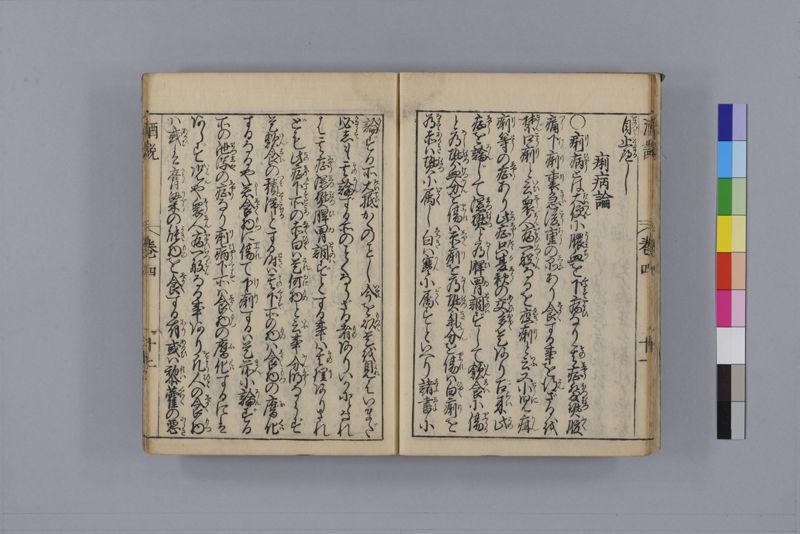
翻刻
【右丁】
自(をのつから)止(とゝまる)へし
痢病論
○痢病(りひやう)とは大便(たいへん)に膿(うみ)血(ち)を下(くたす)病(やまひ)なり其症(そのしやう)発熱(はつねつ)腹(ふく)
痛(つう)下痢(けり)裏急(りきふ)後重(こうちう)の品あり食(しよく)する事を得(え)ざるを
禁口痢(きんこうり)と云(いひ)衆人(しうじん)病(やまひ)一般(いつはん)なるを疫痢(ゑきり)と云(いふ)又 小児(せうに)疳(かん)
痢(り)等(とう)の症(しやう)あり此症(このしやう)只(たゝ)夏秋(かしう)の交(あはひ)多(おほく)是あり古来(こらい)此(この)
症(しやう)を論(ろん)じて湿熱(しつねつ)と為(なし)脾胃(ひゐ)調(とゝのは)ずして飲食(いんしい)に傷(やふくる)
と為(なし)熱血(ねつけつ)分(ふん)を傷(やふれ)は赤痢(しやくり)を為(なし)熱気(ねつき)分(ふん)を傷(やふれ)は白痢(ひやくり)を
為(なす)赤(あかき)は熱(ねつ)に属(ぞく)し白(しろき)は寒(かん)に属(ぞく)すといへり諸書(しよしよ)に
【左丁】
論(ろん)ずる所 大抵(たいてい)かくのことし今(いま)を以(もつて)是を見(みれ)はいまだ
必(かならす)しも其(その)論(ろん)ずる所のことくならざる者(もの)ありいかにとなれ
は其 症(しやう)湿熱(しつねつ)脾胃(ひゐ)調(とゝのは)ずとする事は其理(そのり)ありされ
ども此症(このしやう)下(くたす)所(ところ)の赤白(しやくひやく)は是(これ)何物(なにもの)と云(いふ)事 分明(ふんみやう)ならず
是 飲食(いんしい)の積(つみ)滞(とゝこほる)とする時(とき)は其(その)下(くたす)所の物(もの)は食物(しよくもつ)の腐化(ふくは)
するなるや若(もし)食物(しよくもつ)に傷(やふれ)て下痢(けり)するは是 前(まへ)に論(ろん)ずる
所の泄瀉(せつしや)の症(しやう)なり痢病(りひやう)下(くたす)所は食物(しよくもつ)の腐化(ふくは)するには
あらず況(いはん)や衆人(しうしん)病(やまひ)一般(いつばん)なる事あり凡(をよそ)人(ひと)の食物(しよくもつ)
は或(あるひ)は膏梁(かうりやう)の能(よき)物(もの)を食(しよく)する有(あり)或(あるひ)は黎藿(れいくわく)【注】の悪(あしき)
【注 「藜藿」とあるところ。】
現代語訳
【右丁】
自然に止まるであろう。
痢病論
○痢病とは大便に膿血を下す病気である。その症状には発熱、腹痛、下痢、裏急後重の類がある。食事をすることができないものを禁口痢といい、多くの人が一般的に病気になるものを疫痢という。また小児疳痢等の症状がある。この症状はただ夏秋の交わりに多くみられる。古来この症状を論じて湿熱とし、脾胃が調わずして飲食に傷られるとし、熱が血分を傷れば赤痢となし、熱が気分を傷れば白痢をなす。赤きは熱に属し、白きは寒に属するといっている。諸書に
【左丁】
論ずるところは大抵このようなものである。今これを見れば、必ずしもその論ずるところの通りでないものがある。どういうことかといえば、その症状が湿熱で脾胃が調わないとすることには理がある。されどもこの症状で下すところの赤白は、これが何物であるかということが分明でない。これが飲食の積滞するとするときは、その下すところの物は食物が腐化するものであろうか。もし食物に傷れて下痢するならば、これは前に論ずるところの泄瀉の症状である。痢病で下すところは食物の腐化するものではない。況んや多くの人が一般的に病気になることがある。およそ人の食物は、あるいは膏梁の良い物を食する者があり、あるいは藜藿の悪しき
英語訳
[Right page]
naturally stop.
Discussion of Dysentery
○Dysentery is a disease that discharges pus and blood in the stool. Its symptoms include fever, abdominal pain, diarrhea, tenesmus and a feeling of incomplete evacuation. When one cannot eat, it is called "mouth-blocking dysentery," and when many people generally become ill, it is called "epidemic dysentery." There are also symptoms such as childhood malnutrition dysentery. This condition occurs frequently only at the transition between summer and autumn. Since ancient times, this condition has been discussed as damp-heat, with the spleen and stomach being unregulated and injured by food and drink. When heat injures the blood aspect, it becomes red dysentery; when heat injures the qi aspect, it becomes white dysentery. Red belongs to heat and white belongs to cold, so it is said. In various texts,
[Left page]
what is discussed is generally like this. Looking at this now, there are cases that do not necessarily match what is theorized. How so? While there is logic in saying that the symptoms are damp-heat with unregulated spleen and stomach, what the red and white substances discharged in this condition actually are is not clear. If this is considered to be the accumulation and stagnation of food and drink, would what is discharged be the putrefaction of food? If one has diarrhea from being injured by food, this would be the diarrhea syndrome discussed earlier. What is discharged in dysentery is not the putrefaction of food. Moreover, there are cases where many people generally become ill. Generally, among human foods, some people eat fine foods like rich meat and grain, while others eat poor foods like goosefoot and beans.