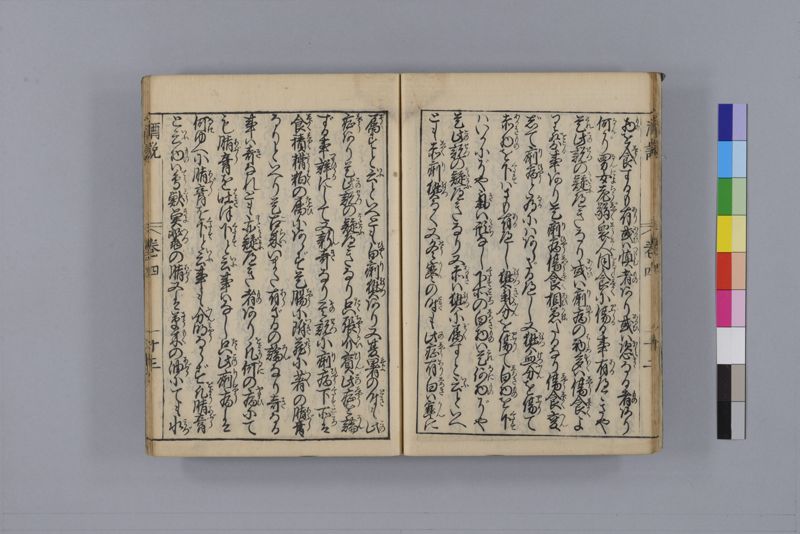
翻刻
【右丁】
物(もの)を食(しよく)するも有(あり)或(あるひ)は慎(つゝしむ)者(もの)あり或(あるひ)は恣(ほしいまゝ)なる者(もの)あり
何(なん)ぞ男女(なんによ)老弱(らうじやく)衆人(しうしん)同(をなしく)食(しよく)に傷(やふくる)事 有(ある)へきや
是(これ)此説(このせつ)の疑(うたかふ)へきなり或(あるひ)は痢病(りひやう)の初(はしめ)多(おほく)は傷食(しやうしよく)よ
り発(をこる)事あり是 痢病(りひやう)傷食(しやうしよく)相(あい)兼(かね)たるなり傷食(しやうしよく)変(へん)
じて痢病(りひやう)と為(なる)にはあらざるへし又 熱血(ねつけつ)分(ふん)を傷(やふり)て
赤者(あかきもの)を下(くたす)はさも有(ある)へし熱気(ねつき)分(ふん)を傷(やふり)て白物(しろきもの)を下(くたす)
はいかにぞや気(き)は形(かたち)なし下(くたす)所(ところ)の白物(しろきもの)は是(これ)何物(なにもの)ぞや
是 此説(このせつ)の疑(うたかふ)へきなり又 赤(あかき)は熱(ねつ)に属(ぞく)すと云(いふ)といへ
とも赤痢(しやくり)熱(ねつ)なく又 冬寒(とうかん)の時(とき)も此症(このしやう)有(あり)白(しろき)は寒(かん)に
【左丁】
属(ぞく)すと云(いふ)といへとも白痢(ひやくり)熱(ねつ)あり又夏 暑(しよ)の時(とき)も此(この)
症(しやう)あり是 此説(このせつ)の疑(うたかふ)へきなり只(たゝ)張介賓(ちやうかいひん)此症(このしやう)を論(ろん)
ずる事 詳(つまひらか)にして又 新奇(しんき)なり其説(そのせつ)に痢病(りひやう)下(くたす)所(ところ)は
食積(しよくしやく)糟粕(さうはく)の属(たくひ)にあらず是 腸(ちやう)に附(つき)蔵(さう)に著(つく)の脂膏(あぶら)
なりといへり是 古来(こらい)いまた有(あら)ざるの論(ろん)なり奇(き)なる
事は奇(き)なれとも亦(また)疑(うたかふ)へき者(もの)あり凡(をよそ)何(なに)の病(やまひ)にて
も脂膏(あぶら)を吐(はき)つ下(くたす)と云(いふ)事はなし只(たゝ)此(この)痢病(りひやう)は
何(なに)ゆへに脂膏(あぶら)を下(くたす)と云(いふ)事も分明(ふんみやう)ならず凡(をよそ)脂膏(あぶら)
と云(いふ)物(もの)は鳥獣魚鼈(てうじうきよへつ)の脂(あぶら)又は草木(さうもく)の油(あぶら)にても水(みづ)
現代語訳
【右丁】
物を食する者もあり、あるいは慎む者があり、あるいは恣意的な者がある。
なぜ男女老弱、多くの人が同じく食事によって傷つくことがあるだろうか。
これがこの説の疑わしいところである。あるいは痢病の初めには多くは傷食より
起こることがある。これは痢病と傷食が相兼ねたものである。傷食が変
じて痢病となるのではないであろう。また熱が血分を傷つけて
赤いものを下すのは、そうであろう。熱が気分を傷つけて白いものを下す
のはどういうことか。気は形がない。下すところの白いものはこれは何物であろうか。
これがこの説の疑わしいところである。また赤いものは熱に属すると言う
けれども、赤痢で熱がなく、また冬寒の時にもこの症状がある。白いものは寒に
【左丁】
属すると言うけれども、白痢で熱があり、また夏暑の時にもこの
症状がある。これがこの説の疑わしいところである。ただ張介賓がこの症状を論
ずることは詳しくしてまた新奇である。その説に痢病で下すところは
食積や糟粕の類ではない。これは腸に付き蔵に著く脂膏
であるといっている。これは古来いまだなかった論である。奇妙な
ことは奇妙であるが、また疑わしいものがある。およそ何の病気でも
脂膏を吐いたり下したりするということはない。ただこの痢病は
なぜ脂膏を下すということも分明でない。およそ脂膏
という物は鳥獣魚鼈の脂、または草木の油であっても水
英語訳
[Right page]
Some people eat such foods, some are cautious, and some are indulgent.
Why should men and women, old and weak, many people alike be injured by food?
This is what is questionable about this theory. Sometimes dysentery often begins with food injury. This is when dysentery and food injury are combined. Food injury does not transform into dysentery. Also, when heat injures the blood aspect and red substances are discharged, this may well be so. When heat injures the qi aspect and white substances are discharged, what does this mean? Qi has no form. What are the white substances that are discharged? This is what is questionable about this theory. Also, while it is said that red belongs to heat, there is red dysentery without fever, and this condition also occurs during cold winter. White is said to belong to cold,
[Left page]
but there is white dysentery with fever, and this condition also occurs during hot summer. This is what is questionable about this theory. Only Zhang Jiebin's discussion of this condition is detailed and novel. In his theory, what is discharged in dysentery is not food accumulation or waste matter. This is the fatty substance that adheres to the intestines and sticks to the organs, he says. This is a theory that has never existed before. Strange as it is strange, there are also questionable aspects. Generally, in any disease, there is no vomiting or discharging of fatty substances. Why this dysentery alone discharges fatty substances is also not clear. Generally, what is called fatty substance is the fat of birds, beasts, fish, and turtles, or the oil of plants and trees, but even with water