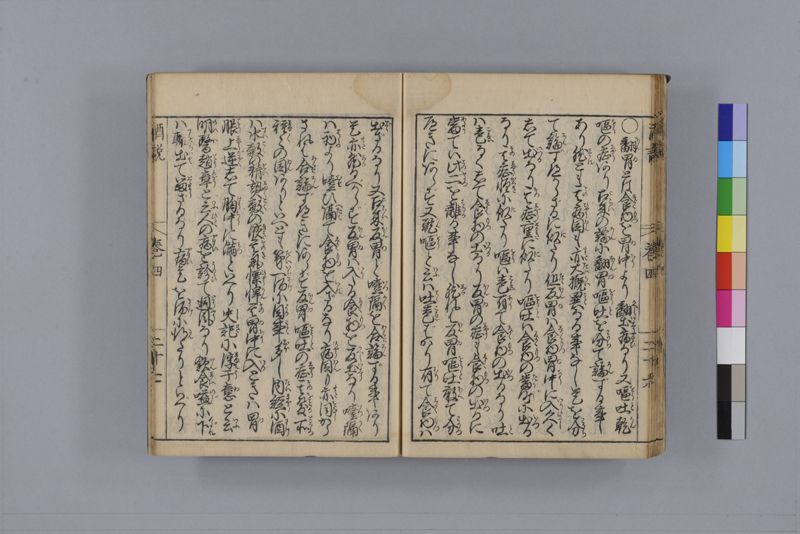
翻刻
【右丁】
○翻胃(ほんゐ)とは食物(しよくもつ)を胃中(ゐちう)より翻出(かへしいたす)病(やまひ)なり又 嘔吐(をうと)乾(かん)
嘔(をう)の症(しやう)あり古来(こらい)の論(ろん)に翻胃(ほんゐ)嘔吐(をうと)を分(わかち)て論(ろん)ずる事
あり然(しかれ)とも其(その)病因(ひやうゐん)も亦(また)大概(たいかい)異(こと)なる事なし是を分(わかち)
て論(ろん)ずへからざるに似(に)たり但(たゝ)反胃(ほんゐ)は食物(しよくもつ)胃中(ゐちう)に入(いり)久(ひさし)く
して出(いつる)なり其症(そのしやう)重(をもき)に似(に)たり嘔吐(をうと)は食物(しよくもつ)の当時(たうじ)に出(いつ)る
なり其症(そのしやう)軽(かろき)に似(に)たり嘔(をう)は声(こゑ)有(あり)て食物(しよくもつ)の出(いつ)るなり吐(と)
は声(こゑ)なくして食物(しよくもつ)の出(いつる)なり反胃(ほんゐ)の症(しやう)も食物(しよくもつ)の出(いつ)るに
当(あたり)ては此(この)二(ふたつ)を離(はなる)る事なし然(しか)れは反胃(ほんゐ)嘔吐(をうと)敢(あへ)て分(わかつ)
へきにあらず又 乾嘔(かんをう)と云(いふ)は吐声(はくこゑ)ばかり有(あり)て食物(しよくもつ)は
【左丁】
出(いで)ざるなり又 古来(こらい)反胃(ほんゐ)と噎隔(いつかく)を合(あはせ)論(ろん)ずる事あり
是 亦(また)然(しか)るべからず反胃(ほんゐ)は入(いり)たる食物(しよくもつ)を反(かへし)出(いたす)なり噎隔(いつかく)
は初(はしめ)より噎(むせ)ひ隔(へたて)て食物(しよくもつ)を入(いれ)ざるなり病因(ひやうゐん)も亦(また)同(をなし)から
されは合(あはせ)論(ろん)ずへきにあらず反胃(ほんゐ)嘔吐(をうと)の症(しやう)其(その)発(をこる)所(ところ)
種々(しゆ〳〵)の因(ゐん)ありといへとも第一(たいいち)酒(さけ)に因事(よること)多(おほ)し内経(たいきやう)に酒(さけ)
は水穀(すいこく)の精(せい)熟穀(しゆくこく)の液(ゑき)其(その)気(き)慓悍(ひやうかん)其(その)胃中(ゐちう)に入(いる)ときは胃(ゐ)
脹(はり)上逆(しやうぎやく)して胸中(けうちう)に満(みつ)といへり史記(しき)に淳于意(しゆんうゐ)と云(いふ)
明医(めいい)趙章(てうしやう)と云人(いふひと)の病(やまひ)を診(うかゝひ)て迵風(とうふう)なり飲食(いんしい)嗌(のど)に下(くだれ)
は輒(すなはち)出(いて)て留(とゝまら)ざるなり病(やまひ)是を酒(さけ)に得(え)たりといへり
現代語訳
【右丁】
○翻胃とは食物を胃の中から吐き出す病気である。また嘔吐や乾嘔の症状がある。古来の論説では翻胃と嘔吐を分けて論じることがあるが、しかしその病因もまた大体において異なることはない。これを分けて論じるべきではないと思われる。ただし、反胃は食物が胃中に入って長時間経ってから出るもので、その症状は重いようである。嘔吐は食物がその時すぐに出るもので、その症状は軽いようである。嘔は声があって食物が出るもの、吐は声なくして食物が出るものである。反胃の症状でも食物が出る際には、この二つを離れることはない。したがって反胃と嘔吐をあえて分ける必要はない。また乾嘔というのは吐く声ばかりがあって食物は
【左丁】
出ないものである。また古来、反胃と噎隔を合わせて論じることがあるが、これもまた適切ではない。反胃は入った食物を吐き出すものであり、噎隔は初めからむせび詰まって食物を入れることができないものである。病因もまた同じではないので、合わせて論じるべきではない。反胃・嘔吐の症状がその発生する原因には種々のものがあるといっても、第一に酒によることが多い。内経には「酒は水穀の精、熟穀の液で、その気は激烈であり、それが胃中に入ると胃が張って上逆し、胸中に満ちる」とある。史記には淳于意という名医が趙章という人の病気を診察して「迵風である。飲食が喉に下ると、すぐに出て留まらない。この病気は酒によって得たものである」と言ったとある。
英語訳
[Right page]
○Stomach reflux (hongui) is a disease where food is expelled from within the stomach. There are also symptoms of vomiting and dry retching. In ancient discussions, stomach reflux and vomiting are sometimes discussed separately, but their underlying causes are generally not different. It seems these should not be discussed as separate conditions. However, stomach reflux involves food that enters the stomach and comes out after a long time, and its symptoms appear severe. Vomiting involves food that comes out immediately, and its symptoms appear mild. "Ou" (retching) involves sound when food comes out, while "to" (vomiting) involves food coming out without sound. Even in stomach reflux symptoms, when food comes out, it cannot be separated from these two types. Therefore, there is no need to deliberately separate stomach reflux and vomiting. Dry retching refers to having only the sound of vomiting while food does
[Left page]
not come out. Also, since ancient times, stomach reflux and esophageal obstruction (itsukaku) have sometimes been discussed together, but this is also inappropriate. Stomach reflux involves expelling food that has entered, while esophageal obstruction involves choking and blockage that prevents food from entering from the beginning. Since the causes of disease are also not the same, they should not be discussed together. Although there are various causes for the occurrence of stomach reflux and vomiting symptoms, they are primarily due to alcohol. The Inner Classic states: "Alcohol is the essence of water and grain, the liquid of cooked grain. Its qi is violent and rapid, and when it enters the stomach, the stomach swells and reverses upward, filling the chest." In the Records of the Grand Historian, a famous physician named Chunyu Yi diagnosed a person named Zhao Zhang and said: "This is penetrating wind. When food and drink go down the throat, they immediately come out and do not remain. This disease was acquired from alcohol."