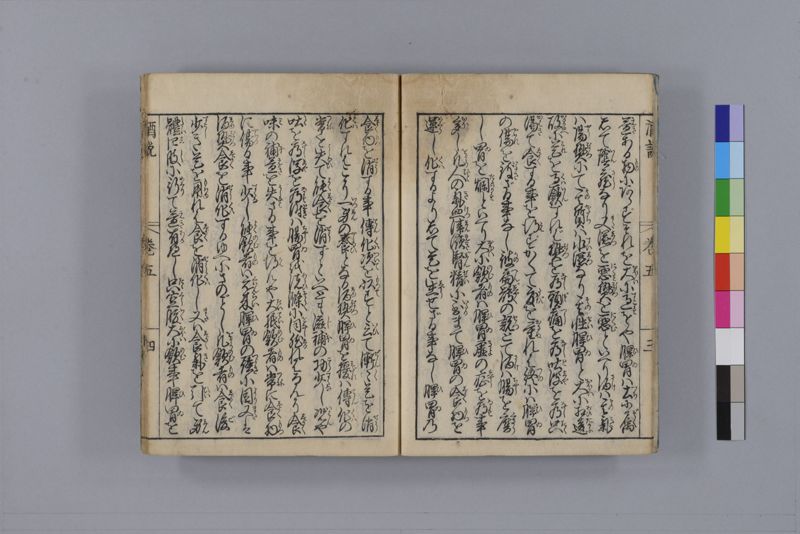
翻刻
【右丁】
益(えき)ある物(もの)にあらずそれを大(おほい)に過(すこす)をや脾胃(ひゐ)は土(つち)に属(ぞく)
して陰蔵(いんさう)なり又(また)湿(しつ)を悪(にくみ)熱(ねつ)を悪(にくむ)といへり酒(さけ)は其(その)気(き)
は陽熱(やうねつ)にて其(その)質(かたち)は水湿(すいしつ)なり其(その)性(せい)脾胃(ひゐ)と大(おほい)に相違(あいたかふ)
故(かるかゆへ)に是(これ)を過飲(くはいん)すれば熱(ねつ)を為(なし)ずつ頭痛(づつう)を為(なし)吐瀉(としや)を為(なし)只(たゝ)
渇(かはき)て食(しよく)する事を得(え)ずかくて度(たび)を重(かさぬ)れは終(つゐ)には脾胃(ひゐ)
の傷(やふれ)を致(いたさ)ざる事なし彼(かの)扁鵲(へんじやく)の説(せつ)とて酒(さけ)は腸(ちやう)を腐(くさら)
し胃(ゐ)を爛(たゝらかす)といへり大(おほい)に飲者(のむもの)は脾胃虚(ひゐきよ)の症(しやう)を為(なす)事
多(おほ)し凡(をよそ)人(ひと)の気血(きけつ)津液(しんえき)腎精(じんせい)に至(いたる)まて脾胃(ひゐ)の食物(しよくもつ)を
運(めぐら)し化(くは)するよりして是を生(しやう)せざる事なし脾胃(ひゐ)の
【左丁】
食物(しよくもつ)を消(せう)する事 伝化(てんくは)次(ついて)を以(もつて)すと云(いひ)て漸々(ぜん〳〵)是を消(せう)
化(くは)すれはこそ一身(いつしん)の養(やしなひ)となる酒熱(しゆねつ)脾胃(ひゐ)を擾(みだれ)は伝化(てんくは)の
常(つね)を失(うしなひ)て能(よく)食(しよく)を消(せう)ずといへとも滋補(じほ)の功(こう)少(すくな)し況(いはん)や
吐(と)を為(なし)瀉(しや)を為(なす)時(とき)は腸胃(ちやうゐ)を洗(あらひ)滌(そゝく)に同(をなし)然(しか)れはなんそ食(しよく)
味(み)の補益(ほえき)を失(うしなは)さる事を得(え)んや大抵(たいてい)飲者(のむもの)は常(つね)に食物(しよくもつ)
に傷(やふる)事 少(すくな)し能(よく)飲者(のむもの)は元来(くわんらい)脾胃(ひゐ)の強(つよき)に因(より)又(また)は
酒熱(しゆねつ)食(しよく)を消化(せうくは)するゆへにさのごとし凡(をよそ)飲者(のむもの)は食後(しよくご)
少(すこし)き是を用(もちゆ)れは食(しよく)を消化(せうくは)し又(また)は食(しよく)気(き)を引(ひい)て身(しん)
体(たい)四肢(しし)に行(めくり)て益(えき)有(ある)へし只(たゝ)空腹(くうふく)大(おほい)に飲(のむ)事 脾胃(ひゐ)を
現代語訳
【右丁】
有益なものではない。それを大いに過度に摂取したらどうだろうか。脾胃は土に属し
て陰蔵である。また湿を嫌い熱を嫌うと言われている。酒はその気は
陽熱であり、その性質は水湿である。その性質は脾胃と大いに相反している。
故にこれを過飲すれば熱を生じ、頭痛を生じ、嘔吐下痢を生じ、ただ
喉が渇いて食事することができない。このように度重なれば最終的には脾胃の
傷害を引き起こさないことはない。あの扁鵲の説として、酒は腸を腐らせ
胃を爛れさせると言っている。大いに飲む者は脾胃虚の症状を呈することが
多い。およそ人の気血、津液、腎精に至るまで、脾胃が食物を
運搬し化学的に変化させることによってこれを生成しないことはない。脾胃が
【左丁】
食物を消化することは、伝化の順序によると言って、漸々とこれを消
化すればこそ一身の養いとなる。酒熱が脾胃を乱すと、伝化の
常を失って、よく食を消化すると言っても滋補の効果は少ない。況んや
嘔吐や下痢をする時は、腸胃を洗い清めるのと同じである。そうであればどうして食
物の補益を失わないことができようか。大抵飲酒する者は普段食物で
傷害を受けることは少ない。よく飲む者は元来脾胃が強いことによるか、また
酒熱が食物を消化するためにそのようである。およそ飲酒する者は食後に
少しこれを用いれば食物を消化し、また食気を引いて身
体四肢に巡らせて有益であろう。ただ空腹時に大いに飲むことは脾胃を
英語訳
[Right page]
beneficial substances. What if one consumes it greatly in excess? The spleen and stomach belong to earth
and are yin organs. They are also said to dislike dampness and heat. Alcohol's qi is
yang-heat, while its nature is water-dampness. Its properties greatly oppose those of the spleen and stomach.
Therefore, excessive drinking generates heat, causes headaches, causes vomiting and diarrhea, and simply
creates thirst while preventing one from eating. When this is repeated, it ultimately
inevitably causes injury to the spleen and stomach. According to the theory of the famous Bian Que, alcohol rots the intestines
and ulcerates the stomach. Those who drink heavily often
develop symptoms of spleen-stomach deficiency. Generally, human qi-blood, body fluids, and kidney essence are all
generated through the spleen and stomach's transportation and transformation of food. The spleen and stomach's
[Left page]
digestion of food follows the sequence of transmission and transformation, and only by gradually digest-
ing and transforming food does it become nourishment for the entire body. When alcohol-heat disturbs the spleen and stomach, the normal process of transmission and transformation
is lost, and although food may be digested well, the nourishing and supplementing effects are minimal. Moreover, when
vomiting and diarrhea occur, it is the same as washing and rinsing the intestines and stomach. Under such circumstances, how could one avoid
losing the beneficial effects of food? Generally, those who drink alcohol rarely suffer
injury from food in normal times. Good drinkers either have naturally strong spleen and stomach, or
alcohol-heat helps digest food, which is why this is so. Generally, if drinkers
use a little after meals, it will help digest food and also guide food-qi to circulate through the
body and four limbs, which would be beneficial. Only drinking heavily on an empty stomach harms the spleen and stomach