翻刻
【右丁】
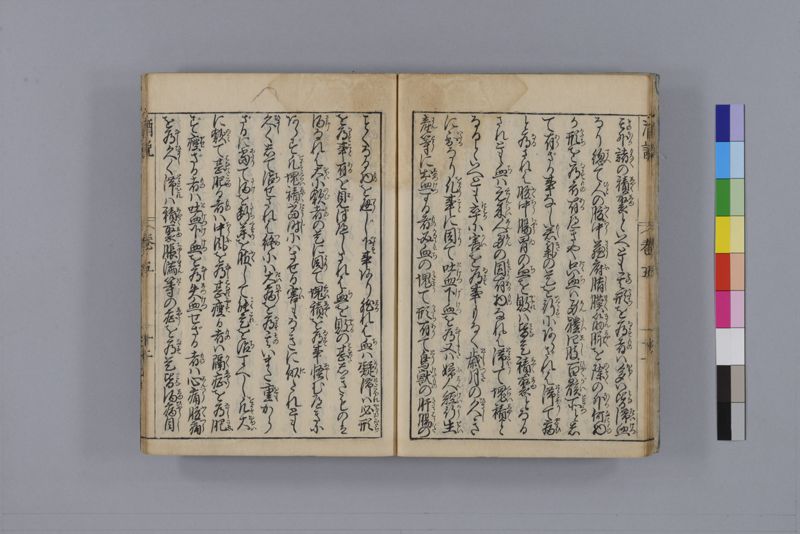
其外(そのほか)諸(もろ〳〵)の積聚(しやくしゆ)といへとも其形(そのかたち)を為者(なすもの)は多(おほく)は皆(みな)滞血(たいけつ)
なり総(すへ)【惣】て人(ひと)の腹中(ふくちう)蔵府(さうふ)脂膜(しまく)筋脈(きんみやく)を除(のそく)の外(ほか)何物(なにもの)
か形(かたち)を為者(なすもの)有(ある)へきや只(たゝ)血(ち)は身体(しんたい)四肢(しし)百骸(ひやくがい)所(ところ)とし
て有(あら)ざる事なし若(もし)気(き)の是を行(めぐらす)にあらざれは滞(とゝこほり)て病(やまひ)
と為(なる)されは腹中(ふくちう)腸胃(ちやうゐ)の血(ち)を敗(やふれ)は皆(みな)是 積聚(しやくしゆ)となる
されとも血(ち)は元来(くわんらい)人身(しんしん)の固(もとより)有物(あるもの)なれは滞(とゝこほり)て塊積(くわいしやく)と
なるといへとも卒(にはか)に害(かい)を為(なす)事もなく歳月(としつき)の久(ひさし)き
に至(いたる)なり凡(をよそ)事(こと)に因(より)て吐血(とけつ)下血(げけつ)を為(なし)又(また)は婦人(ふしん)経行(けいかう)生(せい)
産(さん)等(とう)に出血(しゆつけつ)する者(もの)必(かならす)血(ち)の塊(かたまり)て形(かたち)有(あり)て鳥(とり)獣(けたもの)の肝(きも)腸(はらはた)【「はらわた」とあるところ】の
【左丁】
ことくなる物(もの)を通(つう)じ下(くたす)事あり然(しか)れは血(ち)は凝(こり)滞(とゝこほれ)は必(かならす)形(かたち)
を為事(なすこと)有(ある)を見(み)つへしされは血(ち)を敗(やふる)の甚(はなはた)しきものは
酒(さけ)なれは大(おほい)に飲者(のむもの)の是に因(より)て塊積(くわいしやく)を為(なす)事 怪(あやし)むへきに
あらず凡(をよそ)塊積(くわいしやく)当時(たうじ)にはさせる害(かい)もなきに似(に)たれとも
久(ひさし)くして治(ち)せされは終(つゐ)には大病(たいひやう)を為(なす)其(その)いまた重(をも)から
ざるに当(あたり)て酒(さけ)を断(たち)薬(くすり)を服(ふく)して能(よく)是(これ)を治(ち)すへし凡(をよそ)大(おほい)
に飲(のみ)て甚(はなはた)肥(こゆ)る者(もの)は中風(ちうふ)を為(なし)甚(はなはた)痩(やす)る者(もの)は隔症(かくしやう)を為(なし)肥(こゑ)
ず痩(やせ)ざる者(もの)は吐血(とけつ)下血(けけつ)を為(なし)失血(しつけつ)せざる者(もの)は心痛(しんつう)腹痛(ふくつう)
を為(なし)久(ひさし)く滞(とゝこをれ)は積聚(しやくしゆ)脹満(ちやうまん)等(とう)の症(しやう)を為(なす)是 皆(みな)酒病(しゆひやう)自(し)
現代語訳
【右丁】
その他の諸々の積聚と言っても、その形を作るものは多くは皆滞血である。総じて人の腹中において、臓腑・脂膜・筋脈を除いた外に、何物が形を作るものがあろうか。ただ血は身体四肢百骸において、ないところがない。もし気がこれを循環させなければ滞って病気となる。だから腹中・腸胃の血が敗れれば皆これが積聚となる。しかし血は元来人身に固有のものであるから、滞って塊積となると言っても、急に害を為すこともなく、歳月の久しきに至るのである。およそ事情により吐血・下血を起こし、また婦人の月経・出産等に出血する者は、必ず血の塊で形があって、鳥獣の肝臓や腸のような
【左丁】
物を通じて下すことがある。そうであれば血は凝り滞れば必ず形を作ることがあるのを見るべきである。だから血を敗る最も甚だしいものは酒であるから、大いに飲む者がこれにより塊積を作ることは怪しむべきことではない。およそ塊積は当時にはさしたる害もないように見えても、久しくして治さなければ終には大病となる。そのまだ重くない時に当たって、酒を断ち薬を服して、よくこれを治すべきである。およそ大いに飲んで甚だしく肥る者は中風を起こし、甚だしく痩せる者は隔症を起こし、肥えず痩せざる者は吐血・下血を起こし、失血しない者は心痛・腹痛を起こし、久しく滞れば積聚・脹満等の症状を起こす。これは皆酒病である。
英語訳
【Right page】
Even with other various accumulations and gatherings, what forms their shape is mostly stagnant blood. Generally, in the human abdomen, aside from the organs, fat membranes, and muscle vessels, what else could form shapes? Blood alone exists everywhere in the body, limbs, and all parts. If qi does not circulate it, it stagnates and becomes disease. Therefore, when blood in the abdomen and intestines becomes corrupted, it all becomes accumulations and gatherings. However, since blood is originally inherent to the human body, even when it stagnates and forms masses, it does not immediately cause harm, but develops over many years. Generally, when people vomit blood or have bloody stools due to various circumstances, or when women have bleeding during menstruation, childbirth, etc., they necessarily pass blood clots with form, like the liver and intestines of birds and beasts.
【Left page】
things are passed. Therefore, one should understand that when blood coagulates and stagnates, it necessarily can form shapes. Since alcohol is what most severely corrupts blood, it is not strange that heavy drinkers develop masses due to this. Generally, while masses may seem to cause no particular harm at the time, if left untreated for long periods, they eventually become serious diseases. When they are not yet severe, one should abstain from alcohol and take medicine to treat them well. Generally, those who drink heavily and become very fat develop stroke; those who become very thin develop obstruction syndrome; those who neither gain nor lose weight have vomiting blood and bloody stools; those who do not lose blood suffer heart pain and abdominal pain; and when stagnation continues long, they develop symptoms such as accumulations, gatherings, and distension. These are all alcohol diseases.