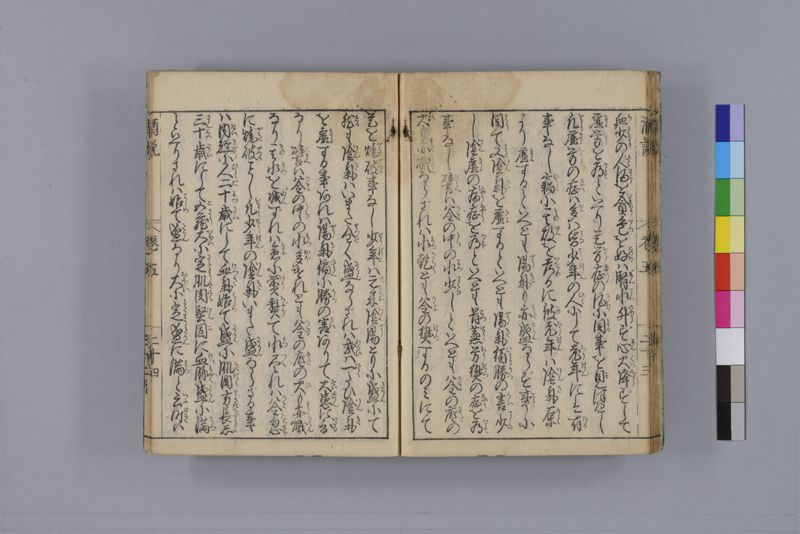
翻刻
【右丁】
血(ち)少(すくなき)の人(ひと)酒(さけ)を貪(むさほり)色(いろ)を好(このめ)は腎水(じんすい)升(のほら)ず心火(しんくは)降(くだら)ずして
虚労(きよらう)を為(なす)といへり是 労症(らうしやう)の酒(さけ)に因(よる)事を見(み)つへし
凡(をよそ)虚労(きよらう)の症(しやう)は多(おほく)は皆(みな)少年(せうねん)の人(ひと)にして老年(らうねん)には有(ある)
事なし窃(ひそか)に其故(そのゆへ)を考(かんかゆ)るに彼(かの)老年(らうねん)は陰気(いんき)原(もと)
より虚(きよ)するといへとも陽気(やうき)も亦(また)盛(さかん)ならず事(こと)に
因(より)て又(また)陰気(いんき)を虚(きよ)するといへとも陽気(やうき)独(ひとり)勝(かつ)の害(かい)少(すくな)
し陰虚(いんきよ)の病症(ひやうしやう)を為(なす)といへとも骨蒸(こつせう)労熱(らうねつ)の症(しやう)を為(なす)
事なし譬(たとへ)は釜(かま)の中(うち)の水(みつ)少(すくな)しといへとも釜(かま)の底(した)の
火(ひ)も亦(また)熾(さかん)ならざれは水(みつ)乾(かはく)とも釜(かま)の熱(ねつ)するのみにて
【左丁】
是(これ)を焼破(やきやふる)事なし少年(せうねん)は元来(くわんらい)陰陽(いんやう)ともに盛(さかん)にて
然(しか)も陰気(いんき)はいまた全(まつた)く盛(さかん)ならざれは或(あるひ)は一(ひと)たひ陰気(いんき)
を虚(きよ)する事何れは陽気(やうき)偏(ひとへ)に勝(かつ)の害(かい)ありて大患(たいくわん)に至(いたる)
なり譬(たとへ)は釜(かま)の中(うち)の水(みつ)多(おほ)けれとも釜(かま)の底(した)の火(ひ)も亦(また)熾(さかん)
なり其水(そのみつ)を減(げん)ずれは急(きふ)に煎熬(いりあぶり)て水(みつ)尽(つく)れは釜(かま)忽(たちまち)
に焼破(やきやふる)ことし凡(をよそ)少年(せうねん)の陰気(いんき)いまた盛(さかん)ならざる事
は内経(たいきやう)に人(ひと)二十歳(にしつさい)にして血気(けつき)始(はしめ)て盛(さかん)に肌肉(きにく)方(まさに)長(ちやう)じ
三十歳(さんしつさい)にして五蔵(こさう)大(おほい)に定(さたまり)肌肉(きにく)堅固(けんこ)に血脈(けつみやく)盛(さかん)に満(みつ)
といへりされは始(はしめ)て盛(さかん)なり大(おほい)に定(さたまり)盛(さかん)に満(みつ)と云(いふ)時(とき)は
現代語訳
【右丁】
血少なき人が酒を貪り色を好めば、腎水が上昇せず心火が下降せずして
虚労をなすと言っている。これは労症が酒に起因することを見るべきである。
おおよそ虚労の症は多くは皆少年の人にあって、老年にはある
ことがない。ひそかにその故を考えるに、かの老年は陰気がもと
より虚するといえども、陽気もまた盛んでなく、事
によってまた陰気を虚するといえども、陽気独り勝つの害が少な
い。陰虚の病症をなすといえども、骨蒸労熱の症をなす
ことはない。たとえば釜の中の水が少ないといえども、釜の底の
火もまた盛んでなければ、水が乾いても釜が熱するのみにて
【左丁】
これを焼き破ることはない。少年はもともと陰陽ともに盛んにて
しかも陰気はいまだ完全に盛んでないので、あるいは一たび陰気
を虚する事があれば陽気がひとえに勝つの害があって大患に至る
のである。たとえば釜の中の水が多くても釜の底の火もまた盛ん
である。その水を減ずれば急に煎り焙って水が尽きれば釜がたちまち
に焼き破れることである。おおよそ少年の陰気がいまだ盛んでないこと
は、内経に「人二十歳にして血気始めて盛んに、肌肉まさに長じ、
三十歳にして五臓大いに定まり、肌肉堅固に、血脈盛んに満つ」
と言っている。されば「始めて盛んなり」「大いに定まり盛んに満つ」と言う時は
英語訳
【Right page】
When people with deficient blood crave alcohol and favor sexual pleasure, kidney water does not ascend and heart fire does not descend, resulting in consumptive disorder. This shows that wasting disease is caused by alcohol.
Generally, consumptive disorder symptoms occur mostly in young people, and do not occur in the elderly. When I secretly consider the reason for this, although the elderly originally have deficient yin qi, their yang qi is also not exuberant, so even when circumstances further deplete their yin qi, there is little harm from yang qi alone predominating. Although they develop symptoms of yin deficiency disease, they do not develop symptoms of bone steaming and wasting fever. For example, even if the water in a pot is scarce, if the fire under the pot is also not intense, even when the water dries up, the pot only becomes hot
【Left page】
and does not burn through and break. Young people originally have both yin and yang exuberant, but since their yin qi is not yet completely abundant, if their yin qi becomes deficient even once, there is harm from yang qi alone predominating and this leads to serious illness. For example, even if there is much water in a pot, the fire under the pot is also intense. If that water is reduced, it rapidly boils and roasts, and when the water is exhausted, the pot immediately burns through and breaks. Generally, regarding young people's yin qi not yet being abundant, the Inner Canon says: "At twenty years old, blood and qi first become exuberant and muscles are just developing; at thirty years old, the five organs become greatly stabilized, muscles become firm, and blood vessels are abundantly full." Therefore, when it says "first become exuberant" and "greatly stabilized and abundantly full,"