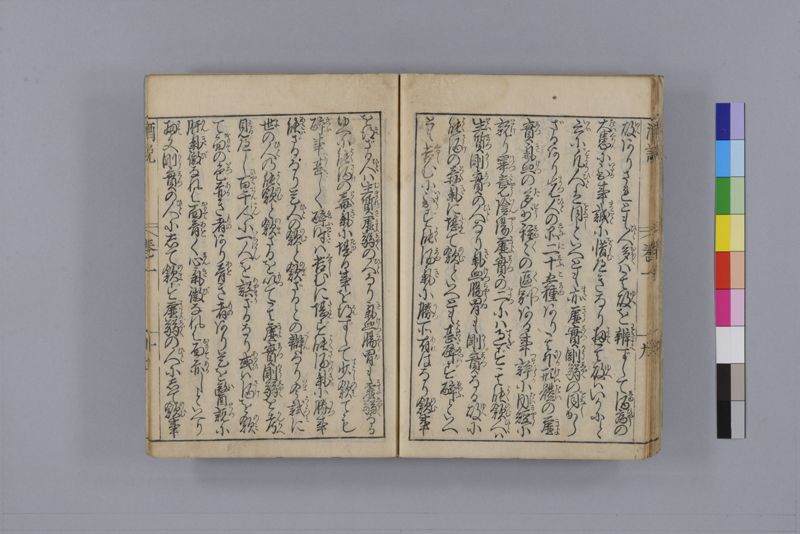
翻刻
【右丁】
故(ゆへ)ありされとも人(ひと)多(おほく)は故(ゆへ)を弁(わきまへ)ずして酒病(しゆひやう)の
大患(たいくわん)に至(いたる)事 誠(まこと)に惜(をしむ)へきなり扨(さて)其 故(ゆへ)はいかにと
云(いふ)に凡(をよそ)人(ひと)は同(をなし)といへとも亦(また)虚実(きよしつ)剛弱(かうしやく)の同(をなし)から
ざるあり先(まつ)人(ひと)の品(しな)二十五種(にしふこしゆ)あり其 外(ほか)形体(けいたい)の虚(きよ)
実(しつ)気血(きけつ)の多少(たせう)種々(しゆ〳〵)の区別(くへつ)ある事 詳(つまひらか)に内経(たいきやう)に
説(とけ)り畢竟(ひつきやう)陰陽(いんやう)虚実(きよしつ)の二(ふたつ)には過(すぎ)ず其 能(よく)飲(のむ)人(ひと)は
生質(せいしつ)剛実(かうしつ)の人(ひと)なり気血(きけつ)腸胃(ちゃうゐ)も剛実(かうしつ)なる故(ゆへ)に
能(よく)酒(さけ)の毒気(とくき)に堪(たえ)て飲(のむ)といへとも甚(はなはた)醉(ゑは)ず醉(ゑふ)といへ
とも苦(くるし)むに至(いたら)ず能(よく)酒気(しゆき)に勝(かつ)所 有(あれ)はなり飲(のむ)事
【左丁】
を得(え)ざる人(ひと)は生質(むまれつき)虚弱(きよじやく)の人(ひと)なり気血(きけつ)腸胃(ちやうゐ)も虚弱(きよじやく)なる
ゆへに能(よく)酒(さけ)の毒気(とくき)に堪(たゆ)ること事を得(え)ずして少(すこし)飲(のみ)ても
醉(ゑふ)事 甚(はなはた)しく醉(ゑふ)時(とき)は苦(くるし)むに堪(たえ)ず能(よく)酒気(さけのき)に勝(かつ)事
能(あたは)ざるなり是 人(ひと)の飲(のむ)と飲(のま)ざるとの弁(べん)なり今(いま)試(こゝろみ)に
世(よ)の人(ひと)の能(よく)飲(のむ)と飲(のま)ざるを以(もつ)て其 虚実(きよしつ)剛弱(かうしやく)を考(かんかへ)
見(みる)へし百千人(ひやくせんにん)に一人(いちにん)を誤(あやまら)ざるなり或(あるひ)は酒(さけ)を飲(のみ)
て面(おもて)の色(いろ)赤(あか)き者(もの)あり青(あを)き者(もの)あり是を医説(いせつ)に
肝気(かんき)微(び)なれは面(おもて)青(あを)く心気(しんき)微(び)なれは面(おもて)赤(あか)しといへり
扨(さて)又 剛実(かうしつ)の人(ひと)にして飲(のま)ず虚弱(きよじやく)の人(ひと)にして飲(のむ)事
現代語訳
【右丁】
故があるとはいえ、人々の多くはその理由を理解せずに酒病の大患に至ることは、まことに惜しむべきことである。さて、その理由はいかなることかというと、およそ人は同じといっても、また虚実剛弱の違いがある。まず人の体質には二十五種類があり、その他形体の虚実、気血の多少など、種々の区別があることが詳しく『内経』に説かれている。結局のところ陰陽虚実の二つに過ぎない。その酒をよく飲める人は生まれつき剛実の人である。気血腸胃も剛実であるゆえに、よく酒の毒気に堪えて飲むといっても甚だしく酔わず、酔うといっても苦しむに至らず、よく酒気に勝つ力があるからである。飲むこと
【左丁】
ができない人は生まれつき虚弱の人である。気血腸胃も虚弱であるゆえに、酒の毒気によく堪えることができずして、少し飲んでも酔うことが甚だしく、酔う時は苦しむに堪えず、酒気に勝つことができないのである。これが人の飲むと飲まないとの違いである。今試しに世の人の酒をよく飲むと飲まないとをもって、その虚実剛弱を考え見るべし。百千人に一人も誤ることがないであろう。あるいは酒を飲んで顔の色が赤くなる者があり、青くなる者がある。これを医説では「肝気が微弱であれば顔は青く、心気が微弱であれば顔は赤い」と言っている。さて、また剛実の人にして飲まず、虚弱の人にして飲むこと
英語訳
【Right page】
Although there are reasons for this, most people do not understand these reasons and reach the serious ailment of sake disease, which is truly regrettable. Now, what are these reasons? Generally speaking, though people are the same, there are also differences in deficiency-excess and strength-weakness. First, there are twenty-five types of human constitution, and besides these, there are various distinctions in the deficiency and excess of bodily form, and the abundance or scarcity of qi and blood, which are explained in detail in the "Inner Classic." Ultimately, it comes down to no more than the two aspects of yin-yang and deficiency-excess. Those who can drink well are people with naturally strong-excess constitution. Because their qi, blood, and digestive organs are also strong-excess, they can well endure the toxic qi of sake and drink without becoming severely intoxicated, and even when drunk, they do not suffer greatly, having the strength to overcome the sake's qi. Those who cannot drink
【Left page】
are people with naturally deficient-weak constitution. Because their qi, blood, and digestive organs are also deficient-weak, they cannot well endure the toxic qi of sake, and even drinking a little causes severe intoxication. When drunk, they cannot bear the suffering and cannot overcome the sake's qi. This is the difference between those who drink and those who do not. Now, one should try examining people's deficiency-excess and strength-weakness based on whether they can drink sake well or not. Not even one person in a thousand would be misjudged. Some people's faces turn red when they drink sake, while others turn blue. Medical theory states that "when liver qi is weak the face turns blue, when heart qi is weak the face turns red." Now, there are also strong-excess people who do not drink, and deficient-weak people who drink