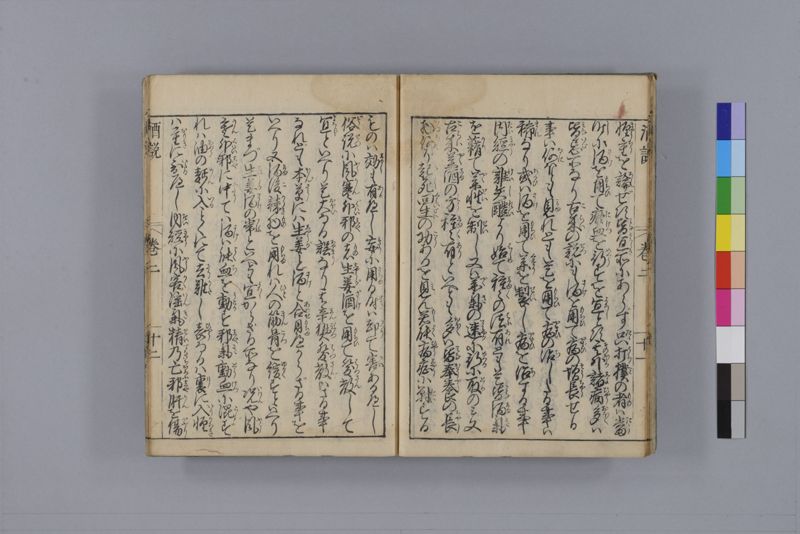
翻刻
【右丁】
軽重(きやうちう)を論(ろん)ぜす皆(みな)宜(よろしき)所にあらず只(たゝ)打撲(うちみ)の者(もの)は当(たう)
時(し)に酒(さけ)を用(もちひ)て瘀血(おけつ)を行(めくら)すを宜(よろし)とす其外(そのほか)諸病(しよひやう)多(おほく)は
皆(みな)忌(いむ)所なり古来(こらい)の説(せつ)にも酒(さけ)を用(もちひ)て病(やまひ)の増長(そうちやう)せる
事は何(なに)ほとも見(みゆ)れとも是を用(もちひ)て病(やまひ)の治(ち)したる事は
稀(まれ)なり或(あるひ)は酒(さけ)を用(もちひ)て薬(くすり)を製(せい)し病(やまひ)を治(ち)する事
内経(たいきやう)の雞矢醴(けいしれい)より始(はしめ)て種々(しゆ〳〵)の法(はふ)有(あれ)とも是 皆(みな)酒気(しゆき)
を藉(かり)て薬性(やくせい)を制(せい)し又は薬気(やくき)の速(すみやか)に行(めくる)に取(とる)のみ又
古来(こらい)薬酒(やくしゆ)の方(はう)種々(しゆ〳〵)有(あり)といへとも多(おほく)は皆(みな)奉養(ほうやう)の長(ちやう)
物(ふつ)何(なん)そ起死回生(きしくはいせい)の功(こう)あるを見(み)ん若(もし)能(よく)病症(ひやうしやう)に対(たい)する
【左丁】
ものは効(しるし)も有(ある)へし妄(もう)に用(もちゆ)る時(とき)は却(かへり)て害(かい)あるへし
俗説(ぞくせつ)に風寒(ふうかん)外邪(ぐはいしや)の者(もの)生姜(しやうがざけ)を用(もちひ)て発散(はつさん)して
宜(よろし)といへり是 大(おほい)なる誤(あやまり)なり其 辛熱(しんねつ)発散(はつさん)はさる事
なれども本草(ほんさう)には生姜(しやうが)と酒(さけ)と合(あわせ)用(もちゆ)へからざる事を
いへり又 酒後(しゆこ)辣物(からきもの)を用(もちゆ)れは人(ひと)の筋骨(きんこつ)を緩(ゆるく)すといへり
是まづ生姜酒(しやうかさけ)の常(つね)といへとも宜(よろし)からざる所なり況(いはん)や風(ふう)
寒(かん)外邪(くはいしや)に中(あたり)ては酒(さけ)は能(よく)血(ち)を動(うこか)す邪気(しやき)動血(とうけつ)に混(こん)ず
れは油(あふら)の麺に入(いる)ことくにて去(さり)難(かた)し表(ひやう)なるは裏(り)に入(いり)軽(かろき)
は重(おもき)に至(いたる)へし内経(たいきやう)に風客(ふうかく)淫気(いんき)精(せい)乃(すなはち)亡(ほろふ)邪(しや)肝(かん)を傷(やふり)
現代語訳
【右丁】
軽重を論ぜず、皆適切ではない。ただし打撲傷の者は、その時に酒を用いて瘀血を巡らせるのが良いとされる。その他の諸病は多くは皆禁忌である。古来の説でも、酒を用いて病気が悪化した事例はいくらでも見られるが、これを用いて病気が治った事例は稀である。あるいは酒を用いて薬を製し病気を治すこと、『内経』の鶏矢醴より始まって種々の方法があるとはいえ、これらは皆酒気を借りて薬性を調製し、また薬気が速やかに巡るのを取るのみである。また古来薬酒の処方は種々あるといっても、多くは皆養生の補助食品であり、どうして起死回生の功効があるだろうか。もしよく病症に対応する
【左丁】
ものなら効果もあるだろうが、みだりに用いる時はかえって害があるだろう。俗説では風寒外邪の者に生姜酒を用いて発散させるのが良いと言っている。これは大きな誤りである。その辛熱発散作用はそうであるが、『本草』には生姜と酒とを合わせて用いてはいけないことを述べている。また酒後に辛いものを用いれば人の筋骨を緩ませると言っている。これはまず生姜酒が一般的だとしても、良くない点である。ましてや風寒外邪に当たっては、酒はよく血を動かし、邪気が動血に混じれば、油が麺に入るようで去り難い。表にあるものは裏に入り、軽いものは重いものに至るだろう。『内経』に「風が客となり淫気が精を失わせ、邪が肝を傷つける」と
英語訳
【Right page】
Regardless of discussing severity, none are appropriate. However, for those with contusions and bruises, it is good to use alcohol at that time to circulate stagnant blood. For other various diseases, most are all contraindicated. Even in ancient theories, there are countless cases where using alcohol worsened illnesses, but cases where it cured diseases are rare. While there are various methods for using alcohol to prepare medicines and treat diseases, beginning with the chicken droppings wine (keishirei) in the Inner Classic, these all merely borrow the qi of alcohol to prepare medicinal properties and to make medicinal qi circulate quickly. Also, while there have been various prescriptions for medicinal wines since ancient times, most are all merely supplementary foods for health maintenance - how could they have life-saving efficacy? If they properly correspond to the disease symptoms,
【Left page】
they might be effective, but when used carelessly, they will instead cause harm. Folk theory says it is good to use ginger wine for those with wind-cold external pathogens to promote dispersal. This is a great error. While its acrid-hot dispersing action is true, the Materia Medica states that ginger and alcohol should not be used together. Also, it says that using spicy foods after drinking will loosen a person's tendons and bones. Even if ginger wine is common, this is an undesirable aspect. Moreover, when afflicted by wind-cold external pathogens, alcohol readily moves the blood, and when pathogenic qi mixes with moving blood, it becomes difficult to remove like oil entering noodles. What is on the surface enters the interior, and what is light becomes heavy. The Inner Classic states: "When wind becomes a guest pathogen, licentious qi destroys essence, and evil injures the liver"