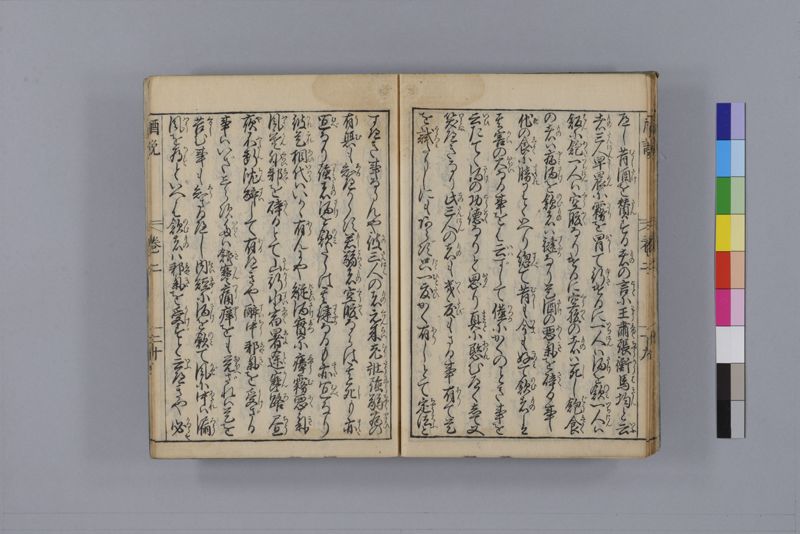
翻刻
【右丁】
へし昔(むかし)酒(さけ)を賛(さん)する者(もの)の言(こと)に王粛(わうしゆく)張衡(ちやうかう)馬均(はきん)と云(いふ)
者(もの)三人(さんにん)早晨(さうしん)に霧(きり)を冒(おかし)て行(ゆき)けるに一人(いちにん)は酒(さけ)を飲(のみ)一人(いちにん)は
飯(はん)に飽(あき)一人(いちにん)は空腹(くうふく)なりけるに空腹(くうふく)の者(もの)は死(し)し飽食(ばうしよく)
の者(もの)は病(やみ)酒(さけ)を飲(のむ)者(もの)は健(すくやか)なり是 酒(さけ)の悪気(あくき)を辟(さく)る事
他(た)の食(しよく)に勝(まされ)りといへり総(すべ)て昔(むかし)も今(いま)も好(このみ)て飲(のむ)者(もの)は
其 害(かい)の大(おほい)なる事をは云(いは)ずして僅(わつか)にかくのことき事を
云(いひ)たてゝ酒(さけ)の功徳(こうとく)なりと思(おもへ)り真(まこと)に愍(あはれ)むへくして又
笑(わらふ)へきなり此(この)三人(さんにん)の者(もの)も幾度(いくたび)もさる事 有(あり)て是
を試(こゝろみ)たりしにもあらず只(たゝ)一度(ひとたひ)かく有(あり)しとて定法(ちやうはふ)と
【左丁】
すへき事ならんや彼(かの)三人(さんにん)の者(もの)元来(くわんらい)老壮(らうさう)強弱(きやうちやく)病(やまひ)の
有無(うむ)も知(しる)へからす若(もし)弱者(よはきもの)空腹(くうふく)ならは其 死(し)も亦(また)
宜(むべ)なり強者(つよきもの)酒(さけ)を飲(のみ)たらは其 健(すくやか)なるも亦(また)宜(むべ)なり
彼是(かれこれ)相(あい)代(かはら)はいかゝ有(あら)んにや縦(たとひ)酒(さけ)実(じつ)に瘴霧(しやうむ)悪気(あくき)
風寒(ふうかん)外邪(くわいしや)を辟(さく)るとて山行(さんかう)水宿(すいしゆく)暑途(しよと)寒路(かんろ)昼(ちう)
夜(や)不断(ふたん)沈醉(ちんすい)して有(ある)へきや醉中(すいちう)邪気(しやき)を受(うけ)ざる
事はいざしらす多(おほく)は饑患(きかん)痛痒(つうやう)をも覚(おほへ)ざれは是を
苦(くるし)む事も知(しら)ざるへし内経(たいきやう)に酒(さけ)を飲(のみ)て風(かぜ)に中(あたれ)は漏(ろう)
風(ふう)を為(なす)といへは飲者(のむもの)は邪気(しやき)を受(うけ)ずと云(いふ)へきや必(かならす)
現代語訳
【右丁】
べきである。昔、酒を賞賛する者の話に、王粛・張衡・馬均という三人が早朝に霧を冒して行った時、一人は酒を飲み、一人は飯に飽き、一人は空腹であった。空腹の者は死に、飽食の者は病気になり、酒を飲んだ者は健康であった。これは酒が悪気を避けることが他の食物に勝っているからだという。総じて昔も今も好んで飲む者は、その害の大きなことは言わずに、わずかにこのようなことを言い立てて酒の功徳だと思っている。真に哀れむべくしてまた笑うべきことである。この三人の者も何度もそのようなことがあってこれを試したわけでもない。ただ一度このようなことがあったといって定法と
【左丁】
すべきことであろうか。かの三人の者の元来の老若・強弱・病気の有無もわからない。もし弱い者が空腹であればその死もまた当然である。強い者が酒を飲んだならばその健康さもまた当然である。彼らが入れ替わったらどうであろうか。たとえ酒が実際に瘴霧・悪気・風寒・外邪を避けるとしても、山行・水宿・暑途・寒路で昼夜不断に沈酔していてよいものか。酔中に邪気を受けないことはさておき、多くは飢え・患い・痛痒も覚えないので、これを苦しむこともわからないだろう。『内経』に「酒を飲んで風に中たれば漏風を為す」とあるなら、飲む者は邪気を受けないと言えるだろうか。必ず
英語訳
【Right page】
This is the case. In the past, those who praised alcohol told a story of three men named Wang Su, Zhang Heng, and Ma Jun who traveled through fog in the early morning. One drank alcohol, one was full from rice, and one was on an empty stomach. The one with an empty stomach died, the one who had eaten became ill, and the one who drank alcohol remained healthy. They say this shows that alcohol's ability to ward off evil qi surpasses that of other foods. Generally, both in the past and now, those who drink with pleasure do not speak of its great harms, but only cite such minor examples and consider them the merits of alcohol. This is truly pitiful and also laughable. These three men had not repeatedly experienced such situations to test this theory - it was just one occurrence, yet they make it into a fixed principle.
【Left page】
Should this be considered a rule? We cannot know the original age, strength or weakness, or presence or absence of illness in those three men. If a weak person was on an empty stomach, his death would also be natural. If a strong person drank alcohol, his health would also be natural. What would happen if their situations were reversed? Even if alcohol truly does ward off miasmic fog, evil qi, wind-cold, and external pathogens, should one remain constantly intoxicated day and night during mountain travel, riverside lodging, hot journeys, and cold roads? Setting aside whether one receives evil qi while intoxicated, most people feel neither hunger, illness, nor pain or itching, so they would not know to suffer from these. The Inner Classic states "if one drinks alcohol and is struck by wind, it causes leaking wind syndrome" - so can we say that drinkers do not receive evil qi? Certainly